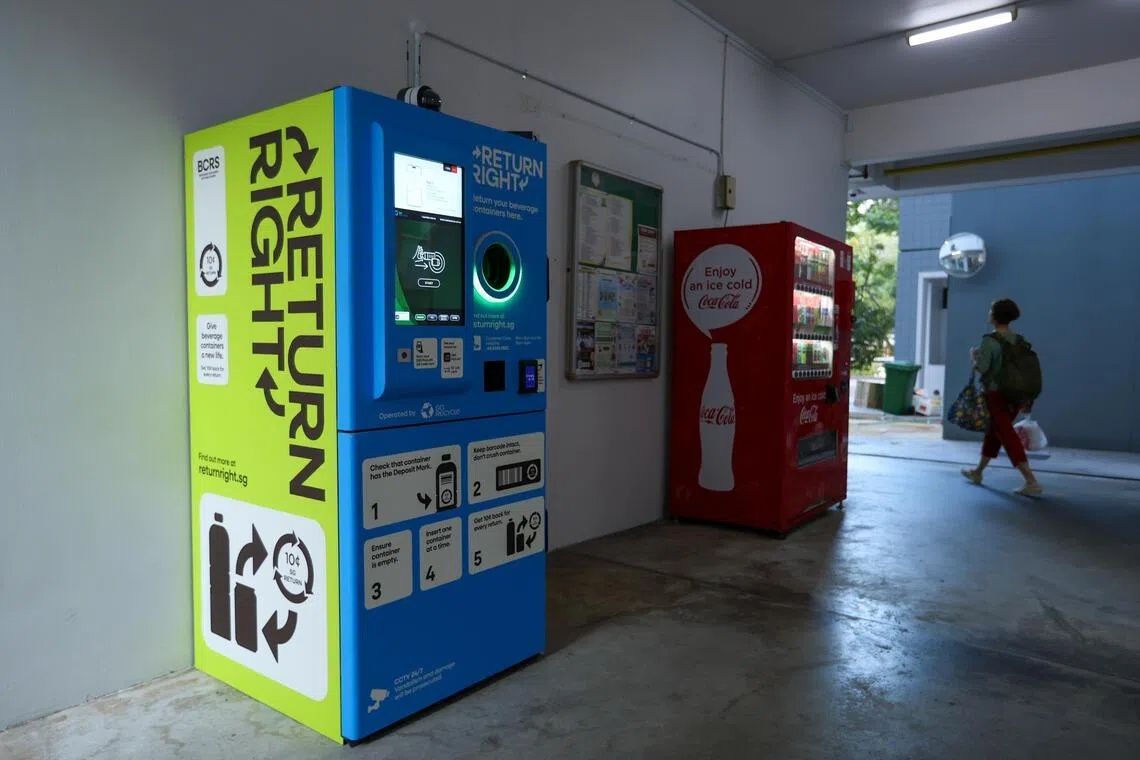
Singapore's National Environment Agency has moved to dispel growing public scepticism surrounding its Beverage Container Return Scheme, flatly rejecting accusations of misappropriation and corruption in connection with the refund process for used drinks containers. The agency issued a Facebook statement on August 15 addressing concerns that had surfaced in online discussions, which had questioned the relationship between the volume of containers being returned and the quantum of deposits being refunded to consumers.
The controversy originated from comments made in Parliament by Singapore's Senior Minister of State for Sustainability and the Environment Janil Puthucheary, who reported that between April and July, the scheme had processed more than one million successful refunds for 5.5 million used bottles and cans deposited into reverse vending machines. Some internet users interpreted this statement to suggest that only one million of the 5.5 million containers had received their deposits back, implying that 4.5 million containers had been processed without corresponding refunds—a discrepancy that sparked accusations of financial impropriety.
The NEA's clarification revealed the source of this confusion: the statistics referenced different metrics entirely. The agency explained that the one million figure referred to individual transactions—the number of times consumers had used the machines—rather than the number of containers processed. Since the vending machines are designed to accept multiple containers in a single transaction, this mathematical distinction fundamentally altered the meaning of the data. On average, customers were returning approximately 5.5 beverage containers per transaction, which when multiplied by the one million transactions, yields the 5.5 million total containers cited by Minister Puthucheary.
With each beverage container carrying a 10-cent deposit under the scheme, this clarification means that approximately S$550,000 in refunds has flowed back to consumers during the four-month period from April to July. The NEA's statement was unequivocal in its rebuttal, declaring that "any accusations of misappropriation or corruption are therefore misplaced." The agency's emphasis on the word "misplaced" suggested frustration that such serious allegations had been levelled without due consideration of the actual mechanics of the refund system.
Understanding the structure of Singapore's beverage recycling initiative is essential for evaluating the legitimacy of the controversy. Under the Beverage Container Return Scheme, consumers pay a surcharge of 10 cents on top of the retail price when purchasing canned or bottled beverages. This deposit is designed to incentivise recycling by offering consumers their money back when they return the empty containers to designated reverse vending machines. The scheme launched on April 1, introducing a financial mechanism intended to shift consumer behaviour towards more sustainable waste management practices.
Since its inception, the programme has encountered operational difficulties that have further complicated public perception. Early users reported technical failures with the vending machines, including instances where deposits were not refunded immediately due to machine malfunctions. Some frustrated consumers reported having to contact the scheme operator directly via email to obtain their refunds after transactions went awry. Additionally, there were documented cases of the machines rejecting containers that should have been accepted, preventing users from retrieving their deposits in real-time. These technical glitches, while apparently limited in scope, created a trust deficit that made the online community particularly receptive to conspiracy theories about missing funds.
When Minister Puthucheary addressed Parliament on August 5, he sought to reassure legislators that the vast majority of transactions had proceeded without incident. He acknowledged that isolated problems had occurred at some machines but stressed that the scheme operator BCRS had responded with relative speed to resolve these issues in conjunction with the equipment operators. His statement was framed as a positive progress report, emphasising successful transactions over failures. However, his presentation of statistics without fuller explanation of how the numbers correlated apparently created an opening for misinterpretation by readers unfamiliar with the scheme's operational structure.
The broader context for this dispute reflects legitimate public concerns about government accountability and financial stewardship, particularly in any programme involving public deposits or mandatory levies. Singaporeans have a reasonable expectation that large sums of collected money be accounted for with transparency and clarity. The Beverage Container Return Scheme, being relatively new and involving millions of individual transactions, naturally invites scrutiny regarding whether all collected deposits are being properly returned to entitled consumers. The fact that technical issues had plagued the scheme's early implementation meant that public trust was already fragile when the parliamentary statistics were presented.
Moving forward, the regulatory framework overseeing the scheme provides some assurance to sceptical consumers. The BCRS operator is required to submit annual financial reports to the NEA, ensuring that an official body maintains oversight of the funds flowing through the system. This reporting requirement is designed to catch any genuine irregularities and provide a mechanism for accountability. However, the gap between parliamentary statements and public understanding suggests that clearer communication strategies may be warranted, particularly when presenting aggregated statistics that could be easily misinterpreted by audiences unfamiliar with programme mechanics.
The episode underscores how rapidly misinformation can spread in the digital age, particularly when statistics appear ambiguous and early technical problems have primed the public to expect difficulties. What began as a simple misunderstanding of how transaction data correlates to container volumes escalated into accusations of corruption that required official denial. For regional observers, the incident offers insights into how environmental programmes involving consumer deposits face inherent public scepticism, and how governments must invest in clear communication alongside regulatory oversight to maintain confidence in such initiatives.

