Singapore's internal security authorities have taken action against two citizens for radicalisation linked to the Israeli-Palestinian conflict, marking the latest cases in a growing wave of extremism fuelled by the Gaza war. The Internal Security Department announced on Wednesday that Cyrus Dzulqarnain Al-Shahriar, 19, a student, has been issued a restriction order, while Tarmizi Mohd Taha, 30, a customer service officer, faces detention. Together, they represent the seventh and eighth Singaporeans dealt with under the Internal Security Act since Hamas' October 7, 2023 attack on Israel triggered a broader pattern of radicalisation among the island nation's youth.
Cyrus' case illustrates how online exposure can rapidly escalate from religious curiosity to violent extremism. After joining religious discussion groups in 2022 to deepen his Islamic knowledge, he became progressively exposed to anti-Western and anti-LGBTQ content that led him to make inflammatory social media posts advocating violence against minority groups. The trajectory accelerated following Hamas' 2023 attacks, when he consumed pro-Hamas narratives and began viewing civilian casualties as a form of legitimate jihad. He even contemplated travelling to Gaza to fight alongside Hamas, abandoning the plan only due to practical constraints and personal fear rather than ideological rejection.
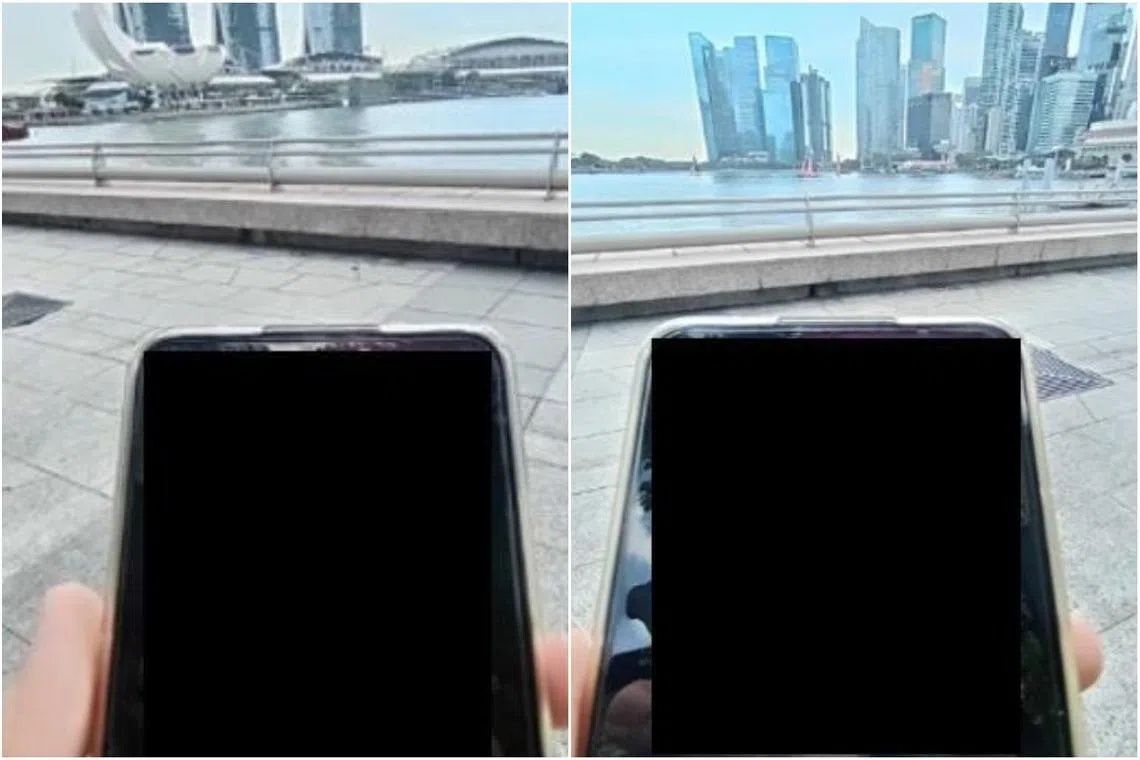
What distinguishes Cyrus' radicalisation is his adoption of what authorities term Composite Violent Extremism, commonly known as a "salad bar" ideology—a dangerous hybrid worldview that draws selectively from multiple, sometimes contradictory extremist frameworks. In early 2025, he encountered an online Islamist group that promoted violent accelerationism, a fringe ideology that glorifies chaos and violence as catalysts for creating a new global order led by Islam. These adherents viewed Western countries, including Singapore, as extensions of American power and Zionist control. Cyrus became so invested that he undertook a specific recruitment task: photographing an extremist publication at Marina Bay Sands and posting the images to his social media account in November 2025 to publicly pledge allegiance to the group.
Perhaps most concerning was Cyrus' immersion in incel ideology, a misogynistic subculture of predominantly male individuals who blame women and society for their romantic failures. After encountering online posts about Elliot Rodger, the American mass shooter who killed six and injured fourteen people in 2014, Cyrus identified with incel grievances and made explicit online threats to kill or rape women, employing derogatory terminology like "foid." He fantasised about violence against LGBTQ individuals and couples at his school. The authorities noted that while these ideations never progressed to actual planning or execution, the combination of Islamist extremism and incel misogyny created a particularly volatile psychological profile that posed genuine security risk.
Tarmizi's case presents a different but equally alarming dimension of the radicalisation problem. The 30-year-old customer service officer made an explicit admission that he was willing to carry out attacks in Singapore if instructed to do so by Hamas. More remarkably, he attempted to leverage his professional experience as a logistics assistant during his national service in the Singapore Police Force, believing that such technical skills would assist Hamas and ultimately earn him martyrdom. His case demonstrates how radicalisation extends beyond youth and can exploit individuals with access to sensitive government institutions or specialised knowledge.
The escalation of these cases within less than two years since October 2023 reflects a troubling pattern across Southeast Asia. Singapore, as the region's most developed economy with significant Internet penetration and a diverse religious composition, appears particularly vulnerable to the contagion effects of the Gaza conflict. The Israeli-Palestinian confrontation has become a radicalising narrative that transcends geographical distance, nationality, and traditional security concerns, transforming international events into personal ideological crusades through algorithmic amplification on social media platforms.
What makes these Singapore cases distinctive is the authorities' identification of CoVE as a strategic threat. Unlike traditional extremist movements with coherent hierarchies and unified ideologies, individuals radicalised by a composite approach construct personalised belief systems that justify violence without adhering to any single movement's discipline or doctrine. This fragmentation actually complicates counter-extremism efforts because there are no consistent recruitment patterns, no centralised command structures, and no predictable escalation pathways to monitor. Cyrus and Tarmizi operated in distinct spheres—one primarily online in fringe Islamic circles, the other with potential operational capability—yet both drew from the same wellspring of Gaza-related grievance and violent ideation.
The authorities emphasised that neither individual progressed beyond ideation to concrete attack planning, yet both posed material security concerns warranting intervention. Cyrus did not share his extremist views or violent fantasies with family or schoolmates, maintaining a dual persona that is increasingly common among online radicals. This compartmentalisation makes detection harder and underscores the difficulty of identifying radicalisation through traditional community channels and family reporting, which typically rely on visible behavioural shifts or overheard conversations.
Singapore's response involves placing both individuals through rehabilitation regimes designed to address their radical beliefs. For a 19-year-old still developing intellectually and ideologically, such intervention potentially offers pathways to deradicalisation, though the psychological pull of incel ideology combined with extremist networking suggests significant deprogramming challenges. The authorities' characterisation of Cyrus' case as illustrating "the growing diversity of violent extremist ideologies fuelling the domestic self-radicalisation threat, especially among youth" signals official concern that a new generation is constructing personalised extremist worldviews through online engagement rather than accepting coherent ideological packages from established movements.
For Malaysia and the broader Southeast Asian region, these Singapore cases carry considerable implications. The same online platforms, social media algorithms, and extremist networks that radicalised Cyrus and Tarmizi operate across borders with minimal friction. Malaysian authorities have similarly documented cases of citizens radicalised by the Gaza conflict, suggesting a regional phenomenon rather than a Singapore-specific anomaly. The success of CoVE in attracting youth through hybrid ideological packaging—combining Islamist grievance narratives with incel misogyny, anti-Western conspiracy theories, and violent accelerationism—represents an evolving recruitment methodology that traditional counter-extremism frameworks may struggle to address.
The cases also highlight the peculiar vulnerability of secular and semi-secular youth in religiously diverse societies. Both individuals apparently lacked strong grounding in established Islamic scholarship or community structures that might have provided ideological inoculation against extremist interpretations. Instead, they encountered extremism primarily through algorithmic curation and niche online communities that offered coherent (if distorted) explanatory frameworks for personal grievances and global injustices. Cyrus' journey from religious curiosity to hybrid extremism occurred largely in isolation, moderated only by online contacts rather than trusted adults or community leaders.
Moving forward, Singapore's identification of CoVE as a distinct and growing threat suggests that Southeast Asian security agencies should anticipate further cases of hybrid radicalisation drawing from multiple ideological sources. The traditional focus on monitoring established terrorist organisations and their recruitment networks may be insufficient when radicalisation occurs through algorithmic feeds, private chat groups, and personalised ideological synthesis. The combination of Gaza-related grievance narratives with other extremist ideologies—whether incel misogyny, anti-Western conspiracy thinking, or accelerationist violent fantasies—creates unpredictable threat profiles that challenge conventional counterterrorism approaches. For Malaysia and the region, strengthening digital literacy, enhancing community intervention capabilities, and developing more nuanced deradicalisation programmes that address the specific psychological appeals of composite extremism will likely become pressing policy imperatives in the coming years.