Singapore has detained three self-radicalised teenagers under its Internal Security Act after uncovering plans for separate violent attacks, with the youngest suspect just 14 years old. The cases, announced by the Internal Security Department on July 27, illustrate a troubling pattern of youth radicalisation driven by extremist ideologies accessed online, a phenomenon that carries implications far beyond Singapore's borders for Southeast Asia's security landscape.
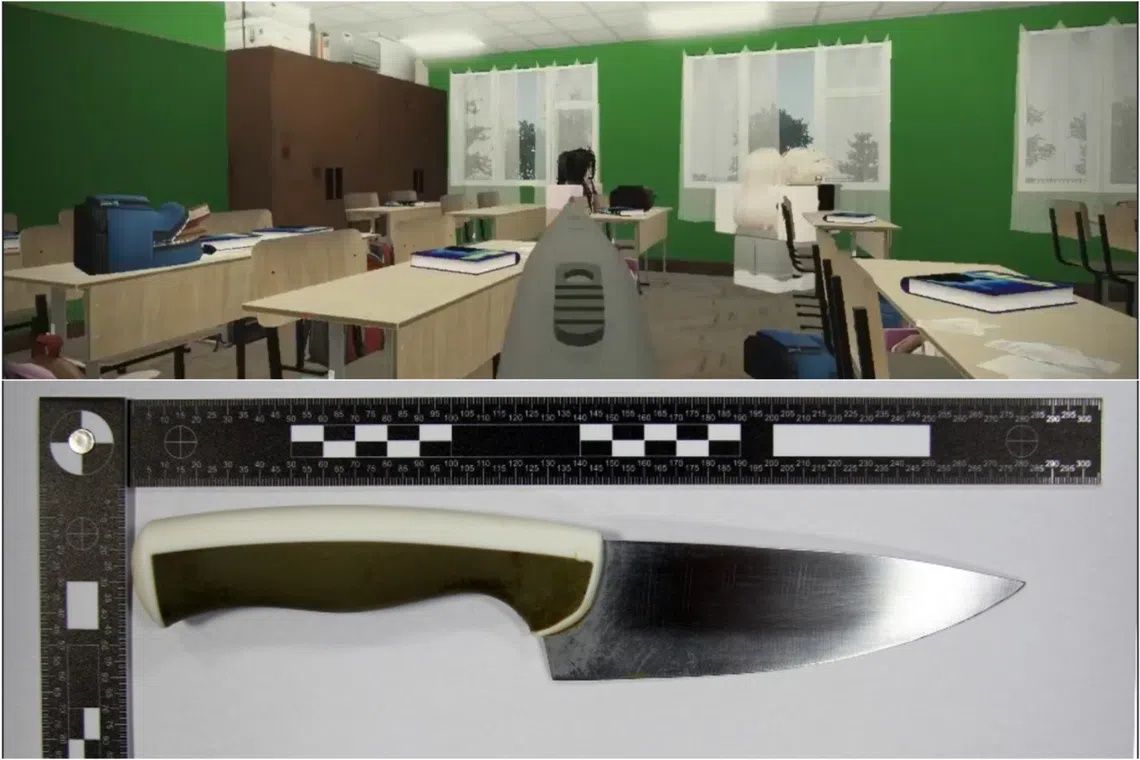
The most alarming case involves a Secondary 2 student arrested in May who had meticulously planned a mass stabbing at his school during the June holidays. The teenager had drafted a 21-page manifesto outlining his attack strategy, complete with weapon selection and a roster of targeted victims—specifically non-Muslim teachers and students. He had progressed significantly toward execution when apprehended, prompting Senior Minister K. Shanmugam to characterise the situation as deeply concerning. Shanmugam highlighted the asymmetry of the security challenge: enforcement agencies must succeed repeatedly, whilst a single successful attack represents catastrophic failure. This observation underscores the mounting pressure on law enforcement across Southeast Asia as digital radicalisation becomes increasingly sophisticated and harder to detect.
Radicalisation pathways for this young suspect began innocuously through exposure to violent video game content on Roblox in 2024. His ideological trajectory accelerated when he encountered recordings of Omar Mateen's 2016 mass shooting at a Florida nightclub on social media. The teenager became fixated on Mateen, identifying with the shooter's history of bullying whilst simultaneously admiring his lethal effectiveness. This parasocial relationship with a mass murderer transformed his personal grievances—bullying by peers and academic pressure from teachers—into justification for mass violence. Crucially, he reinterpreted Islamic theology to sanctify violence against LGBTQ individuals, demonstrating how extremist content distorts religious understanding among vulnerable youth.
The suspect's planning evolved through tactical iterations shaped by Singapore's regulatory environment. Initially aspiring to use firearms, he abandoned that approach upon recognising the republic's stringent gun control laws. He subsequently researched explosive materials and bomb-making techniques but lacked both financial resources and a secure location for construction and testing. His final decision to use knives represented a pragmatic adaptation rather than a reduction in lethality. He identified specific kitchen implements from his home and developed confidence in stabbing techniques through repeated viewing of ISIS execution videos and instructional content online. By late 2025, he had selected particular school holidays and identified days when both he and his targets would be present for co-curricular activities—demonstrating the granular level of planning that characterised his threat assessment.
The second detainee, Tan Jun Jie, aged 19, presents a distinct radicalisation narrative involving tertiary education and ideological extremism beyond violent jihadism. Arrested in April with a detention order issued in May, Tan harboured ambitions to conduct knife attacks against Singapore Armed Forces personnel stationed at Sembawang Air Base and against LGBTQ students at his educational institution. Beyond kinetic violence, Tan attempted to execute distributed denial-of-service cyberattacks targeting websites of Muslim organisations he deemed doctrinally deviant. This case demonstrates how extremism can manifest across multiple operational domains—physical violence, identity-based targeting, and cyber warfare—suggesting that radicalised youth develop increasingly sophisticated tactical portfolios.
The third case concerns a 15-year-old Secondary 4 student whose ambitions centred on pressure-cooker explosives aimed at civilian populations. Viewing Singapore as an enemy of ISIS, this teenager researched methods for constructing improvised explosive devices and envisioned detonation in high-density urban areas to maximise casualty figures. Significantly, whilst he had not yet crystallised a specific timeline, location, or target, his deliberate conceptualisation of mass civilian casualties indicates ideological commitment rather than passing fascination with extremism. What compounds concern in this case is that family members and friends possessed knowledge of his extremist views yet failed to alert authorities—a failure that raises questions about community awareness and reporting thresholds across Southeast Asian societies where family loyalty may supersede civic obligations.
The three cases collectively illustrate that radicalised youth are not merely younger but also increasingly capable of translating ideological commitment into operational planning. The Internal Security Department disclosed that over half of 23 youths detained under the ISA during the past decade—including these three individuals—explicitly intended to conduct attacks within Singapore. This trend suggests that youth radicalisation is not merely a security irritant but a systemic threat requiring sustained counter-messaging and community intervention. The fact that suspects identified readily available weapons, particularly implements with blades, and actively sought online instruction for explosive manufacturing indicates that technical barriers to conducting lethal attacks have collapsed in the digital age.
A critical vulnerability lies in how radicalised youth disseminate extremist content within social networks. The 14-year-old suspect shared ISIS videos with schoolmates whilst simultaneously inviting family members and friends into chat groups where he promoted pro-ISIS material. Another suspect distributed ISIS recordings among peers and schoolmates. These patterns suggest that radicalisation often proceeds through intimate social circles rather than purely digital isolation, creating both detection opportunities and cascade risks if interventions fail. The fact that none of the targeted audiences became radicalised indicates these dissemination attempts met resistance, yet the persistence of such efforts demonstrates ideological fervour amongst detainees.
Shanmugam's emphasis on parental vigilance and public awareness reflects a strategic pivot toward community-based prevention. However, this approach faces structural challenges in Southeast Asia, where digital literacy varies considerably and parental understanding of online radicalisation vectors remains limited. The progression from encountering violent video game content to ideological alignment with mass murderers occurs rapidly and often invisibly to offline observers. Schools, parents, and community organisations require significantly enhanced capacity to recognise radicalisation indicators and understand how social media algorithms amplify extremist content to vulnerable youth. Singapore's approach of combining detention with public disclosure aims to generate community alertness, yet effectiveness remains contingent on translating awareness into actionable community reporting.
The implications for regional stability are substantial. If Singapore, with its sophisticated security apparatus and digital literacy advantages, struggles to intercept radicalised youth before operational planning advances significantly, neighbouring countries with comparatively stretched resources face even greater challenges. The emergence of pressure-cooker bomb construction guides and tactical knowledge within extremist online communities represents a democratisation of capability that transcends geographical boundaries. A radicalised teenager in Malaysia, Indonesia, or Thailand possesses access to identical instructional materials and ideological content as their Singapore counterparts. Cross-border extremist networks may facilitate operational coordination or competitive inspiration, wherein attacks in one country motivate emulation attempts elsewhere.
The cases further underscore how personal grievances—bullying, academic stress, social alienation—interact with extremist narratives to produce violent outcomes. These teenagers identified with mass murderers precisely because they perceived shared experiences of victimisation and rejection. Extremist content provides interpretive frameworks that transform such experiences into justification for mass casualty attacks. Addressing youth radicalisation therefore requires simultaneous attention to both online ideological currents and offline psychological vulnerability. Educational institutions, mental health services, and social support systems must work in concert with security and law enforcement to identify at-risk youth and provide constructive alternatives to extremist narratives. Singapore's detention approach manages immediate security threats but does not resolve the underlying conditions that render certain youth susceptible to radicalisation in the first place.

