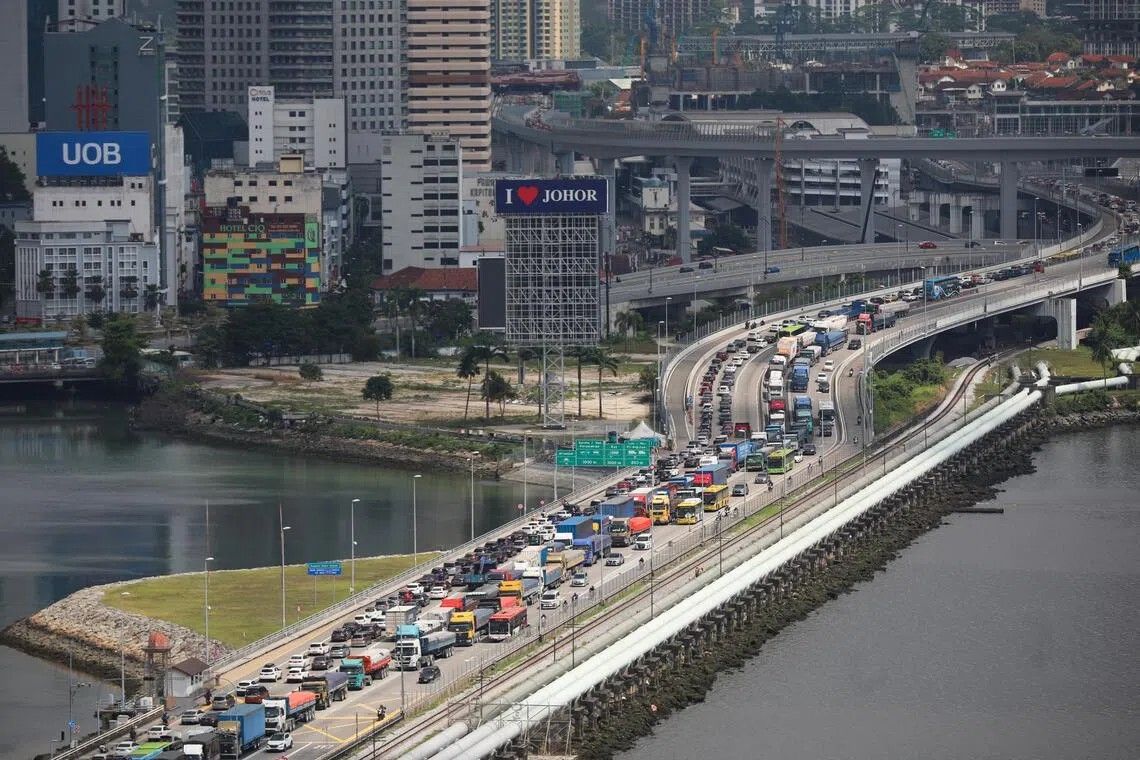
The Immigration and Checkpoints Authority (ICA) of Singapore has cautioned travellers to expect severe congestion at both the Woodlands and Tuas land checkpoints during the upcoming National Day long weekend spanning August 7 to 10, with officials urging motorists to make travel plans well in advance to avoid the anticipated bottlenecks. The agency released its advisory on August 3, emphasising that those who must cross during this period should prioritise travelling outside standard rush hours, particularly during early morning or late evening slots when traffic volumes typically remain manageable.
The warning comes against a backdrop of unprecedented border crossing volumes recorded in recent months. Between late May and late June, encompassing the Hari Raya Haji celebration, Vesak Day, and the school holiday period, immigration authorities processed more than 18 million travellers through the two checkpoints, reflecting the enormous cross-border traffic that defines the Singapore-Malaysia relationship. This figure underscores the sheer scale of daily people movement between the two countries, with hundreds of thousands commuting, holidaying, or conducting business across the Straits of Johor regularly.
The intensity of recent border crossings has already pushed daily records to unprecedented levels. On June 19 alone, more than 598,000 travellers completed immigration procedures at Woodlands and Tuas combined, shattering the previous single-day record of 589,000 set on December 19, 2025. Such volume concentrations reveal the unpredictable nature of border management, where seasonal holidays, school breaks, and cultural celebrations can create sudden spikes in demand that strain even well-resourced facilities.
These record volumes have translated directly into extensive waiting periods for cross-border commuters and visitors. During peak periods earlier this year, private motor vehicle occupants faced delays of up to three hours simply to clear immigration formalities, with much of this waiting attributable to traffic congestion originating from the Malaysian side of the border. The situation represents a significant logistical challenge for both governments, highlighting the practical limits of border infrastructure when demand surges simultaneously.
Security considerations have added another layer of complexity to border management operations. Since February 28, the ICA has implemented heightened security screening protocols across all checkpoints in response to the evolving global security environment, particularly given geopolitical tensions in the Middle East. While such measures are necessary for national security, they inevitably consume additional processing time at the border, further contributing to overall delays during already congested periods.
To improve throughput and reduce delays, authorities have rolled out technological solutions that bypass some traditional bottlenecks. The MyICA mobile application allows travellers to generate QR codes that facilitate faster immigration clearance by reducing manual processing requirements. Motorcycle riders and pillion passengers benefit from facial recognition capabilities under the New Clearance Concept initiative, which has yielded impressive efficiency gains. According to ICA figures, this system has boosted clearance rates by more than 35 per cent during peak departure times—equivalent to an additional 7,600 travellers per hour—compared with pre-pandemic throughput levels in 2019.
Beyond technological interventions, the ICA emphasises that traveller conduct directly impacts overall border efficiency. Queue-cutting remains a persistent problem that disrupts traffic flow and delays countless other motorists attempting to cross. The agency has warned that those caught engaging in this behaviour face mandatory redirecting to the rear of the queue and potential banning from Singapore entry. During the recent holiday period spanning Hari Raya Haji, Vesak Day, and school holidays, enforcement personnel apprehended 52 motorists for traffic-related violations and dangerous driving, with consequences ranging from police investigation referrals to outright travel bans.
For Malaysian readers, the congestion outlook carries practical implications for cross-border commuting, business travel, and leisure visits to Singapore. Those working or studying in Singapore may need to adjust departure times significantly to accommodate potential delays, whilst holidaymakers should factor additional transit time into their itineraries. The August 7-10 period corresponds with significant work and school commitments in both countries, making careful journey planning essential to avoid disruptions to daily schedules or business operations.
The broader context of Singapore-Malaysia land border management reveals the intricate coordination required between two nations with one of Asia's most heavily trafficked land borders. Daily, hundreds of thousands cross for employment, education, shopping, and cultural reasons, making efficient border operations crucial for regional economic functionality. However, the competing demands of security enhancement, infrastructure capacity, and traveller convenience require ongoing adjustment and investment from both sides.
Official guidance to travellers emphasises advance preparation, checking real-time traffic conditions before departure, and cooperating with immigration and traffic officers. Those unable to travel during non-peak hours should allocate substantially more time than usual for border crossing, potentially departing several hours earlier than normal to ensure on-time arrival at their destinations. The ICA's multi-pronged approach—combining technology adoption, enhanced security protocols, enforcement against rule-breakers, and public communication—reflects the complexity of managing one of the world's most significant cross-border traffic corridors, where even marginal improvements in efficiency translate to meaningful time savings for hundreds of thousands of travellers annually.

