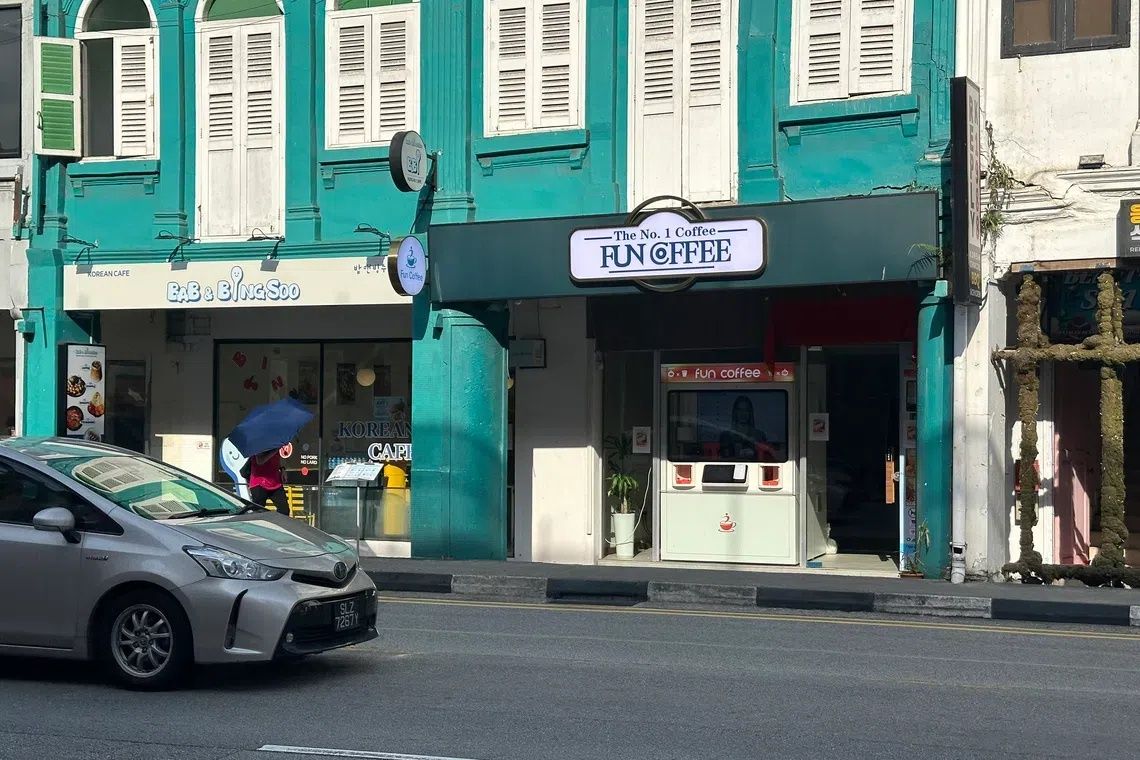
Authorities in Singapore have arrested a 49-year-old woman suspected of actively promoting Fun Coffee, an investment platform that has emerged as a significant regional fraud operation. The arrest, made on August 6, marks part of a broader crackdown across Asia targeting the scheme and those who facilitate its operations through recruitment and marketing activities.
Fun Coffee operates as a multilayered scheme requiring users to download a dedicated mobile application and transfer Tether (USDT)—a cryptocurrency designed to maintain parity with the US dollar—into wallet addresses accessible through the platform. The mechanics of the operation rely on enticing participants with promises of exceptionally high investment returns while simultaneously rewarding members who successfully recruit additional investors into the system. This dual-incentive structure is the hallmark of pyramid and multilevel marketing operations that extract wealth from new recruits rather than generating genuine returns from legitimate business activity.
The woman's arrest comes under Singapore's Multi-Level Marketing and Pyramid Selling (Prohibition) Act, legislation that criminalises the organisation and promotion of schemes built on unsustainable recruitment models. If convicted, she faces potential imprisonment of up to five years, financial penalties reaching S$200,000, or a combination of both sentences. The severity of these penalties underscores how seriously Singapore's legal framework treats orchestrated fraud schemes that erode public confidence in investment platforms and exploit trust within communities.
Fun Coffee presents itself as a lifestyle enterprise merging coffee commerce with wellness services and digital innovation, claiming a global asset base exceeding US$1 billion and an operational team surpassing 5,000 members. The organisation maintains a registered address at 202 Jalan Besar in Singapore, where journalists discovered a coffee vending machine with handwritten instructions directing customers to scan QR codes for payment processing. This superficially legitimate commercial presence—combining actual merchandise with digital payment infrastructure—appears designed to legitimise what authorities have determined to be a fraudulent investment scheme lacking genuine underlying business operations.
The scheme has generated substantial losses across multiple Asian jurisdictions. Hong Kong and Macau authorities have jointly arrested eight individuals linked to Fun Coffee operations, with victims in those territories reporting aggregate losses approaching HK$100 million (approximately S$16.3 million). Within Singapore itself, documented cases reveal individual investors transferring hundreds of thousands of dollars with no ability to recover their capital. One local victim reported investing approximately S$400,000 only to discover the platform had become completely inaccessible for fund withdrawals, a pattern repeated among other participants who attempted to liquidate their positions.
The Fun Coffee operation appears to have established itself in Singapore relatively recently, gaining market penetration during 2025 as it expanded beyond its Vietnam-based headquarters in Phu Quoc. This expansion trajectory mirrors typical international fraud operations that establish legitimacy in a home jurisdiction before scaling across border regions with less coordinated regulatory oversight. The cryptocurrency-based transfer mechanism—particularly the use of USDT rather than traditional banking channels—provides operational advantages for fraudsters, including reduced traceability and extended processing delays that complicate rapid law enforcement response.
Singapore's police have issued explicit public warnings cautioning residents against making additional payments or engaging in fund transfers with Fun Coffee representatives or through its application interface. This advisory extends to scenarios where individuals claim authorised affiliation with the enterprise or request transfers via informal channels including personal PayNow QR codes, individual mobile telephone numbers, or overseas-registered financial accounts. Authorities have highlighted these informal payment request mechanisms as significant warning indicators distinguishing fraudulent operations from regulated financial services providers, which utilise institutional banking infrastructure and formal payment verification systems.
The regional nature of the Fun Coffee investigation reveals how investment fraud has evolved into a cross-border phenomenon requiring coordinated law enforcement action. Victims in Singapore, Hong Kong, and Macau have collectively reported losses totalling multiple millions of dollars, suggesting the scheme has attracted substantially broader participation than currently documented. The involvement of multiple jurisdictions complicates victim compensation and prosecutorial efforts, as funds transferred across international boundaries become increasingly difficult to recover and perpetrators may relocate beyond single-nation enforcement reach.
For Malaysian investors and regulators, the Fun Coffee case offers important instructive value regarding cryptocurrency-facilitated schemes operating across Southeast Asia. Malaysia's own regulatory frameworks governing investment platforms and digital asset trading must remain alert to comparable operations seeking to establish presence locally. The scheme's reliance on social recruitment mechanisms and affiliate commissions suggests it likely maintained an active promotional presence in online communities, messaging applications, and social media platforms where Malaysian users congregate, potentially attracting local participation even if formal enforcement actions have not yet materialised domestically.
The broader implications extend beyond individual criminal accountability to encompass systemic vulnerabilities in how digital investment platforms are regulated and monitored across the region. Fun Coffee's ability to operate openly with registered commercial addresses while conducting fraudulent activities highlights potential gaps in verification procedures for investment service providers. Regulators across Southeast Asia may need to strengthen coordination mechanisms for identifying and shutting down cross-border fraud networks before they accumulate the scale of losses evident in the Fun Coffee case.
Victims and potential participants should recognise several structural indicators of fraudulent schemes: promises of returns substantially exceeding market benchmarks, compensation structures rewarding recruitment rather than productive business performance, requirements for payments in cryptocurrency or informal channels, and resistance to transparent fund withdrawal processes. The regulatory response across Singapore, Hong Kong, and Macau demonstrates increased enforcement commitment, yet the scale of losses suggests detection occurred only after substantial fraud had already transpired. This timeline emphasises the importance of individual due diligence and scepticism when evaluating investment opportunities, particularly those promoted through personal networks or leveraging trust relationships for recruitment purposes.

