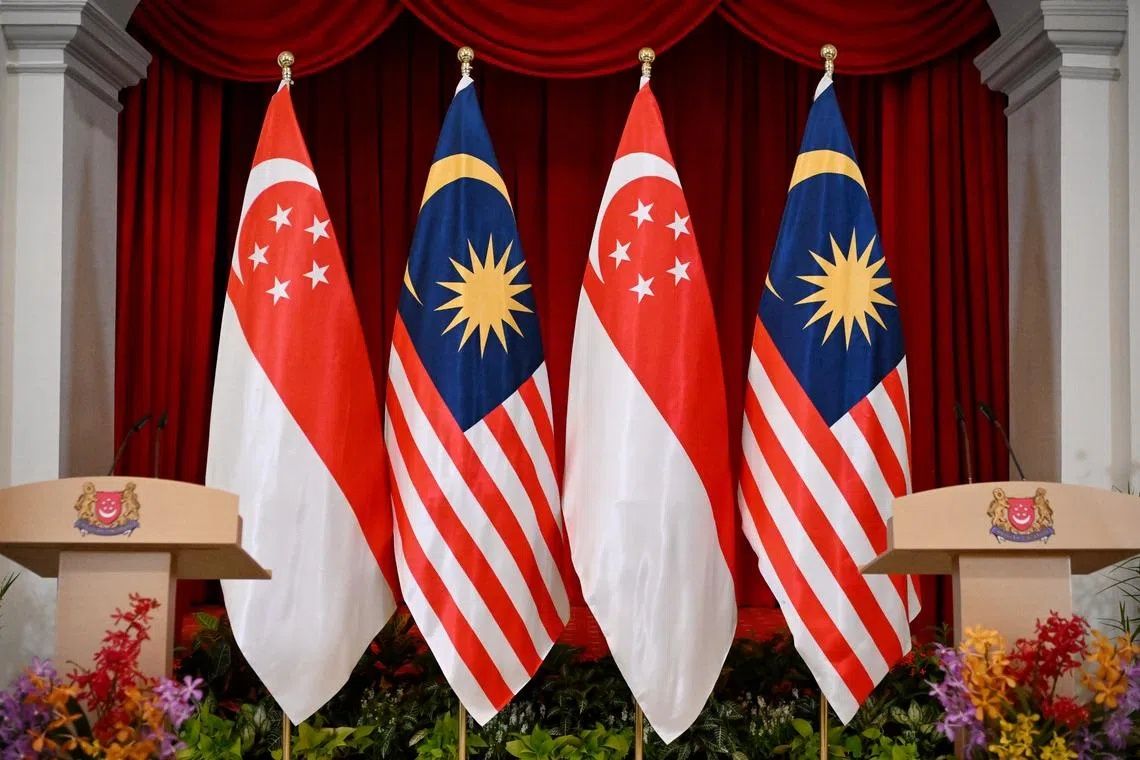
Singapore President Tharman Shanmugaratnam has embarked on a four-day state visit to Malaysia, using the occasion to underscore how neighbouring nations can maintain robust partnerships while managing periodic friction over specific matters. The visit, made at the invitation of Malaysian King Sultan Ibrahim Sultan Iskandar, reflects a deeper commitment both governments share: that their relationship operates on foundations far more substantial than transactional arrangements or the mere avoidance of conflict.
In remarks published through Malaysian news agency Bernama ahead of his arrival, President Tharman articulated a nuanced perspective on bilateral relations that will resonate across Southeast Asia, where multiple nations contend with overlapping territorial claims, resource competition, and historical grievances. The Singapore leader acknowledged forthright what many governments shy away from stating so plainly—that Singapore and Malaysia will inevitably encounter disagreements on specific issues. Rather than treating such differences as failures of diplomacy, he framed them as manageable elements within a larger strategic framework built on six decades of interaction.
The philosophical approach President Tharman described reflects how both governments have evolved from their contentious separation in 1965. Rather than suppressing or ignoring contentious matters, successive administrations have chosen to address them directly through channels grounded in mutual respect and international law. This methodology stands in marked contrast to how some regional partnerships deteriorate when disputes fester beneath surface civility. By channeling disagreements through structured dialogue and appeals to shared legal frameworks, Singapore and Malaysia have created institutional mechanisms that prevent isolated quarrels from destabilising the entire bilateral relationship. Such discipline in managing disputes carries implications beyond the two nations, offering a model for how Asean members might approach their own persistent differences.
President Tharman emphasised that the reservoir of trust accumulated across six decades—built through regular engagement among leaders, officials, and ordinary citizens—provides psychological and diplomatic space to navigate contentious terrain. This accumulated goodwill functions as shock absorber during periods when specific policies diverge. He pointedly noted that regional stability does not depend on the absence of conflicts, but rather on the institutional capacity and political will to manage them responsibly. For Malaysia, a nation navigating its own complex relationships within Asean and with larger powers, this perspective offers reassurance that disagreement need not preclude partnership.
The Singapore president flagged a concern gaining traction across Southeast Asia: the fracturing of multilateral trading systems and intensifying great power competition. In this context, he argued, Singapore and Malaysia must accelerate their integration efforts and deepen cooperation across multiple domains. Economic interdependence, he suggested, should be complemented by joint ventures in renewable energy, supply chain resilience, and climate action. Such cooperation transforms the relationship from a largely political arrangement into a substantive economic partnership where both nations benefit from coordinated action.
Concrete examples already demonstrate this collaborative potential. The Johor-Singapore Special Economic Zone represents an ambitious effort to create cross-border prosperity, combining Malaysia's land and labour resources with Singapore's capital and expertise. The RTS Link—the rapid transit system connecting the two nations—exemplifies infrastructure cooperation that enhances daily life for millions of citizens on both sides of the causeway. These projects illustrate President Tharman's central thesis: countries pursuing mutually beneficial outcomes by leveraging their respective comparative advantages achieve superior results compared to zero-sum competition.
President Tharman's comments arrive as Malaysia prepares to hand over Asean's rotating chair to Singapore in 2027. He highlighted Malaysia's 2025 chairmanship as having achieved significant milestones, notably welcoming Timor-Leste as the 11th Asean member. This transition underscores another layer of the Singapore-Malaysia partnership: their shared responsibility for maintaining Asean's coherence, institutional integrity, and role as guarantor of regional peace. Both nations have vested interests in preventing Asean from fragmenting along great power lines or becoming a hollow shell stripped of agency. By working in concert, they can help the bloc maintain its central position in regional architecture during a period of geopolitical turbulence.
The emphasis on people-to-people connections revealed an important recognition that bilateral relationships cannot survive on elite consensus alone. President Tharman stressed that regular engagement must extend across multiple levels—among politicians, bureaucrats, business leaders, and ordinary citizens. He acknowledged that such cross-border familiarity came naturally to earlier generations but now requires intentional cultivation through bilateral exchange programmes, youth leadership initiatives, and community projects. For Malaysia, where younger populations may lack the lived experience of the colonial and immediate post-independence periods that shaped their parents' attitudes toward Singapore, such programmes carry particular weight in sustaining affinity across the causeway.
President Tharman invoked a Malay saying—jiran sepakat membawa berkat, meaning neighbours in agreement bring blessings—to anchor his remarks in cultural values both societies share. This rhetorical choice transcends diplomatic convention; it signals Singapore's positioning as not merely a Chinese-majority city-state but a multiethnic society with deep connections to Malay and Islamic civilisational traditions. For Malaysian audiences, such linguistic and cultural gestures carry weight in sustaining the belief that Singapore, despite its unique trajectory and prosperity, remains genuinely invested in regional belonging.
The substance of President Tharman's remarks reflects recognition that Southeast Asia faces mounting pressures from technological disruption, climate change, and geopolitical realignment. In such circumstances, partnerships built on genuine mutual respect and understanding of each other's legitimate interests become strategic assets rather than optional niceties. The Singapore-Malaysia relationship, tested repeatedly across six decades and refined through successive crises, offers both countries a foundation for navigating whatever challenges lie ahead. For the broader region watching these two neighbours, their demonstrated capacity to manage difference while deepening cooperation provides a template for how Asean nations might approach their own complex interdependencies during an increasingly complicated era.

