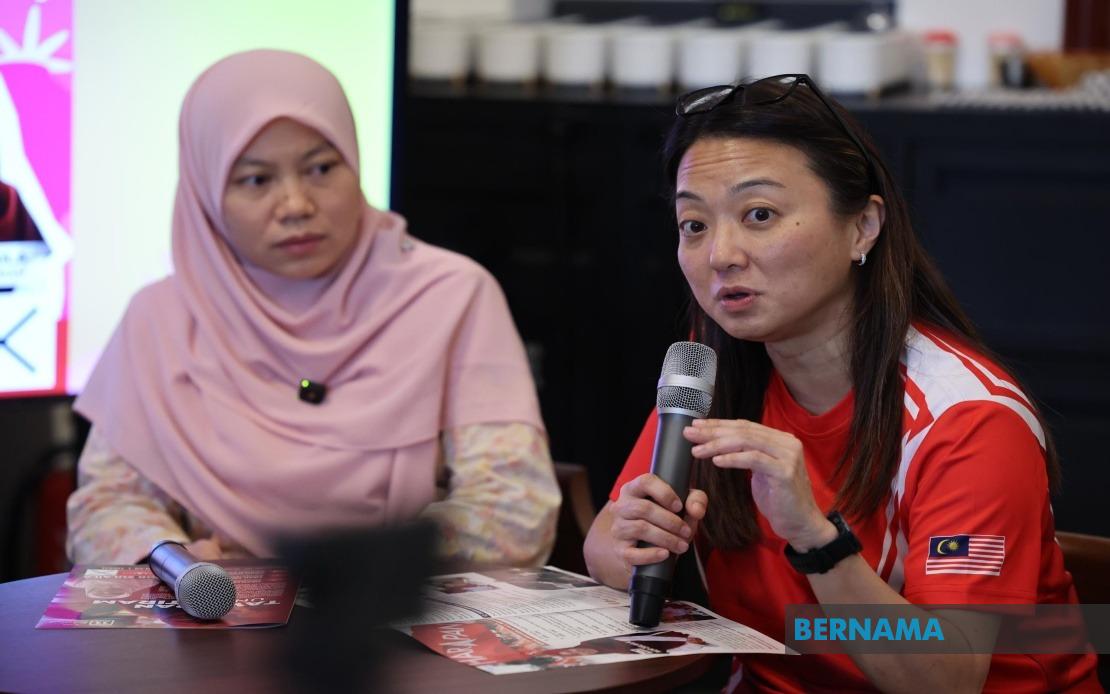
In a spirited defence of Pakatan Harapan's electoral platform ahead of the 16th Johor state election, DAP deputy secretary-general Hannah Yeoh has rebuffed criticism that competing parties are merely recycling each other's pledges. Speaking in Johor Bahru on the campaign trail, she reframed the narrative around manifesto similarities, positioning them as evidence that political contenders are genuinely attuned to grassroots concerns rather than engaging in unoriginal policymaking.
Yeoh, who holds the ministerial portfolio in the Prime Minister's Department overseeing Federal Territories affairs, argued that when multiple parties address identical societal challenges, it demonstrates alignment with voter priorities rather than intellectual dishonesty. She highlighted how welfare provisions and housing accessibility consistently dominate campaign discourse across the political spectrum, not because candidates lack originality but because these domains sit at the heart of Malaysians' everyday struggles. This framing rejects the premise that policy convergence signals weak leadership or derivative thinking, instead suggesting it validates that parties understand their constituents' material needs.
The comments arrive as political observers have noted apparent parallels between Pakatan Harapan and Barisan Nasional policy proposals in the Johor contest. Rather than viewing such congruence as problematic, Yeoh contended that voters should welcome broad-based commitment to fundamental issues. Her argument carries particular weight in a Malaysian context where economic uncertainty, housing affordability crises, and social welfare gaps continue fuelling public discourse across urban and rural constituencies. When politicians from competing coalitions propose comparable solutions to demonstrable problems, she suggested, scepticism should yield to recognition that democracy functions when parties respond to documented citizen concerns.
Beyond defending manifesto content, Yeoh articulated DAP's strategic emphasis on women's representation as a differentiating factor in the electoral battle. The party has fielded eight female candidates among its 17 contenders in Johor, a decision Yeoh framed as demonstrating substantive commitment to gender equity in governance structures. This positioning matters because women's political participation remains contested terrain across Malaysia, with constituencies frequently questioning whether female candidates possess requisite experience or capability to navigate high-level policymaking roles.
Yeoh advanced a more provocative assertion: that female candidates potentially qualify for positions of supreme state authority, including the coveted Menteri Besar role. This statement challenges persistent stereotypes about women's suitability for executive office and suggests DAP views women's political advancement not as tokenistic representation but as preparedness for wielding genuine power. Her framing recognises that Malaysian voters often harbour unconscious biases against female leadership, making explicit articulation of women's qualifications strategically necessary during campaign cycles.
The party highlighted Nor Zulaila Abd Ghani, its Tiram candidate, as exemplifying their women's calibre. With 12 years of accumulated administrative experience across local, state, and federal governance tiers, Nor Zulaila possesses a documented track record beyond rhetoric. Yet Yeoh's commentary extended beyond professional credentials, emphasising Nor Zulaila's biographical uniqueness: her mother's Malay heritage and father's Chinese ethnicity position her as a living embodiment of racial harmony. In Malaysian political vocabulary, such family composition carries symbolic weight, suggesting that candidates from mixed-race backgrounds can bridge communal divisions and defuse ethnic tensions through their very existence in public office.
This dimension of Yeoh's remarks speaks to a deeper strategic calculation within Malaysian politics. At a time when ethno-nationalist rhetoric periodifies political contests, the DAP's elevation of multi-ethnic candidates implicitly offers a counter-narrative proposing that meritocratic diversity strengthens governance. Nor Zulaila's candidacy becomes more than individual ambition; it represents an ideological position on how Malaysia should address persistent racial polarisation. By publicly championing her background, Yeoh invites voters to conceptualise her election as a referendum on whether intercommunal bridges can replace divisive tribal politics.
Nor Zulaila's electoral contest bears watching precisely because it involves four-cornered competition among Pakatan Harapan, Barisan Nasional, Parti Bersama Malaysia, and Perikatan Nasional candidates. This fragmented field means that victorious margins may prove slimmer than in conventional two-way fights, complicating predictions about whether voters will embrace DAP's gender and ethnic diversity messaging or default to established coalitional loyalties. The Tiram race becomes a microcosm revealing whether Johor voters prioritise innovative representation or gravitational pull toward traditional political blocs.
Pakatan Harapan's comprehensive participation across all 56 Johor state seats signals organisational confidence despite recent electoral reversals elsewhere. The coalition's resource deployment and candidate recruitment strategies will shape whether anti-incumbency sentiment benefiting Barisan Nasional in previous contests proves durable or whether Yeoh's messaging around manifestos reflecting genuine concerns resonates with tired voters. With polling scheduled for July 11 and early voting commencing July 7, the campaign's final phase will test whether similitude in policy proposals enhances or diminishes Pakatan Harapan's electoral prospects.
From a regional Southeast Asian perspective, the Johor election demonstrates how Malaysian parties navigate the tension between democratic responsiveness and electoral differentiation. Yeoh's intellectual move—transforming manifesto similarities from liabilities into legitimacy markers—reflects sophisticated political communication that acknowledges voter sophistication. Rather than assuming Malaysians passively consume competing narratives, this framing credits voters with sufficient intelligence to appreciate that convergent policy platforms indicate parties listening to shared grievances. Whether Johor voters reciprocate that respect through ballot box endorsement remains the pending question that will reshape state-level political calculations heading into 2024.

