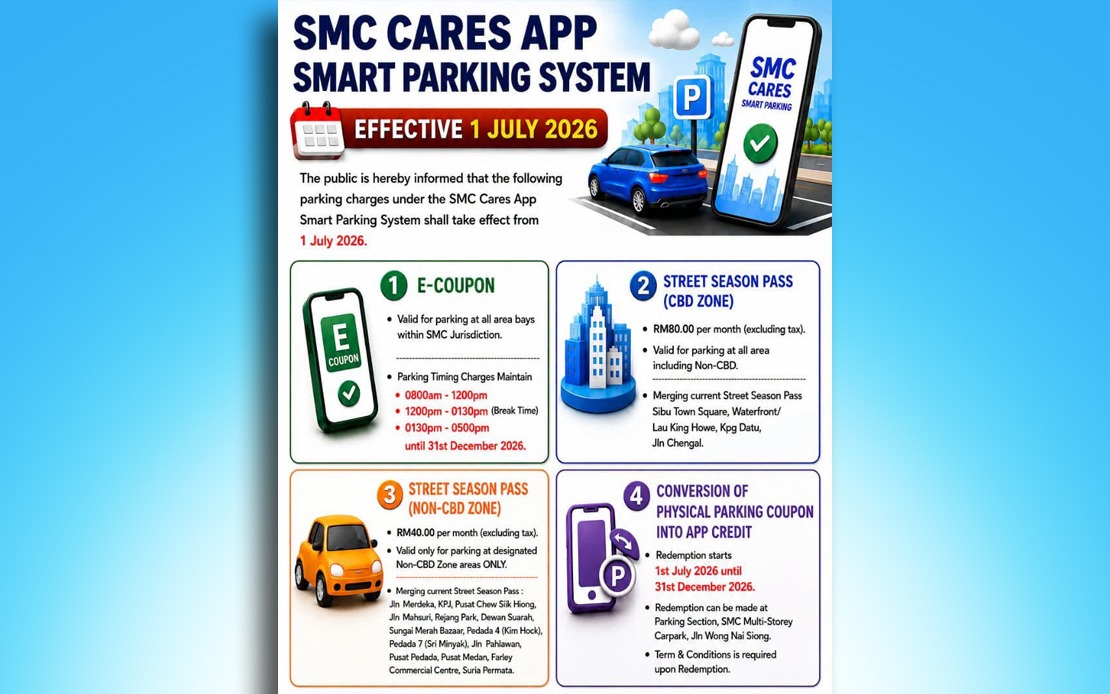
The Sibu Municipal Council has moved to defuse mounting public anger over its automated smart parking system by introducing corrective measures that directly address the most contentious enforcement practices. Starting immediately, the council will implement a grace period of between five and 10 minutes before the system issues an Over Parking Notice, allowing drivers adequate time to complete the parking transaction through the mobile application after physically leaving their vehicles.
The decision follows an avalanche of complaints that erupted after the SMC Cares Smart Parking system went fully live earlier this month. Sibu residents took to social media to air grievances about compounds being generated almost instantaneously, sometimes before motorists had even finished downloading the app or navigating its interface to activate their parking sessions. The backlash revealed a significant disconnect between the system's operational speed and users' practical ability to comply, particularly among older residents unfamiliar with smartphone applications.
SMC Chairman Clarence Ting Ing Horh acknowledged the legitimate user experience challenges when he announced the modifications at a press conference at his office. He emphasised that the council's primary objective is improving convenience rather than revenue maximisation through penalties. By instructing system provider Primal Solution Sdn Bhd to engineer the grace period into the enforcement mechanism, the council has conceded that the previous zero-tolerance approach was generating justified resentment among the motoring public.
The second major initiative targets a demographic group particularly disadvantaged by technology-driven enforcement systems. From August, drivers aged 60 and above will be eligible for a Senior Citizen Parking Pass, though specific details about the pass's scope and cost remain pending. This accommodation recognises that elderly motorists often struggle with app-based transactions and deserve protection from compounds while learning to navigate digital payment systems. The move aligns with broader Southeast Asian efforts to ensure technological change does not inadvertently penalise senior populations.
Ting also clarified the council's enforcement strategy, distinguishing between contracted parking wardens and municipal enforcement divisions. The wardens employed by Primal Solution are authorised only to address parking rule violations such as unpaid fees, expired time slots, and overparking. Illegal parking enforcement, including traffic obstruction, remains the exclusive purview of the SMC enforcement division and police, directly contradicting social media claims that privatised wardens were issuing compounds for illegal parking offences.
The council has further instructed contractors to enhance wardens' approachability and visibility by prohibiting face coverings except on genuine medical grounds. This transparency measure aims to build public confidence that enforcement personnel are identifiable and accountable. Simultaneously, the council established a dedicated support desk at the Sibu Public Library where staff assist residents with application registration and feature navigation, addressing complaints that the platform's complexity excluded less digitally literate users.
To counter allegations that Sibu imposes Malaysia's most expensive parking rates, Ting presented comparative data suggesting the city's charges remain competitive with other Sarawak local authorities. He also clarified the revenue flow, noting that all parking receipts go directly to the SMC, while the contractor receives a separate service fee. This structure prevents perceptions that excessive enforcement is driven by profit-sharing arrangements between the council and the service provider.
Since launching in recent months, the SMC Cares system has registered over 93,000 users, with council projections suggesting the figure will surpass the initial 100,000-user target by year-end. However, the rapid adoption masks significant technical deficiencies that frustrated early adopters. Users reported complications during registration, an unintuitive interface design, sluggish system performance, unexpected session logouts, processing delays in payment confirmation, and the critical issue of compounds being issued before payment transactions could be finalised.
Ting encouraged motorists who believe they have received incorrect notices to lodge formal appeals with the SMC for review, assuring them that every notice carries photographic evidence stored in the system's database. This appeals mechanism represents a safeguard against erroneous enforcement, though it places the burden on aggrieved users to initiate contact with the council. For instances involving registration number errors or other technical failures, the appeals process offers a pathway to resolution.
The council's response reflects a broader tension facing Malaysian local authorities implementing automated systems: the technology's efficiency must be balanced against practical constraints of user adoption and equity considerations. Sibu's adjustments—the grace period, senior citizen provisions, and support infrastructure—represent pragmatic acknowledgments that smart systems require human-centred design principles to gain public acceptance.
Looking ahead, the success of these modifications will depend on seamless technical implementation by Primal Solution and sustained commitment to user-friendly operations from the SMC. The grace period must function reliably, the senior citizen pass must be straightforward to obtain, and wardens must consistently demonstrate the improved accessibility the council has mandated. Should these measures fail to satisfy public concerns, further adjustments may become necessary.
The Sibu experience offers instructive lessons for other Malaysian municipalities contemplating smart parking systems. Successful implementation requires extensive user testing, particularly with populations that may lack smartphone proficiency, gradual rollout with feedback mechanisms, and enforcement strategies that prioritise user assistance over immediate penalties. By responding to constituent concerns rather than defending the original system's rigidity, the SMC has signalled willingness to evolve its approach, a posture that may yet restore public confidence in automated parking governance.

