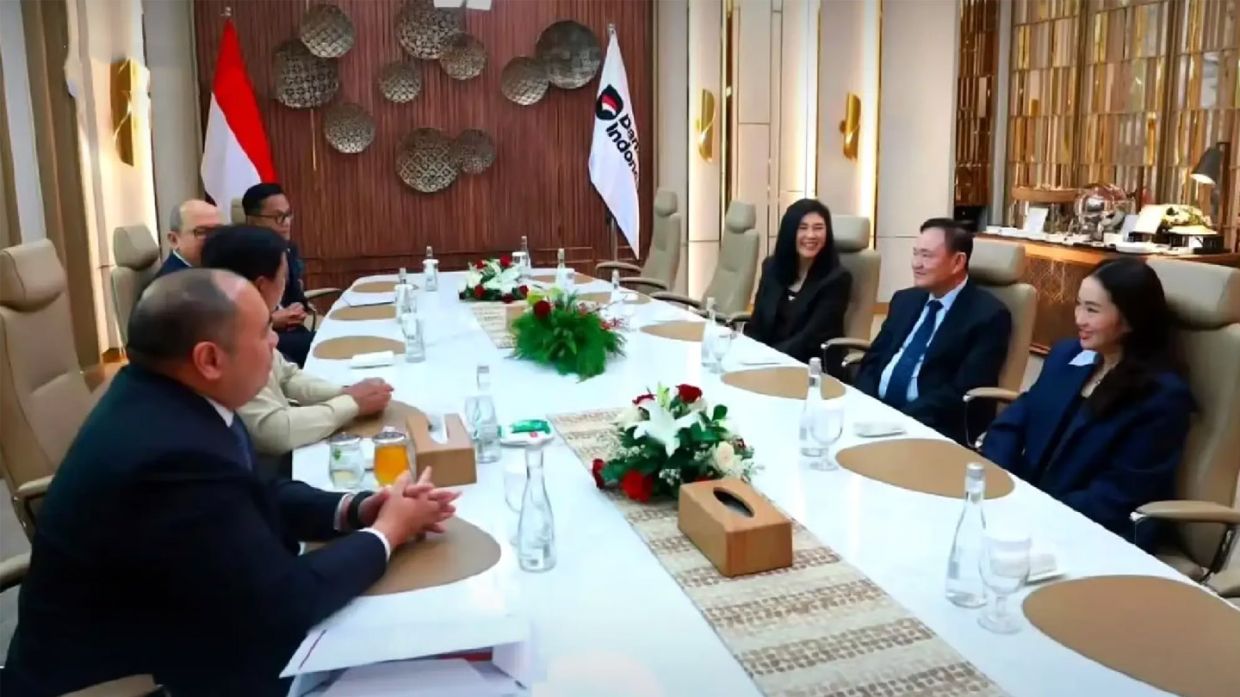
Three prominent figures from Thailand's Shinawatra family held talks with Indonesian President Prabowo Subianto in Jakarta on Thursday, signalling the depth of cross-border political and business connections across Southeast Asia. Former prime ministers Thaksin Shinawatra, Yingluck Shinawatra, and incumbent Prime Minister Paetongtarn Shinawatra gathered at the Danantara building to discuss investment prospects, asset management frameworks, and strategies for sustainable economic growth, according to Indonesian Cabinet Secretary Teddy Indra Wijaya.
The meeting underscores the Shinawatra family's continued influence in regional economic circles despite the political turbulence that has defined Thai politics for two decades. Thaksin, who led Thailand from 2001 to 2006 before being ousted in a military coup, remains a towering figure in Southeast Asian business and investment networks. His sister Yingluck, who served as prime minister from 2011 to 2014, has similarly maintained international connections despite facing legal challenges at home. Paetongtarn, the family's youngest political representative, assumed office as prime minister in August 2024 and represents a fresh chapter for the clan's political trajectory.
Thaksin's prominent position on the advisory board of Danantara, Indonesia's state investment management agency, provided the framework for this engagement. During the Jakarta discussions, Thaksin exchanged views with Prabowo and senior Danantara leadership, contributing recommendations on investment strategies and asset optimisation. The presence of Danantara group chief executive officer Rosan Roeslani, chief operating officer Dony Oskaria, and chief investment officer Pandu Sjahrir reflected the formal nature of the gathering, despite it being characterised by observers as informal and warm in tone.
Danantara Indonesia functions as a strategic vehicle for the Jakarta government's management and development of critical national assets. The agency plays a pivotal role in Indonesia's economic transformation agenda, identifying opportunities to leverage state resources for growth while strengthening the nation's position amid evolving geopolitical and economic circumstances. By engaging with international figures like Thaksin who bring decades of experience in managing large corporate and political networks, Prabowo's administration signals its openness to drawing on global expertise for Indonesia's development priorities.
The timing of this meeting carries significance for Malaysia and the broader region. Both Thailand and Indonesia face similar challenges in attracting foreign investment, managing sovereign wealth, and positioning themselves advantageously within ASEAN. The Shinawatra family's continued access to decision-making circles in Jakarta demonstrates how personal networks and business relationships transcend national borders and political upheaval. For Malaysian observers, the meeting illustrates how neighbouring economies leverage family connections and private-sector expertise to advance state interests.
Prabowo's administration has made strengthening international partnerships a cornerstone of its early tenure. The meeting with the Thai delegation reflects this broader strategy of deepening bilateral engagement with regional neighbours and key international economic players. Beyond the formal investment discussion at Danantara, Prabowo separately hosted Thaksin and family members at his private residence, underscoring the personal rapport between the figures. Such private engagements often signal deeper trust and openness to exploring collaboration beyond official channels.
Thaksin's involvement with Danantara positions him as a bridge between Thai and Indonesian business ecosystems. His three-decade trajectory in corporate and political leadership has given him unique insights into managing large portfolios of assets and navigating complex regulatory environments. By drawing on his advisory role, Danantara gains access to perspectives shaped by experience managing significant Thai business interests and understanding the Southeast Asian investment landscape. This advisory relationship, which includes other international economic figures, reflects Indonesia's desire to benchmark its practices against global standards and attract sophisticated international capital.
For Thailand, the participation of all three Shinawatra representatives carries domestic political implications. The family's engagement in international investment discussions, particularly at the highest levels of neighbouring governments, reinforces their relevance in Thai politics and business despite recurrent challenges and controversies. Paetongtarn's inclusion in the Jakarta meeting signals that the family maintains momentum in shaping Thailand's external economic relationships and positions her government as an active participant in regional development initiatives.
The investment topics discussed—asset management optimisation, sustainable economic development, and long-term growth strategies—reflect shared concerns across Southeast Asia. All regional economies grapple with allocating resources efficiently, attracting quality investment, and ensuring that development benefits are broadly distributed. By convening discussions between Prabowo's administration and experienced international investors and advisors, Indonesia demonstrates commitment to drawing on regional expertise for addressing these challenges.
The broader context of this engagement reveals how Southeast Asian elites maintain interconnected networks that transcend formal diplomatic channels. Business relationships, family ties, and advisory roles create alternative pathways for political and economic collaboration. For Malaysian policymakers and investors, the Shinawatra-Prabowo meeting offers a reminder that regional influence often derives from sustained personal relationships and demonstrated competence in managing large-scale economic interests.
Moving forward, the depth of engagement between the Shinawatra family and Indonesia's leadership may influence regional investment flows and collaborative approaches to economic development. As Paetongtarn consolidates power in Bangkok and Prabowo pursues his administration's priorities in Jakarta, the personal relationships established through these meetings could facilitate future cooperation on transnational investment projects, infrastructure development, and financial market integration. For Southeast Asia broadly, stronger Thailand-Indonesia economic coordination, driven by relationships like those on display in Jakarta, could enhance the region's attractiveness to international capital and strengthen ASEAN's collective economic influence.

