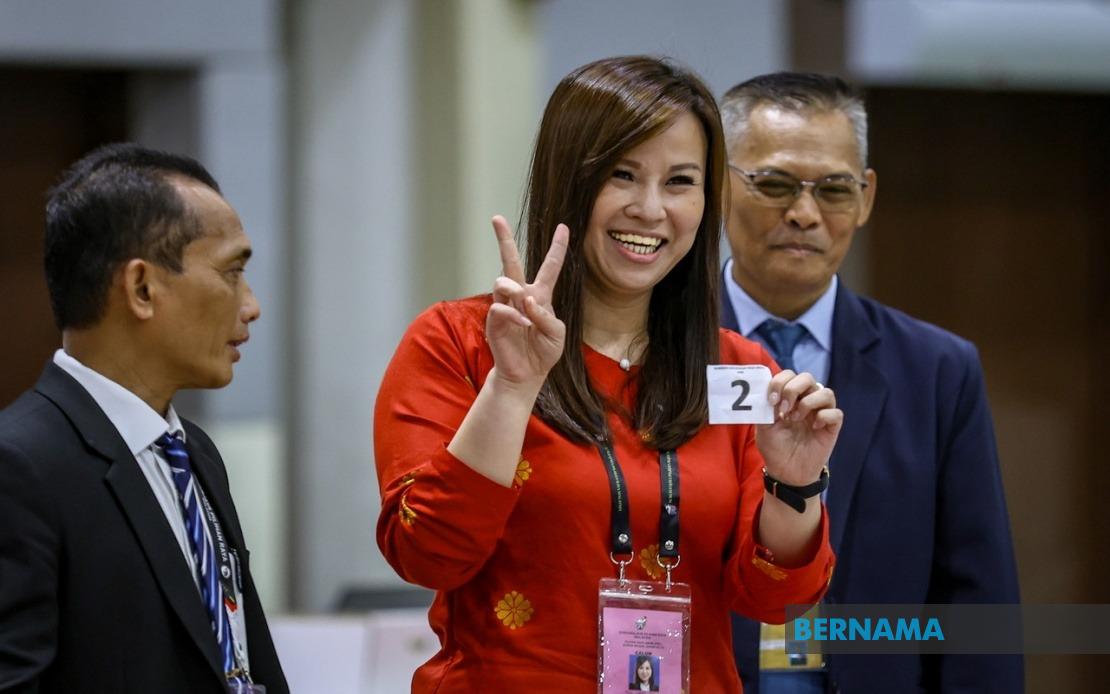
Sharon Teo's bid to capture the Permas state seat in Johor's upcoming electoral contest is anchored on two pillars: fixing deteriorating road infrastructure and strengthening support systems for vulnerable residents. The Pakatan Harapan candidate, who leads the Johor Amanah Women's Youth wing, presented this platform during the nomination process at Dewan Muafakat, Taman Mawar, positioning herself as someone responsive to grassroots concerns that have emerged during her door-to-door campaigning.
Road conditions have emerged as a pressing grievance among Permas constituents, according to Teo's assessment. She frames road safety not merely as a convenience issue but as a matter of public protection, particularly for families and commuters navigating the constituency daily. This positioning reflects a broader recognition that infrastructure deficits directly affect resident quality of life and economic opportunity. Her decision to prioritise this concrete, tangible issue suggests a strategy of addressing immediate neighbourhood concerns rather than abstract policy declarations.
Teo brings prior experience in parliamentary politics, having served as an aide within the Pulai constituency under the late Amanah deputy president Salahuddin Ayub. That background provides her with parliamentary-level exposure, though the state legislative arena presents different constituencies, voter bases, and policy levers. She has committed to releasing a detailed manifesto specifically articulating her vision and promises for Permas voters, signalling intent to move beyond broad campaign messaging into documented commitments.
Defending his 2022 victory, incumbent Baharudin Mohamed Taib represents Barisan Nasional's effort to retain the seat. His public statements acknowledge the competitive intensity of the contest, with four candidates vying for the mandate. Baharudin has identified each opponent as serious contenders possessing distinct strengths, indicating he recognises this will not be a routine incumbent victory lap. His framing emphasises the work required to secure a Barisan Nasional win in what he characterises as a demanding electoral environment.
Barahudin's campaign approach diverges from Teo's manifesto-based strategy. Rather than releasing a personal platform, he plans to operate within the broader Barisan Nasional framework, allowing the coalition's overall agenda to guide his positioning. This approach carries both advantages and limitations—it anchors him to a larger political machine with established voter relationships and resources, yet potentially limits his ability to differentiate himself through individualised policy offerings or personal vision.
The Permas race has evolved into a genuine four-way contest. Beyond Teo and Baharudin, T. Vela represents Perikatan Nasional while Dr Zamil Najwah contests under Parti Bersama Malaysia. This fragmentation expands the strategic calculations for all camps—with four competitive candidates, plurality victories become possible, and the winning margin may prove slimmer than in more traditional two-party races. Each candidate must appeal to a distinct voter segment while preventing opposition consolidation.
Permas sits within the larger Pasir Gudang parliamentary constituency, a district with established political leanings and voter demographics that shape state-level competition. The state seat carries 113,963 eligible voters, representing a meaningful but not enormous electorate. For reference, this voter population is substantial enough that ground organisation and targeted messaging can meaningfully influence outcomes, yet intimate enough that direct candidate engagement remains feasible.
Johor's 16th state election on July 11 represents a significant political moment for Malaysia's most populous state. Early voting scheduled for July 7 will provide initial indicators of voter sentiment, though Permas's specific dynamics will only fully crystallise on election day. The timing compresses campaigns into a relatively brief window, privileging candidates with existing name recognition and established ground networks.
For Malaysian observers, the Permas race encapsulates broader electoral trends in Johor. Pakatan Harapan's strategy of targeting infrastructure and welfare concerns reflects lessons from previous contests, where bread-and-butter issues consistently outweigh abstract partisan arguments. Barisan Nasional's incumbency advantage remains potent, yet no longer guarantees automatic victory, particularly where opposition candidates articulate compelling local agendas. The presence of Perikatan Nasional and Parti Bersama Malaysia signals a fractious opposition that may inadvertently benefit the ruling coalition through vote splitting.
The election also occurs within Malaysia's broader political realignment. Johor, traditionally a Barisan stronghold, has become genuinely competitive terrain where opposition advances are plausible. Teo's campaign strategy of grounding her appeal in specific infrastructure complaints and welfare commitments represents a pragmatic opposition approach—avoiding sweeping ideological rhetoric while promising tangible local improvements. Whether this resonates sufficiently depends substantially on voter perception of incumbent performance on these identical issues.
For Southeast Asian context, Johor elections matter beyond state boundaries. As Malaysia's economic powerhouse and demographic heavyweight, electoral shifts in Johor reverberate through national coalition calculations. A strong Pakatan Harapan performance, even if not capturing ultimate control, would reinforce momentum in the party's potential national comeback. Conversely, decisive Barisan Nasional victories would strengthen Prime Minister Anwar Ibrahim's rivals within federal politics and complicate Pakatan Harapan's path to future national power.
The Permas contest thus represents something beyond a local state election. It functions as a testing ground for campaign messaging, voter sentiment regarding infrastructure and welfare priorities, and the relative organisational capacity of competing political forces. The outcome will provide data points influencing subsequent electoral contests across Malaysia's political calendar, making this seemingly routine state race consequential for national political trajectories.

