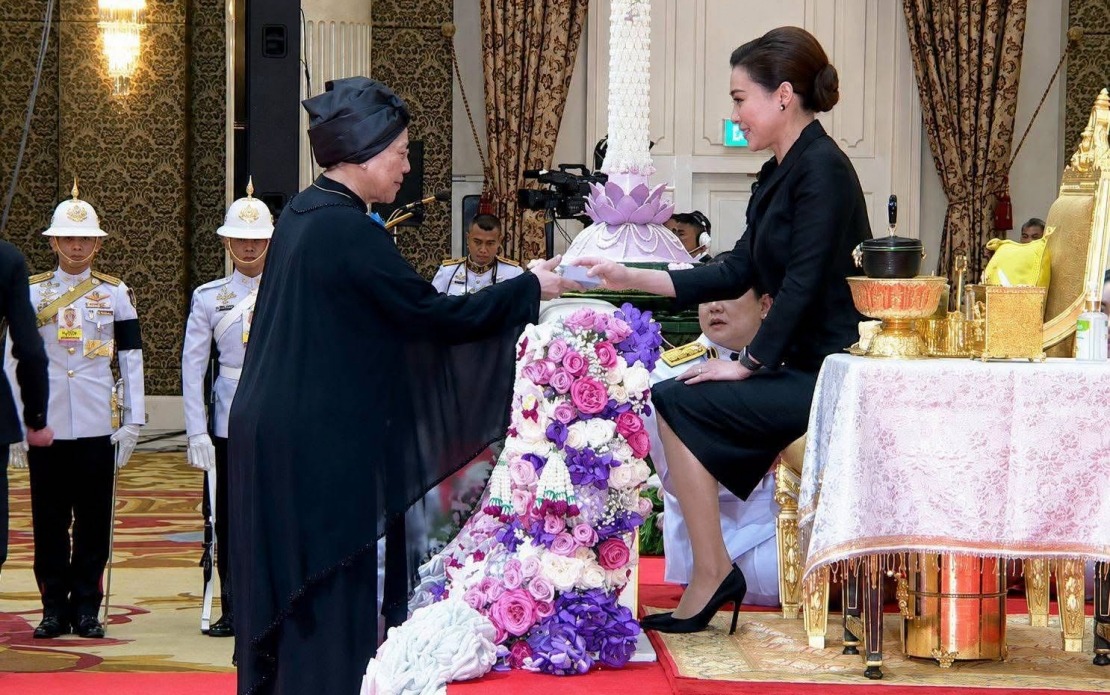
Prime Minister Datuk Seri Anwar Ibrahim and his wife, Datuk Seri Dr Wan Azizah Wan Ismail, have publicly commended Prof Emerita Tan Sri Datuk Seri Dr Sharifah Hapsah Syed Hasan Shahabudin following her receipt of the Outstanding Woman Award for Social Development, conferred by Queen Suthida Bajrasudhabimalalakshana of Thailand. The accolade, bestowed in August 2024, carries significant symbolic weight within the broader context of regional women's empowerment and cross-border recognition of professional excellence.
Anwar's endorsement positions the award as far more than a personal achievement. In his remarks circulated via social media, the Prime Minister stressed that the honour reflects positively on Malaysia's international standing whilst simultaneously validating the expanding footprint of Malaysian women professionals across the global stage. This framing underscores a deliberate government narrative around female participation and visibility within strategic sectors, aligning individual accomplishment with national brand-building efforts.
The Prime Minister's commentary specifically emphasised that Malaysian women continue to secure international recognition, a development he characterised as reflective of their calibre, capability, and substantive contributions to society. This emphasis on capability and contribution—rather than symbolic representation alone—suggests a recognition that women's advancement in Malaysia operates at multiple levels: personal achievement, sectoral participation, and strategic national relevance. Sharifah Hapsah's award thus serves as a tangible marker of this multi-layered progress.
Anwar deployed the recognition as a call to inspire further engagement from Malaysian women across knowledge sectors, leadership roles, and community-oriented initiatives. His language deliberately connected individual aspiration to collective nation-building, particularly through his invocation of the Malaysia MADANI agenda. This connection between women's participation and the government's flagship development framework suggests that female advancement is positioned not as a peripheral diversity concern but as integral to the administration's core policy objectives around inclusive prosperity and institutional transformation.
The Malaysia MADANI agenda, a cornerstone of the current administration's policy platform, encompasses multiple dimensions including economic opportunity, institutional integrity, and social cohesion. By explicitly linking Sharifah Hapsah's international recognition to this framework, Anwar signalled that women's contributions—whether in academic, professional, or social development contexts—directly support these overarching national priorities. This rhetorical positioning elevates women's roles beyond traditional welfare or symbolic representation to active participation in substantive governance agendas.
Government commitment to expanding opportunities for female participation across diverse sectors formed a central pillar of Anwar's statement. The Prime Minister pledged that the MADANI administration would persistently nurture women's involvement in various economic, social, and institutional domains whilst safeguarding their access to leadership pathways. Such commitments, whilst politically routine in contemporary governance discourse, carry practical implications for policy implementation, resource allocation, and institutional culture across Malaysian government agencies and private enterprises alike.
The Thai royal endorsement carries particular diplomatic significance within Southeast Asian contexts. Thailand's recognition of a Malaysian woman professional signals regional acknowledgement of cross-border excellence whilst subtly reinforcing Malaysia's positioning as a generator of internationally competitive talent. For Malaysian women professionals specifically, such third-country validation can enhance career prospects, institutional standing, and visibility within regional professional networks that increasingly matter for collaboration, employment, and intellectual exchange across ASEAN economies.
Sharifah Hapsah's focus on social development—the specific category of her award—aligns closely with contemporary international development priorities emphasising inclusive growth, community resilience, and institutional capacity-building. Her recognition thus reflects broader global trends valuing women leaders who concentrate on equitable social outcomes rather than merely occupying leadership positions. This substantive dimension distinguishes awards of this nature from purely ceremonial recognition and underscores the importance of women's contributions to tangible development outcomes.
For Malaysian readers, the award carries implications extending beyond individual celebration. It provides empirical evidence of female advancement at senior professional levels whilst simultaneously highlighting potential pathways for emerging women leaders. The international dimension—particularly recognition from a neighbouring Southeast Asian monarchy—underscores that Malaysian women's professional achievements gain traction and credibility within regional frameworks, potentially facilitating future collaboration, research partnerships, and institutional advancement across borders.
The government's amplification of Sharifah Hapsah's achievement through prime ministerial statements reflects strategic recognition that celebrating women's accomplishments serves multiple policy functions. Beyond promoting individual excellence, such recognition signals government commitment to female advancement, influences institutional cultures favouring women's participation, and potentially encourages private sector organisations to align their own diversity and inclusion frameworks with national development objectives. The award thus functions simultaneously as personal honour, national validation, and policy tool.
Looking forward, sustained commitment to the institutional structures and resource allocations enabling women's advancement remains essential for translating rhetorical support into tangible opportunity expansion. Malaysia's competitiveness within regional and global contexts increasingly depends on mobilising talent across the entire population demographic. Sharifah Hapsah's recognition, celebrated through official government channels, contributes to normalising women's presence at senior professional levels whilst encouraging subsequent generations to pursue leadership pathways across multiple sectors.

