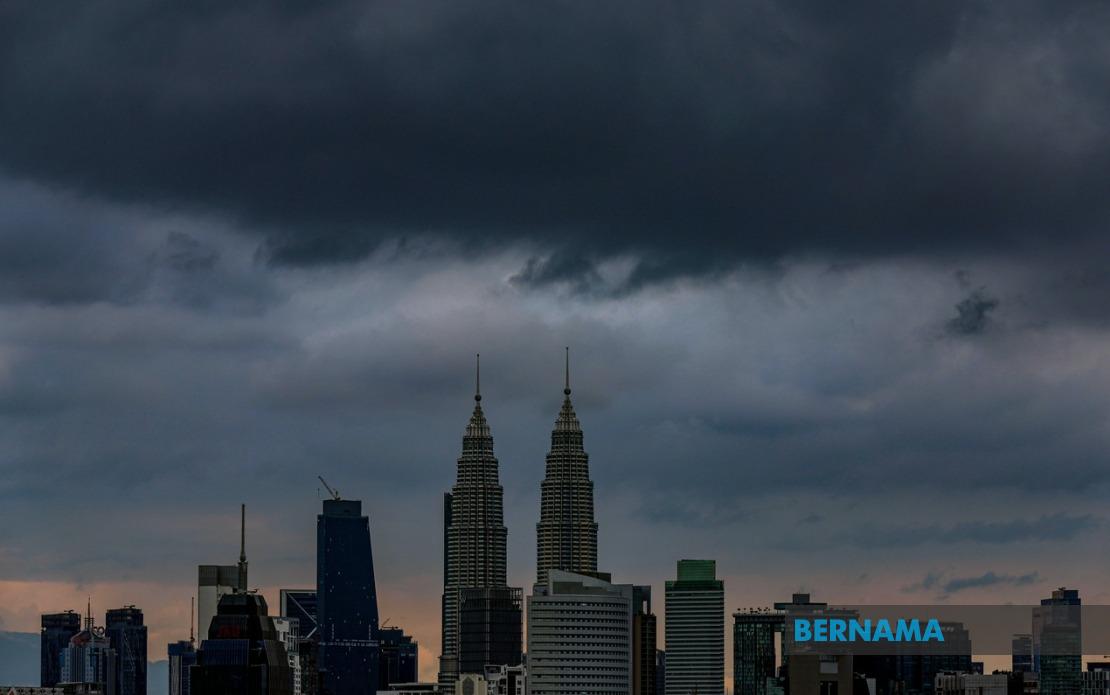
Malaysians across a swathe of the country face hazardous weather conditions as the Meteorological Department issues a sweeping alert covering Kuala Lumpur, Putrajaya and ten states, with severe thunderstorms, torrential downpours and gusty winds expected to persist until 7 pm today. The alert underscores the country's vulnerability to sudden weather disruptions that can trigger flash flooding, transport disruptions and public safety concerns in vulnerable communities.
The impact zone spans multiple regions across Peninsular Malaysia, with the northern states bearing particular exposure. In Perlis, Penang and Kedah, residents should brace for the worst conditions, though Kedah's warning extends only to specific districts including Langkawi, Kubang Pasu, Padang Terap, Kuala Muda and Kulim. Similarly, Perak faces elevated risk concentrated in Hulu Perak, Kuala Kangsar, Manjung, Kinta, Perak Tengah, Kampar and Bagan Datuk, suggesting the weather system is moving in a defined pattern rather than affecting entire states uniformly.
The central and eastern regions of Peninsular Malaysia remain exposed, with warnings encompassing Gua Musang in Kelantan and a broad stretch of Terengganu including Besut, Setiu, Kuala Nerus, Hulu Terengganu and Dungun. Pahang's designated areas—Cameron Highlands, Raub, Bentong and Rompin—require heightened vigilance given their mountainous terrain, which can amplify rainfall intensity and increase landslide risks. These highland regions frequently experience isolated incidents of mudslides during heavy precipitation events, endangering residents and stranding travellers on major routes.
Selangor, which encompasses the capital region and major economic corridors, faces significant exposure through six affected divisions: Hulu Selangor, Gombak, Petaling, Kuala Langat, Hulu Langat and Sepang. The concentration of warnings around Greater Kuala Lumpur hints at the geographic distribution of the storm system, with particular intensity anticipated in suburban and rural pockets rather than the city centre proper. For commuters and businesses across the Klang Valley, this timeline demands careful monitoring as afternoon rush hour could coincide with the worst weather conditions.
The alert extends beyond Peninsular Malaysia to encompass vast areas of Sarawak, reflecting the extent and severity of the weather disturbance. Affected districts include Bau and Kuching in Kuching Division, Serian, Samarahan and Sri Aman, plus Betong and Sarikei. The warning reaches further east into Sibu Division covering Selangau, Mukah and the Kapit Division areas of Song and Kapit, alongside Tatau in Bintulu Division and Subis and Miri in Miri Division. The geographic breadth of Sarawak's alert zone suggests a significant atmospheric system capable of influencing weather patterns across hundreds of kilometres.
Sabah experiences a more concentrated impact, with warnings focused on Interior Division encompassing Keningau and Tambunan, West Coast Division's Ranau, and the Sandakan Division areas of Telupid, Kinabatangan, Beluran and Sandakan. The positioning of these alerts across Sabah's interior and eastern coastal regions reflects the complexity of local weather patterns, where geography and maritime influences create distinct microclimatic zones vulnerable to different weather systems.
Thunderstorms of this magnitude carry multiple hazards beyond the obvious inconvenience of heavy precipitation. Strong accompanying winds can uproot trees, damage structures and create airborne debris, while lightning strikes pose acute risks to outdoor workers and recreational users. Flash flooding in low-lying areas and drainage-prone localities poses the most immediate threat to lives and property, particularly in informal settlements and areas with inadequate storm-water infrastructure. Communities in flood-prone zones should prepare evacuation plans and remain alert to official warnings from their respective state disaster management authorities.
The temporal specificity of the alert—constrained to a seven-hour window until 7 pm—suggests meteorologists expect the system to weaken or relocate as evening progresses. This narrower window, compared to broader all-day warnings, reflects improved forecasting precision from modern radar and satellite technology. However, residents should recognise that such predictions carry inherent uncertainty; conditions can deteriorate faster or persist longer than anticipated, necessitating vigilance beyond the stated timeframe.
For transport networks, this alert poses real operational challenges. Airlines may experience delays or cancellations, while road conditions on major highways—particularly in elevated areas like the North-South Expressway sections crossing Perak and the routes through Pahang—could rapidly become hazardous. Public transport operators should expect congestion as travellers seek shelter or delay departures. Businesses with outdoor operations, construction sites and event organisers must implement contingency measures immediately.
The MetMalaysia alert system remains Malaysia's primary real-time mechanism for communicating severe weather risks to the public. Residents are advised to monitor official channels continuously, particularly those in listed areas, and to implement basic precautions including securing loose outdoor items, avoiding flooded roads and staying indoors during the most intense periods. Authorities across affected states should activate emergency response protocols to ensure rapid deployment of rescue and relief resources should incidents occur.

