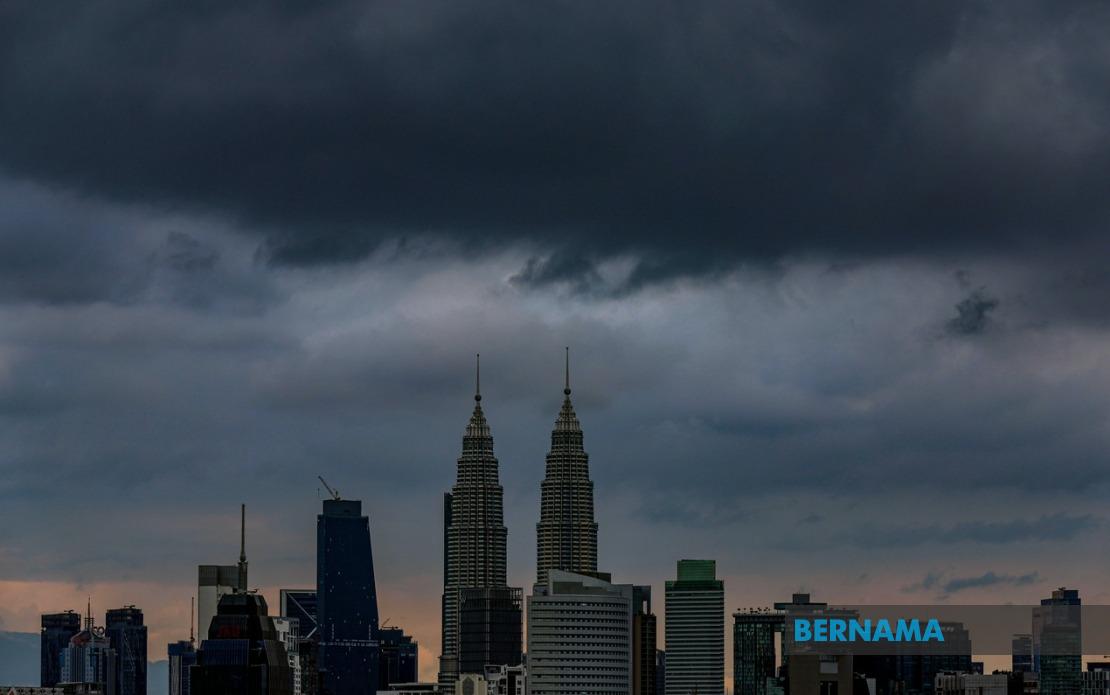
Commuters and residents across a vast swathe of Malaysia face disrupted travel plans and potential flooding risks today, as the Malaysian Meteorological Department has declared widespread weather alerts affecting Kuala Lumpur, Putrajaya and eight additional states through the afternoon. The advisory, issued in the early morning hours, underscores the volatile seasonal conditions gripping the nation as monsoon patterns continue to influence atmospheric stability across the peninsula and both East Malaysian territories.
The alert encompasses a remarkably extensive geographical footprint, stretching from the upper reaches of the east coast to the southern regions and eastern Sabah. Within the Klang Valley, the warnings specifically target Kuala Langat, Hulu Langat, Sepang, Gombak, Petaling and Hulu Selangor in Selangor state, areas that form the commercial and residential heart of Malaysia's most densely populated region. Given the concentration of office buildings, shopping centres and transportation hubs in these districts, the disruption could significantly impact business operations and commuter convenience during the crucial afternoon period.
In the east coast states, the meteorological authority has pinpointed vulnerable localities across three jurisdictions. Kelantan residents in Jeli, Kuala Krai and Gua Musang should exercise caution, whilst Terengganu faces adverse conditions in Besut, Hulu Terengganu, Dungun and Kemaman. Pahang, Malaysia's largest peninsula state, will experience the heaviest exposure, with warnings extending across Cameron Highlands—a tourist destination at elevation—as well as Raub, Bentong, Pekan and Rompin. These diverse topographies, from highland terrain to lowland river basins, present variable flooding scenarios depending on rainfall intensity and local drainage capacity.
The central region is not spared from this meteorological onslaught. Negeri Sembilan has been flagged for three districts including the coastal Port Dickson area, which frequently experiences tidal surge complications during heavy precipitation events. The inclusion of Seremban and Jelebu suggests widespread instability across the state's geography, from administrative centres to rural enclaves. This broad coverage indicates that the weather system is neither localised nor confined to particular terrain types, but rather reflective of a substantial atmospheric disturbance affecting the entire region.
Down south, Johor confronts an unusually extensive warning list encompassing seven districts: Batu Pahat, Kluang, Mersing, Pontian, Kulai, Kota Tinggi and the state capital Johor Bahru. This exceptional coverage spans the state's western frontier near Selangor, its interior agricultural regions, and its eastern coastal stretches facing the South China Sea. The maritime districts of Mersing and Pontian warrant particular attention given their vulnerability to water accumulation and storm surge dynamics during periods of intense convective activity.
Across the South China Sea, Sabah's interior plateau and western lowlands face comparable threats. The alerts encompass four interior districts—Sipitang, Kuala Penyu, Beaufort and Tambunan—alongside the west coast trio of Papar, Penampang and Ranau. Kudat division, encompassing Kota Marudu, rounds out Sabah's affected areas. This pattern suggests a system of sufficient magnitude to influence weather across the entire state, a notable phenomenon that often accompanies the region's periodic weather shifts.
Sarawak, Malaysia's largest state by area, has similarly been placed under advisory status across nine distinct zones. The warnings cover Kuching and its surrounding districts of Serian and Samarahan, which collectively house over half the state's population. The alerts extend further inland to Sri Aman, the Betong division encompassing both Pusa and Betong towns, Kapit's sprawling interior jurisdiction covering Song, Kapit and Bukit Mabong, and the northern Limbang district. The geographical dispersion indicates that the atmospheric instability is continent-wide rather than isolated to particular regions.
Thunderstorms of this predicted magnitude pose multifaceted hazards for Malaysian communities. Beyond the immediate nuisance of reduced visibility and rainfall-induced congestion, heavy downpours within condensed timeframes create flash flood risks, particularly in low-lying urban areas with limited drainage infrastructure and in rural localities adjacent to river systems. Strong wind gusts accompanying such systems can destabilise weakly-anchored structures, damage overhead utilities and pose aviation safety concerns. The four-hour window until 4 pm means that the most intense activity will likely coincide with peak afternoon economic and transport activity.
Residents and commuters across these regions would be prudent to monitor subsequent updates from MetMalaysia, as weather forecasts can be refined as systems develop. Drivers should exercise heightened caution on highways where aquaplaning risks escalate dramatically during downpours, whilst business establishments and schools may need to adjust schedules or implement contingency procedures. The widespread nature of this alert, touching nearly every significant population centre in Malaysia, underscores the scale and severity that meteorological authorities perceive from the approaching system. Authorities in affected states and federal territories have likely commenced preparedness protocols to manage potential disruptions to essential services and public safety.

