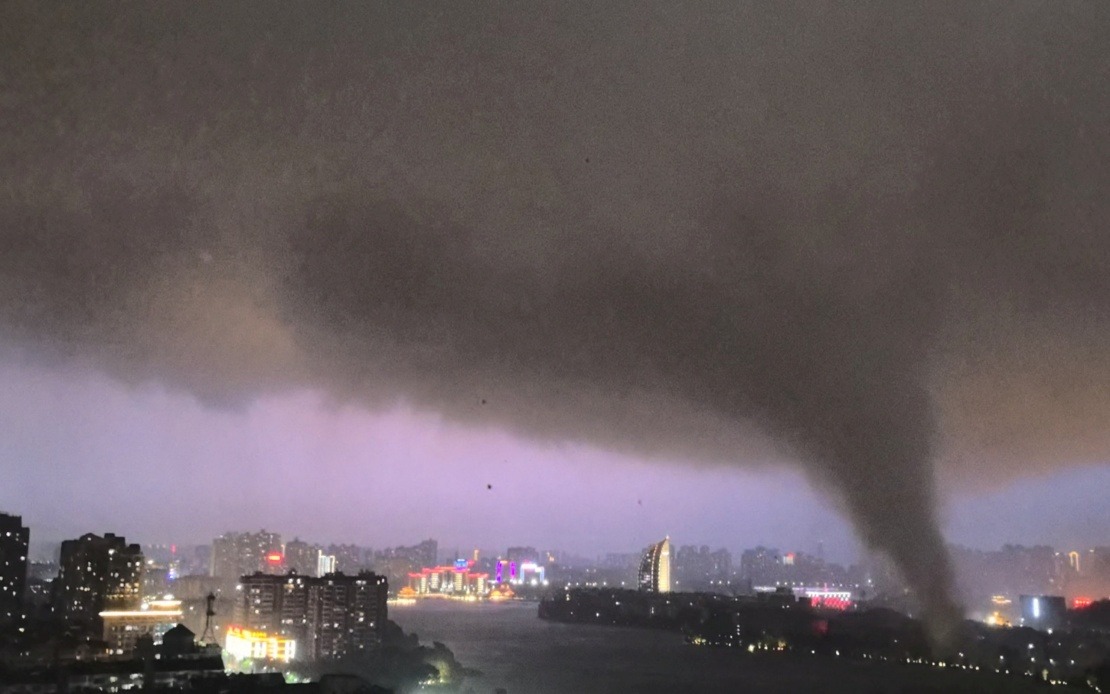
A deadly bout of severe weather swept across eastern portions of Hubei Province in central China on Monday night, leaving a trail of destruction and claiming at least eleven lives while leaving another person unaccounted for. The tempestuous conditions struck between 7 pm and 11 pm, affecting four major urban centres in the region simultaneously: Huangshi, Huanggang, Ezhou, and Xianning. The ferocity of the storm system proved substantial enough that two townships experienced winds classified at level 13 on the gale scale, indicating speeds capable of causing widespread structural damage.
Provincial authorities have confirmed that the disaster also spawned tornadoes in certain localities, adding another layer of destruction to an already catastrophic event. The combination of rotational winds and straight-line gales created multiple hazards for residents caught in the path of the convective system. This meteorological phenomenon, known as severe convective weather, emerges when atmospheric conditions become unstable, leading to the rapid development of powerful thunderstorms that can produce damaging winds, large hail, and rotating columns of air.
The material impact of Monday's storms has proven considerable. Preliminary assessments indicate that twenty-two buildings were completely razed or structurally compromised beyond immediate repair, while a further 4,855 structures sustained varying degrees of damage ranging from minor roof and window damage to more serious compromises of structural integrity. Beyond property loss, the human toll extends beyond fatalities, as 331 residents sought medical attention for injuries sustained during the weather event, placing significant demand on local healthcare facilities.
The geographical spread of the disaster across four distinct municipalities highlights the scale and intensity of the weather system that traversed the region. Hubei Province, located in the Yangtze River valley, experiences seasonal severe weather patterns, but this particular event appears to have been exceptionally severe based on the casualty and damage figures. The timing of the storms during evening hours also increased vulnerability, as residents may have had less warning and limited visibility to seek shelter from approaching hazards.
For Malaysian and Southeast Asian observers, this event underscores the destructive potential of extreme convective weather systems that regularly impact East and Central Asia during seasonal monsoon transitions. Such phenomena can develop rapidly with limited warning time, presenting significant challenges to emergency management systems even in developed regions with advanced meteorological infrastructure. The injuries to over three hundred people demonstrate how weather-related disasters affect not only direct impacts but also strain medical and emergency response capabilities.
Response mechanisms were mobilised promptly following the disaster's onset. Hubei Province authorities launched comprehensive rescue and relief operations coordinated across multiple administrative jurisdictions, recognising the need for rapid response to address both immediate life-saving priorities and longer-term recovery needs. This coordinated approach reflects established protocols for managing multi-city emergencies in densely populated regions.
A critical focus of ongoing operations centres on preventing secondary disasters—a concern commonly associated with severe weather events in populated areas. When buildings are damaged or partially destroyed, subsequent collapses can occur from aftershocks or further weather events. Additionally, downed electrical lines pose electrocution risks, damaged gas infrastructure creates explosion hazards, and debris fields obstruct access routes needed for emergency vehicles. Water contamination from damaged infrastructure and flooding represent additional public health threats that authorities must address in the immediate aftermath.
The incident illustrates vulnerabilities that persist despite technological advances in weather prediction and emergency management. While modern forecasting systems provide several hours' notice of severe weather development, the precise location and intensity of damaging phenomena remain challenging to predict with perfect accuracy. For regions like Southeast Asia, where comparable meteorological systems develop during monsoon seasons and transitional periods, the Hubei experience provides important lessons about preparedness and response coordination.
Investigations into the precise meteorological conditions that spawned this severe convective system will likely receive attention from Chinese meteorological authorities, potentially revealing insights into warning protocols and their effectiveness. Understanding why certain storms produce tornadoes while others do not, and predicting gale intensity more accurately, remains an active area of atmospheric research with direct applications for emergency management across the region.
The recovery phase ahead will involve not only rebuilding damaged structures but also assisting displaced residents and supporting trauma counselling services for survivors. Hubei Province's provincial authorities face the dual challenge of documenting losses for insurance and disaster relief purposes while simultaneously restoring essential services to affected communities. The incident reinforces that even in moderately developed provinces, severe weather can overwhelm local resources, necessitating provincial and potentially national coordination of relief efforts.

