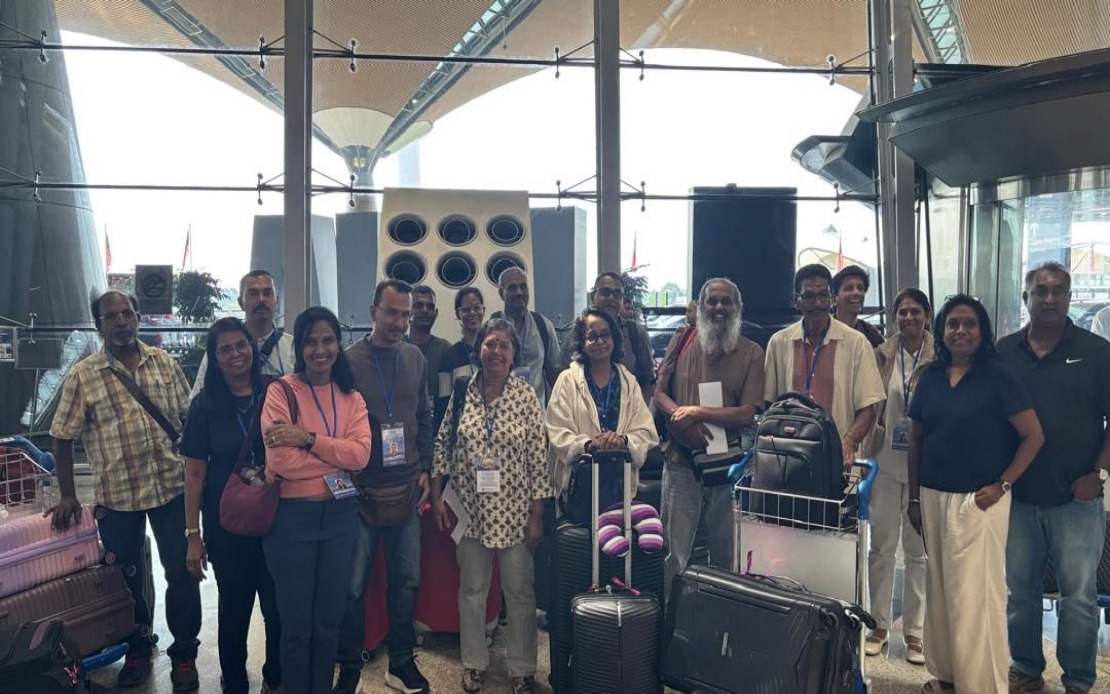
Seventeen Malaysians on a religious pilgrimage to Mount Kailash in Tibet have vanished from contact after destructive flash floods ravaged the Nepal-Tibet frontier, prompting urgent intervention from the Malaysian government and deep anxiety among waiting families back home. The group, which had arrived in Nepal on August 23 under the arrangement of Fishtail Tours & Travels, a Nepal-based travel company, lost all communication shortly after 8 am Nepal time on August 26 when positioned approximately two kilometres from the Nepal-Tibet Immigration Checkpoint. The family of R. Logadashini revealed that her elderly parents S. Raman, aged 59, and M. Neelavany, aged 54, alongside uncle S. Murukan, aged 60, and aunt G. Padmahwathi, aged 58, were all part of the missing contingent. Their final message came through WhatsApp at 8.40 am Malaysian time, after which an information blackout descended.
The incident has exposed the vulnerability of the popular overland pilgrimage route that crosses one of Asia's most unforgiving and geographically volatile borders. The pathway linking Nepal and the Tibet Autonomous Region serves as a crucial lifeline for devout Malaysians and other nationalities seeking to undertake the sacred pilgrimage around Mount Kailash, a site of immense religious significance for Hindu, Buddhist, and Muslim traditions. Additionally, the same corridor provides access for mountaineering expeditions headed toward Mount Everest and other trekking ventures in the high Himalayan ranges. The sudden unleashing of nature's fury along this strategic corridor underscores how rapidly circumstances can transform in remote, high-altitude terrain where infrastructure remains rudimentary and meteorological conditions can shift without warning.
Weather conditions deteriorated catastrophically across Nepal's Rasuwa and Nuwakot districts following torrential downpours and the sudden collapse of a glacier, unleashing enormous volumes of water and debris through valleys and settlements. The natural disaster promptly severed principal highway connections between the impacted zones and Kathmandu, the capital city, thereby fragmenting supply chains and isolating rescue personnel from those requiring immediate assistance. Communications infrastructure across the region suffered widespread damage, rendering cellular networks and internet connectivity unreliable or non-functional in many localities. Rescue operations have consequently faced substantial logistical impediments, with teams struggling to navigate damaged terrain and coordinate response efforts across fragmented communication channels.
Wisma Putra, Malaysia's Ministry of Foreign Affairs, disclosed that approximately 55 Malaysians registered with the Malaysian Embassy in Kathmandu have been reported as currently unreachable, though the ministry stressed that no formal confirmation of Malaysian casualties has yet been received. The embassy itself is maintaining constant liaison with Nepalese government authorities, operational search and rescue units, the travel agencies coordinating the pilgrimage groups, and all other stakeholder organisations deemed relevant to the crisis response. Prime Minister Datuk Seri Anwar Ibrahim has issued direct instructions to all pertinent government departments to prioritise the location and establishment of contact with Malaysians affected by the flooding, elevating the incident to the highest levels of governmental concern. The Malaysian diplomatic missions stationed in Kathmandu and New Delhi have been activated to lend their institutional resources and diplomatic weight to recovery operations.
The situation remains fluid and information-scarce, reflecting the challenging conditions that prevail in the disaster zone. Families of those missing have expressed considerable apprehension regarding the fate of their relatives, with many attempting unsuccessfully to reach both the tour operator and embassy officials for clarification. The protracted communication failure has amplified uncertainty and anxiety across Malaysian communities, particularly among extended family networks of the missing pilgrims. The case demonstrates how contemporary globalisation has woven Malaysian society into complex international travel ecosystems, where citizens undertaking religious journeys abroad become exposed to natural hazards and geographical volatility in regions far removed from home support systems.
Contrastingly, encouraging news emerged regarding a separate cohort of Malaysian pilgrims whose safety could be verified. Datuk N. Mohanadas, a legendary Malaysian mountaineer renowned for his summit of Mount Everest, was leading an expedition comprising 56 individuals—including 39 Malaysians alongside four Singaporeans and three Canadians—when the floods occurred. Mohanadas reported that his group maintained its security, having been positioned away from the disaster zone, and has continued advancing safely toward Mount Kailash. The expedition confirmed awareness of the calamity unfolding at the border, including documentation of the torrential rainfall, resulting flash floods, and reports of fatalities, yet emphasised that their particular route and geographical position remained unaffected by the deluge. The group proceeded with commencing the initial segment of a three-day circumambulation ritual around Mount Kailash, one of Hinduism's holiest sites.
The contrasting outcomes between the two pilgrim groups underscores the unpredictable nature of mountain travel and the critical importance of geographical positioning when natural disasters strike remote regions. The fortunate safety of Mohanadas's expedition, despite operating in the same general region, suggests that the flash floods concentrated their destructive force within specific valleys and drainage basins, rather than spreading uniformly across the entire frontier zone. This geographic specificity, however, provides little consolation to families of the missing pilgrims, as it emphasises how proximity to the wrong location during a natural catastrophe can determine survival or disappearance. The incident raises pressing questions about risk assessment protocols for pilgrimage organisers, the adequacy of emergency communication systems in remote border areas, and the extent to which Malaysian citizens receive sufficient pre-departure briefing regarding environmental hazards inherent in high-altitude Himalayan travel.
The Malaysian government's swift mobilisation of diplomatic and administrative resources reflects the seriousness with which authorities regard the situation. The involvement of Prime Minister Anwar Ibrahim at the directing level indicates that the case has assumed national importance, signalling to families and the broader public that governmental institutions are treating the matter with appropriate urgency and prioritisation. Nevertheless, the practical obstacles confronting rescue and recovery operations—damaged infrastructure, communications breakdown, and geographical remoteness—mean that definitive information may take considerable time to emerge. The coordination between Malaysian diplomatic missions, Nepalese authorities, and international rescue organisations represents a complex logistical undertaking that must overcome substantial physical and institutional barriers.
The incident also carries implications extending beyond the immediate humanitarian crisis to encompass broader questions about adventure tourism, pilgrimage travel, and religious expression in an era of climate-related environmental volatility. The Hindu, Buddhist, and Islamic communities in Malaysia maintain centuries-old traditions of journeying to Mount Kailash, and such expeditions attract thousands of devotees annually. As climate patterns exhibit increasing instability and extreme weather events become more frequent, the safety profile of such journeys may undergo reassessment. Insurance providers, travel operators, and religious institutions may need to implement enhanced risk mitigation strategies, including improved communication technologies, more frequent safety updates, and potentially revised routing decisions that avoid the most dangerous seasons or pathways.

