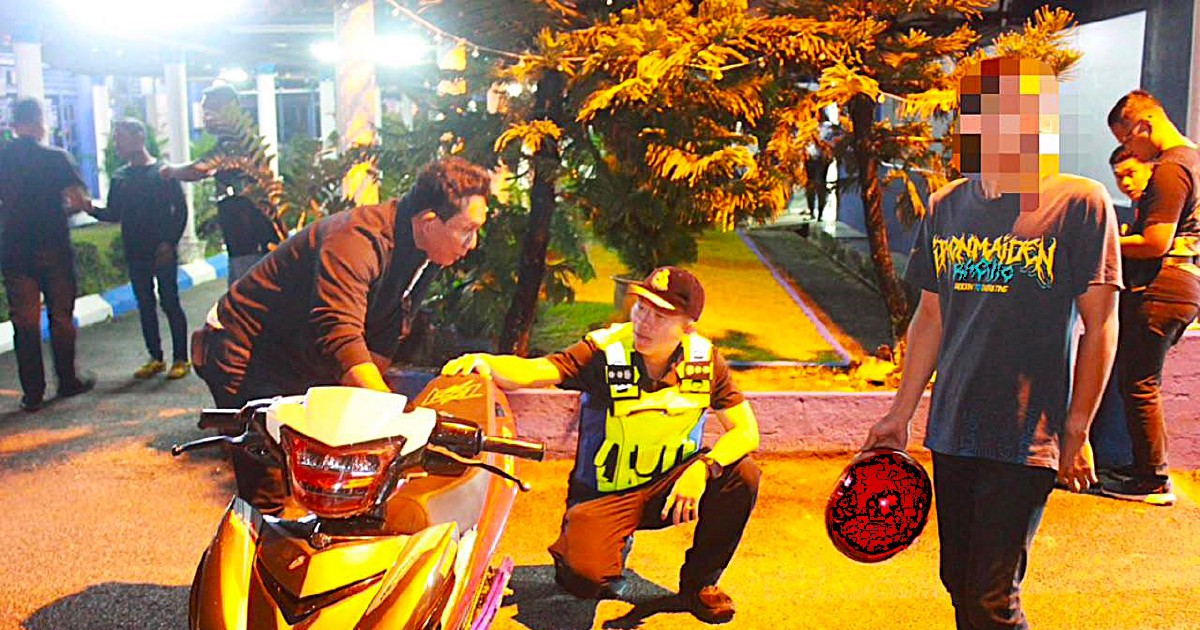
Police in Klang have escalated enforcement efforts against illegal street racing, seizing seven motorcycles and opening a formal investigation against one rider for dangerous and reckless driving during a targeted crackdown operation conducted in the early hours of this morning.
The operation underscores growing concerns among law enforcement agencies across the Klang Valley about organised motorcycle racing on public roads, a phenomenon that has intensified in recent years despite repeated warnings and penalties. Street racing activities, which typically occur during late-night and early-morning hours when traffic volume is lower, pose significant risks not only to participants but also to other road users, pedestrians, and properties in affected areas.
The confiscation of motorcycles represents one of the more severe deterrents available to authorities under Malaysia's road traffic regulations. Beyond immediate seizure, riders found engaging in street racing face multiple layers of legal consequences, including substantial fines, license suspension, and potential imprisonment depending on the severity of the offence and whether injury or property damage resulted from their actions.
The Klang district, which encompasses major urban centres and commercial hubs within the Selangor state territory, has historically been a hotspot for such illegal activities. The geographic proximity to Kuala Lumpur, coupled with the availability of relatively straight and wide roads in certain areas, has made the region attractive to street racing enthusiasts seeking venues for their illicit activities.
Police operations of this nature typically involve coordinated efforts across multiple departments, including traffic enforcement units, community policing teams, and sometimes even special operations squads. The timing of such operations—deliberately scheduled for early morning hours—reflects strategic planning to intercept riders when activity is typically concentrated and enforcement presence can be maximised with available personnel.
For motorcyclists who are not engaged in illegal activities, such crackdowns present both positive and negative dimensions. While legitimate riders generally welcome enhanced enforcement against law-breaking peers, increased police presence on roads can occasionally create complications for regular commuters and enthusiasts travelling during off-peak hours. The challenge for authorities lies in calibrating enforcement intensity to target genuine offenders while minimising inconvenience to compliant road users.
The investigation opened against the individual rider suggests that officers gathered sufficient evidence of traffic violations to proceed with formal charges. Malaysian traffic laws provide varying degrees of penalties depending on whether the conduct is classified as dangerous driving under Section 42 of the Road Transport Act 1987 or reckless driving under related provisions, with aggravating factors potentially elevating charges to more serious categories.
Community safety initiatives have become increasingly important in addressing street racing, as traditional enforcement alone has proven insufficient to eliminate the problem entirely. Several states and municipalities have experimented with awareness campaigns, youth engagement programmes, and legitimate racing venues designed to channel the enthusiasm of motorcycle enthusiasts into sanctioned activities with proper safety protocols and insurance coverage.
The seizure of motorcycles also serves an economic deterrent function, as impounded vehicles incur storage fees and owners must navigate administrative processes to potentially recover their machines. In cases where motorcycles are used as primary transportation, the loss creates genuine hardship that can discourage repeat offences, though critics argue this approach may unfairly penalise lower-income riders who view their bikes as essential transport rather than recreational toys.
Malaysia's approach to street racing enforcement has evolved considerably over the past decade, with police departments receiving enhanced training in traffic management and investigation techniques. The focus has shifted somewhat from reactive responses to illegal activities toward more proactive community policing models that emphasise prevention and education alongside enforcement.
Looking forward, the sustainability of such operations depends significantly on resource allocation and political commitment to road safety initiatives. Many enforcement personnel argue that tackling street racing requires sustained, consistent pressure rather than sporadic crackdowns, as motorcycle racing communities can simply migrate to alternative locations when enforcement increases in specific areas.
For residents of Klang and surrounding districts, these enforcement actions represent official acknowledgement of their complaints about noise disturbances and safety risks associated with street racing. Public support for such operations typically remains strong, though effectiveness ultimately hinges on whether consequences are perceived as sufficiently severe to deter participation in illegal activities.

