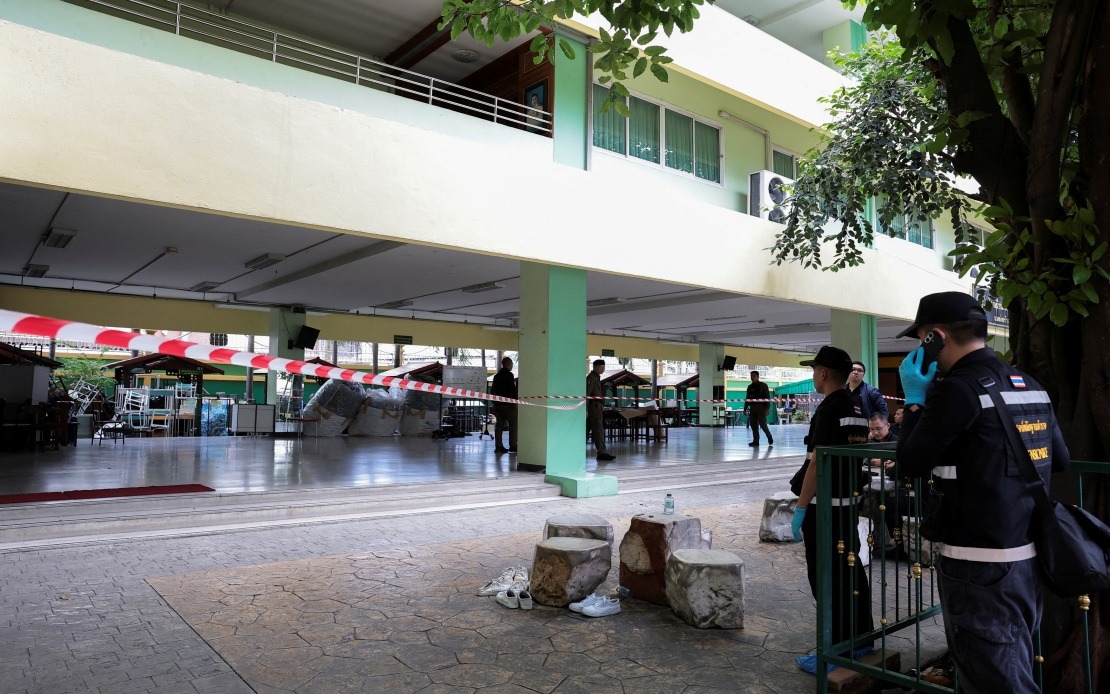
The shooting unfolded at Debsirin Nonthaburi School in Bang Kruai district on Friday morning around 10 am, leaving a community devastated and reigniting concerns about gun violence in Southeast Asia. Among those killed were three teachers and three students, alongside the shooter himself, according to Royal Thai Police deputy inspector-general Lieutenant General Trairong Piwpan. Another 15 people sustained injuries in the attack, with two requiring intensive care treatment at local hospitals.
Thailand's security apparatus moved swiftly to manage the immediate aftermath. Teachers and students were evacuated to nearby Chanrat Wittaya School as a precautionary measure, while authorities contacted parents and guardians to arrange collection of their children. The national police chief issued urgent orders for the Police General Hospital to deploy psychologists to the scene, recognising the severe psychological trauma inflicted on survivors and witnesses by such a violent event. The response reflected growing institutional awareness of mental health consequences following mass casualty incidents.
Investigations quickly established that the student perpetrator had used a 9mm handgun with 34 rounds of ammunition, establishing a clear forensic picture of the weapon's capacity and lethality. Police discovered that the firearm did not belong to the shooter himself but rather to his grandfather, raising immediate questions about weapon storage protocols and family oversight. This detail underscores persistent vulnerabilities in household gun security across Thailand, despite existing legal frameworks intended to restrict civilian firearms access.
Prime Minister Anutin Charnvirakul, who concurrently holds the interior ministry portfolio, travelled to the scene and expressed profound dismay at the tragedy. His statement—"It's terrible, what has happened"—conveyed emotional acknowledgment while also serving a political function. Anutin extended formal condolences to the families of victims and directed all relevant agencies to prioritise assistance to the injured and support services to affected communities.
More significantly, Anutin used the tragedy to underscore the government's broader gun control stance. He explicitly connected the shooting to Thailand's policy decision not to renew permits authorising civilians to carry or possess firearms. This rhetorical pivot transformed a immediate crisis response into policy validation, suggesting that stricter gun regulation represents a legitimate governmental response to recurring mass violence. The position reflects international trends toward tighter firearms oversight following school shooting incidents, though implementation varies dramatically across nations.
The Nonthaburi incident represents part of a troubling pattern in Thailand. Just six months earlier, in February, an 18-year-old gunman opened fire at a school in Hat Yai, located in Songkhla province in the southern region. That attacker killed the school director and wounded multiple others before law enforcement apprehended him. The recurrence within such a compressed timeframe suggests systemic vulnerabilities rather than isolated incidents, raising alarms among education officials, parents, and policymakers throughout the region.
For Malaysian observers, the incident carries particular relevance given geographic proximity and shared concerns about school safety across Southeast Asia. Thailand's experiences provide cautionary examples of how permissive firearms regulations can enable individuals—particularly young people experiencing psychological distress—to access deadly weapons. While Malaysia maintains different legal structures governing civilian gun ownership, cross-border security dynamics and the potential for contagion effects through social media exposure mean Thai incidents inevitably influence regional threat assessments.
The shooter's status as a student at Debsirin Nonthaburi raises complex questions about peer awareness, mental health support systems within educational institutions, and early intervention protocols. Schools across Southeast Asia increasingly face pressure to identify troubled students before crisis escalates into violence, yet balancing such surveillance with student privacy and psychological support remains deeply challenging. Thailand's experience highlights gaps in this critical infrastructure.
Gun violence in schools represents a distinct category of mass casualty terrorism that resonates globally. The perpetrator's suicide at the scene mirrors patterns observed in mass shooting incidents across different continents, suggesting psychological and behavioural commonalities transcending geographic and cultural boundaries. Understanding these dynamics becomes essential for prevention strategies.
Thailand's government response—combining immediate victim assistance with policy reinforcement—demonstrates how tragic incidents can accelerate or validate existing policy trajectories. Whether tighter gun controls will meaningfully reduce future incidents depends on consistent enforcement, social attitudes toward compliance, and addressing underlying factors driving young people toward lethal violence. The psychological dimension cannot be overlooked; deploying counsellors alongside police investigators represents implicit recognition that trauma transcends immediate physical injury.
Regional policymakers and education administrators will inevitably scrutinise Thailand's circumstances and response mechanisms. The incident underscores that even middle-income nations with functioning security apparatus and legal frameworks can experience mass shooting incidents. Prevention therefore requires sustained, multifaceted approaches encompassing firearm regulation, mental health support, school security protocols, and community monitoring systems working in coordinated fashion rather than isolation.

