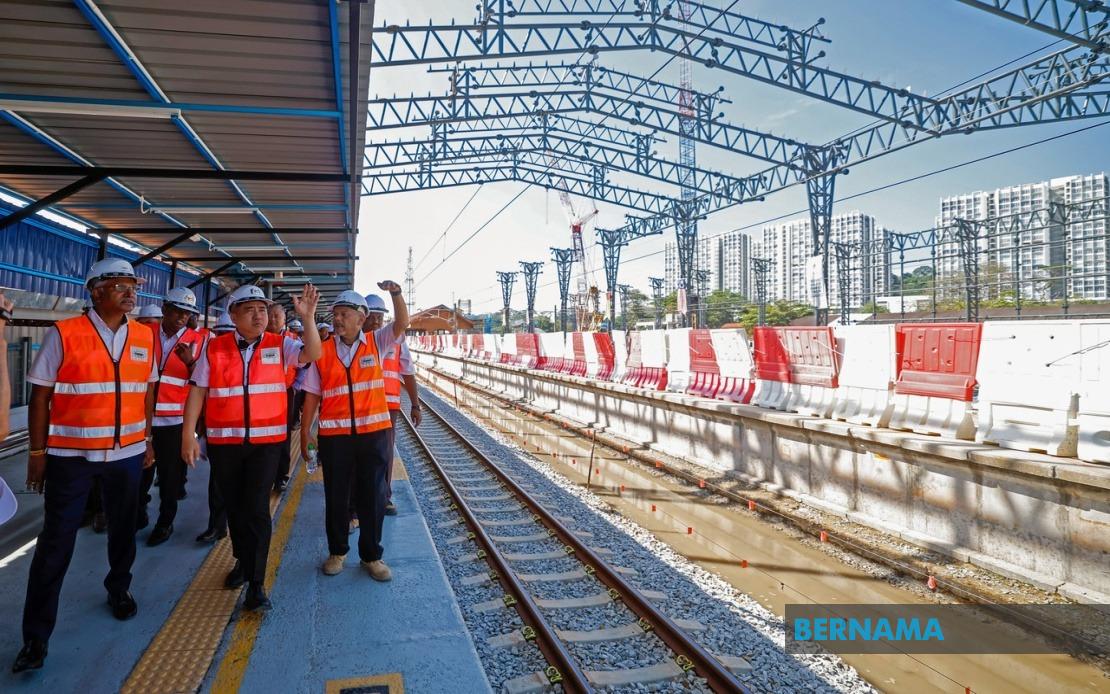
Seremban's new flagship railway station is moving into its acceleration phase after completing the foundational work that had initially slowed progress. Transport Minister Anthony Loke announced during a site inspection this week that the integrated transport hub has reached 35 per cent completion, with an expected opening in March 2027. The RM100 million project represents a significant investment in modernising transport infrastructure in Negeri Sembilan's capital city.
Loke attributed the earlier leisurely pace to the complexity of preliminary engineering work that is now largely behind the project. The most labour-intensive and technically demanding phases—deep piling operations and the relocation of underground utilities including cables and wiring—have been substantially resolved. This clearance removes a major bottleneck, allowing contractors to shift focus to more visible construction phases that typically advance faster and more predictably. The distinction matters for residents monitoring progress and for the broader transport sector assessing delivery timelines for similar megaprojects.
With foundational challenges mostly overcome, the construction schedule is expected to accelerate significantly. Coming phases will concentrate on structural elements including roof installation, the glass facade systems, and interior finishing work. These components, while still technically demanding, follow more standardised procedures than underground preparation work and should progress at a noticeably quicker tempo. The Transport Ministry's confidence in the March 2027 timeline reflects this realistic assessment of remaining work rather than mere optimism.
The new station will seamlessly integrate with Seremban's heritage railway facility, which has stood for over a century. Rather than replacing this historic structure, the project creates a modern transport complex that preserves and enhances the original station while adding contemporary capacity alongside it. This approach respects architectural heritage while meeting 21st-century passenger demands—a balancing act increasingly important as Malaysian cities modernise. The design incorporates Minangkabau-inspired architectural elements, grounding the modern facility within the state's cultural identity.
The facility will incorporate green building principles, reflecting Malaysia's broader sustainability agenda. Additional commercial spaces within the station will diversify revenue streams while creating a vibrant, mixed-use environment that encourages transit-oriented development. This commercial integration transforms the station from a purely functional transport node into a destination in its own right, potentially attracting visitors for dining, retail, or entertainment beyond their transit needs.
Capacity planning built into the design demonstrates forward-thinking infrastructure development. The station will initially accommodate 30,000 passengers daily, with structural provisions allowing expansion to 120,000 daily passengers as demand warrants. This staged approach to capacity—planning for six platforms while constructing three initially—aligns infrastructure investment with actual passenger growth rather than building unused excess from the outset. The design philosophy anticipates Seremban's transport needs for the next three to five decades, a planning horizon increasingly rare in Southeast Asian urban development.
Operational efficiency features address longstanding congestion issues in the city. The station provides two separate entrance and exit points—one fronting Jalan Tunku Antah and another serving the rear—supplemented by dedicated drop-off zones. This dual-entrance strategy distributes passenger flows and vehicular traffic, reducing the bottleneck congestion that plagues single-access transport facilities. The layout recognises that modern stations must function as full transport ecosystems managing not only rail passengers but also taxi, ride-hailing, and private vehicle circulation.
Service frequency improvements will follow infrastructure completion. Once the station opens and associated double-track upgrades on the Klang Valley route finish, the Transport Ministry plans to increase service frequency for Komuter and ETS trains. Enhanced frequency transforms rail from a convenience option into a genuinely competitive alternative to private vehicles for commuters. This traffic management impact extends beyond Seremban itself, potentially reducing congestion across the broader Klang Valley corridor as passengers choose rail over road transport.
The heritage Seremban KTMB Station has already undergone full renovation, completed last month. Conservation work modernised electrical and wiring systems while preserving the building's structural and aesthetic integrity. The heritage preservation effort ensures the historic station remains safe and fully functional, validating the integrated development approach. This dual-station model—heritage building plus modern facility—creates layered infrastructure that serves multiple community functions simultaneously.
Flood resilience improvements address critical vulnerabilities that previously disrupted operations. A new dedicated sewerage system will direct stormwater directly into Sungai Temiang, bypassing the station precinct entirely. This engineering solution prevents the platform and track areas from flooding during heavy rainfall, a persistent problem that historically disrupted service. For a region increasingly vulnerable to extreme weather events, such drainage improvements represent essential adaptation infrastructure alongside new capacity.
The Klang Valley Double Track Phase 2 project continues advancing at 55.8 per cent completion, underpinning the broader railway modernisation initiative. Current reductions in afternoon Komuter service frequency reflect deliberate operational management to accelerate construction following temporary closure of one track. This trade-off—accepting shorter-term service constraints to achieve faster long-term infrastructure gains—exemplifies the difficult balancing act transport authorities must navigate when modernising systems that millions depend on daily.
Seremban Sentral represents part of Malaysia's systematic approach to transit-oriented development, anchoring urban growth around high-capacity rail infrastructure. The project will catalyse the broader Seremban Sentral transit-oriented development megaproject behind the station, creating integrated residential, commercial, and office spaces serving rail passengers. This concentration of activities around transport nodes represents best-practice urban planning for managing growth while controlling sprawl and congestion.

