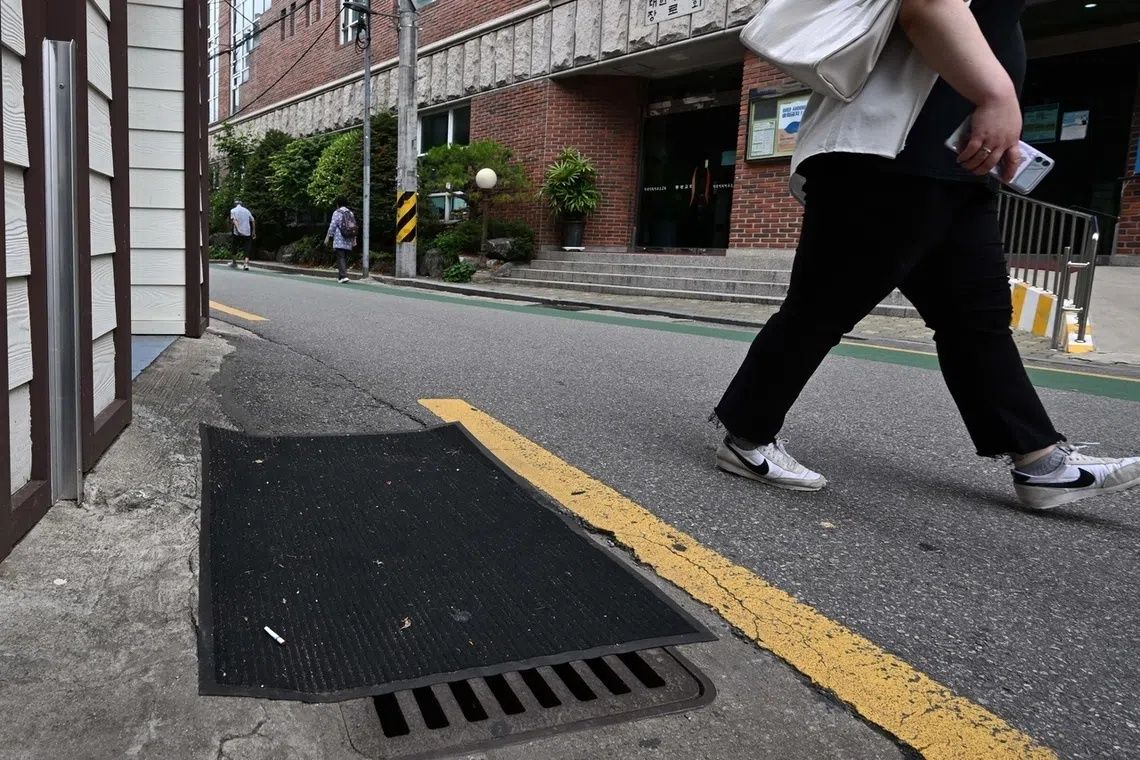
Pedestrians in Seoul frequently encounter an unpleasant sulphurous stench that materialises without warning along busy pavements and at crowded transit stops, then vanishes within moments. Yet the ephemeral nature of these odour episodes belies a persistent urban problem that has frustrated residents and visitors alike. Posts documenting sudden bursts of foul-smelling air appear regularly across both Korean and international online forums, suggesting the issue remains far from resolved despite official assurances. The Seoul Institute's 2025 report quantifies the scale of public dissatisfaction, revealing that sewer-related complaints constitute approximately half of all civil grievances regarding air quality in the city, a finding that underscores how central this issue has become to residents' daily experience of the capital.
The chemical culprit behind Seoul's notorious odour problem is hydrogen sulfide, a gas that produces a distinctly rotten-egg-like smell when organic matter in sewage undergoes decomposition in oxygen-starved conditions. The city's infrastructure struggles reflect decades of rapid urbanisation that outpaced the capacity of waste management systems to cope. As buildings proliferated throughout Seoul, many property owners installed septic tanks as temporary solutions pending full integration into the municipal sewer network. While these tanks effectively remove solid waste, they leave dissolved organic compounds suspended in wastewater that subsequently flows into underground pipes, where stagnant conditions promote the very chemical reactions that generate hydrogen sulfide and other malodorous gases. This cascading system of interim and permanent infrastructure creates a perfect storm for odour generation, particularly when environmental conditions conspire against efficient sewage movement.
Weather patterns significantly influence how severely Seoul residents experience sewer odours on any given day. Heavy rainfall increases water flow through the sewer system, effectively flushing accumulated gases and preventing hydrogen sulfide from building up to problematic concentrations. By contrast, the hot, dry periods common during Korean summers create ideal conditions for gas accumulation. When rainfall diminishes and wastewater flow decreases, hydrogen sulfide becomes trapped within the underground network, gradually building pressure until it escapes through accessible openings including storm drains, maintenance access points, and poorly sealed connections. This seasonal volatility means that odour complaints spike predictably during specific periods, creating cycles of public frustration that coincide with changing weather patterns. The inability to provide consistent solutions across seasons reflects fundamental shortcomings in Seoul's approach to the problem.
City officials acknowledge that the issue stems from complex, interconnected causes requiring careful diagnosis rather than blanket remedies. High-level drops in wastewater flow within individual pipe segments contribute significantly to stagnation and subsequent gas generation, whilst accumulated sediment deposited over decades reduces effective pipe diameter and exacerbates flow problems. Seoul's administration is exploring structural modifications to sewer layouts and systematic dredging operations to remove built-up deposits, yet these interventions remain piecemeal rather than comprehensive. The more fundamental architectural problem lies in Seoul's combined sewer system, whereby wastewater from residential and commercial buildings flows through identical underground conduits as stormwater runoff from streets and pavements. This unified approach, which was logical during Seoul's initial modernisation, now creates inherent inefficiencies that specialists have recognised since the early 1990s as requiring separation into distinct systems.
The transition from combined to separate sewer systems represents the most substantial long-term solution available, yet progress remains glacially slow due to the enormous financial and logistical demands of replacing subterranean infrastructure across a dense metropolitan area. As of 2025, merely 20.4 per cent of Seoul's total sewer network had completed conversion to a separate system, a statistic that reveals the vast undertaking still remaining. The cost of excavating, replacing, and reconnecting underground pipes throughout the city runs to astronomical figures, straining municipal budgets and disrupting street-level commerce and transport. Korean policymakers have wrestled with this reality for more than three decades, recognising the necessity whilst deferring implementation due to practical constraints. Meanwhile, the incomplete transition creates a patchwork of old and new infrastructure that functions inconsistently across different districts, meaning some areas experience worse odour problems than others depending on local sewer system configuration.
Legal frameworks governing odour management have further constrained Seoul's ability to address the problem proactively. Current regulations primarily focus on managing odours that exceed established legal thresholds rather than requiring municipalities to prevent sewer smells preemptively. This reactive posture means that government intervention typically occurs only after numerous residents lodge formal complaints, by which time the problem has already affected public spaces and damaged quality of life. Experts argue that a global city of Seoul's status and resources should adopt a more aggressive stance, implementing preventive measures before problems manifest rather than waiting for evidence of public dissatisfaction. The philosophical shift from complaint-driven management to anticipatory environmental stewardship would signal genuine commitment to solving the problem comprehensively.
Recent history demonstrates both the potential and limitations of Seoul's current approach. Sewer odour complaints declined substantially from 3,095 in 2015 to 1,660 in 2020, a 46 per cent reduction that demonstrated genuine progress following the city's launch of odour reduction initiatives. These improvements resulted primarily from installing specialised odour-control devices at large septic tank facilities across the city. Yet this encouraging trajectory reversed dramatically, with complaints rising to 2,302 in 2024, indicating that incremental measures provide only temporary relief rather than durable solutions. The rebound suggests that the underlying structural problems remain unaddressed, and that without fundamental infrastructure transformation, recurring waves of complaints will continue plaguing the city indefinitely. This cyclical pattern has bred scepticism amongst residents about the sincerity and efficacy of official remediation efforts.
Researchers at the Seoul Institute have identified a critical blind spot in the city's analytical capacity regarding odour problems. Korea currently lacks predictive models capable of simulating how sewer-generated gases disperse through above-ground air, limiting the ability to identify specific urban locations most vulnerable to odour episodes. Without such mapping and analytical frameworks, responses remain generalised and poorly targeted. Efforts to create sewer odour maps have commenced, yet these initiatives remain disconnected from concrete performance metrics or standardised evaluation criteria for odour reduction facilities. The absence of quantifiable targets and accountability mechanisms means that completed projects cannot be rigorously assessed for effectiveness, perpetuating the current complaint-driven cycle. Developing these foundational analytical tools would enable Seoul to move beyond intuitive problem-solving toward evidence-based interventions guided by systematic data.
Engineering specialists have proposed alternative approaches that sidestep the massive expense of replacing existing sewer infrastructure. Park Seok-soon, an environmental engineering professor emeritus at Ewha Womans University, advocates for artificial water circulation through sewer pipes to prevent stagnation and the decomposition processes that generate hydrogen sulfide. By introducing water from fire hydrants or other municipal sources into key segments of the sewer network, circulation could be maintained during dry periods when natural flow diminishes. This approach mimics practices in large cities across Japan and other developed nations that have successfully managed combined sewer systems through rigorous operational discipline rather than wholesale replacement. Water quality degradation that occurs during prolonged stagnation could be mitigated through enhanced circulation protocols, offering a pragmatic middle path between the current unsatisfactory situation and the prohibitively expensive infrastructure conversion.
The Seoul experience offers instructive lessons for Southeast Asian cities grappling with similar infrastructure challenges. Rapid urbanisation in Malaysia, Singapore, Indonesia, and Vietnam has created comparable pressures on inherited or inadequately designed sewer systems, and many regional cities now face recurring odour complaints from residents in densely populated areas. Seoul's difficulties demonstrate that technological sophistication and municipal resources alone cannot overcome fundamental infrastructure mismatches between current urban scale and legacy systems designed for smaller populations. The Korean capital's struggle illustrates that addressing such problems requires integrated approaches combining infrastructure upgrades, regulatory reform, analytical capacity building, and operational innovation. Cities across Southeast Asia should study both Seoul's achievements and failures to avoid replicating expensive mistakes whilst adopting proven strategies for managing combined sewer systems more effectively than current practice permits.

