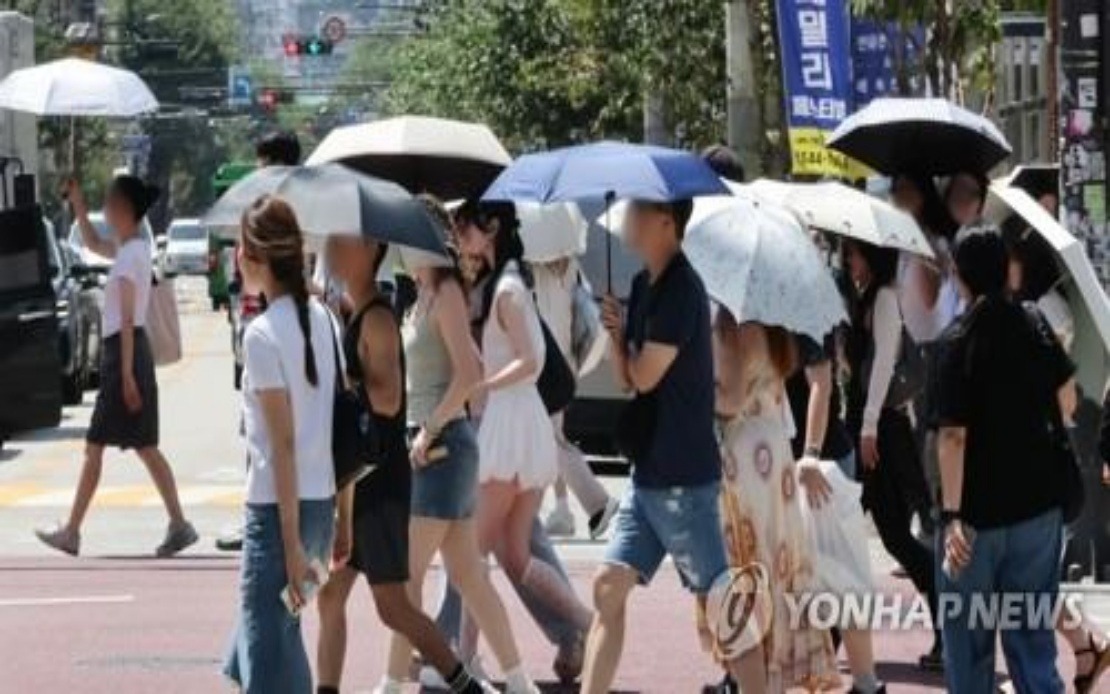
South Korea is enduring an exceptionally severe heat wave as temperatures soared above 40°C in Seoul and at least two other major cities on Friday, according to readings from the Korea Meteorological Administration. The mercury reached 40.2°C in Seoul's northern Nowon ward at mid-afternoon, breaking a temperature barrier that the capital had not crossed since August 2018, when it recorded 41.8°C. This resurgence of extreme heat underscores the growing intensity of the ongoing weather phenomenon that has gripped the Korean peninsula and raised fresh concerns about public health and climate change impacts on the region.
The heat was not confined to the capital. Hanam's Deokpung district, situated immediately southeast of Seoul, registered an even more alarming 40.7°C, while Gwangyang, located roughly 300 kilometres to the south, also reached 40.2°C during the afternoon. Similarly extreme conditions were recorded in several other localities, with temperatures in Yeongweol county in Gangwon Province and Yeoju in Gyeonggi Province climbing to 39.8°C. These readings across geographically dispersed locations underscore the breadth of the heat wave's impact, extending well beyond isolated urban heat islands to affect multiple regions simultaneously.
The persistence and intensity of this weather event have created alarming statistical benchmarks. From June through Thursday, South Korea experienced an average of 14.8 days when daytime temperatures reached 33°C or higher—the fourth highest occurrence for this period since comprehensive nationwide weather monitoring began in 1973. More concerning still is the count of tropical nights, those oppressive periods when minimum temperatures fail to drop below 25°C even during sleeping hours. The nation has now recorded 13 such nights, establishing a new historical record and indicating a fundamental shift in nighttime climate patterns that prevents residents from obtaining natural relief from daytime heat.
These metrics carry profound implications for Southeast Asian nations like Malaysia, which already contend with tropical climates and rising temperatures. The Korean experience demonstrates how even developed nations with advanced infrastructure struggle to manage extreme heat events. South Korea's situation suggests that regional governments across Southeast Asia must reassess heat mitigation strategies, urban planning approaches, and public health preparedness. The frequency and severity of such events appear to be accelerating, challenging assumptions built into infrastructure designed for historical climate patterns rather than emerging realities.
Weather authorities have implemented emergency protocols to address the crisis. The Korea Meteorological Administration activated its highest-level heat wave warning for Seoul beginning Tuesday, maintaining that alert status until Friday evening when projections indicated a marginal improvement. The warning system follows precise criteria: serious warnings are issued when apparent temperatures are forecast to reach 38°C or higher, or when daily maximum temperatures exceed 39°C, in regions already experiencing extreme heat conditions for consecutive days. This graduated approach allows authorities to concentrate resources and public attention on the most dangerous periods.
Some modest relief is expected to arrive over the weekend, though authorities caution that sweltering conditions will persist rather than vanish. Saturday's forecast shows morning lows between 21°C and 26°C nationwide, with daytime highs expected to range from 26°C to 35°C—still warm, but considerably lower than the devastating temperatures of recent days. Given this projected amelioration, the KMA downgraded its warning status for Seoul and portions of the eastern and southwestern regions from serious to ordinary classifications at 6 p.m. Friday. However, this represents a relative improvement rather than genuine relief, and officials remain cautious about the trajectory beyond the weekend.
The significance of this heat wave extends beyond meteorological records or immediate human discomfort. Sustained exposure to temperatures above 40°C creates genuine public health emergencies, particularly for vulnerable populations including elderly residents, outdoor workers, and those with pre-existing medical conditions. Heat-related illness and mortality spike dramatically during such episodes, straining hospitals and emergency services. Furthermore, extreme heat drives surge demand for electricity as air conditioning systems operate at maximum capacity, creating potential grid instability and the risk of blackouts precisely when cooling is most critical. South Korea's experience in managing these competing pressures offers sobering lessons for neighbouring countries.
From a regional perspective, South Korea's heat wave reflects broader climatic patterns affecting East and Southeast Asia. The phenomenon is not isolated to the peninsula but part of a larger atmospheric system. Malaysian observers should recognize that heat waves generating temperatures exceeding 40°C in temperate regions indicate the magnitude of climate disruption now occurring across the entire region. While Malaysia's equatorial climate means such absolute temperature records are less remarkable, the implications regarding atmospheric instability, monsoon disruption, and changing precipitation patterns warrant close attention from policymakers and environmental specialists.
Looking forward, the episode raises pressing questions about infrastructure adequacy and societal adaptation. South Korea, with its substantial resources and technological capabilities, has nonetheless struggled to prevent dangerous conditions from developing. The nation's response mechanisms, while sophisticated, offer only partial mitigation of underlying climatic stress. For less developed economies in Southeast Asia, the challenge becomes exponentially more difficult. Malaysian cities, many characterised by dense populations, limited green space, and aging infrastructure, face comparable or greater vulnerability. The Korean experience suggests that technological solutions alone prove insufficient without complementary strategies addressing urban design, industrial heat generation, and climate adaptation planning at a fundamental level.

