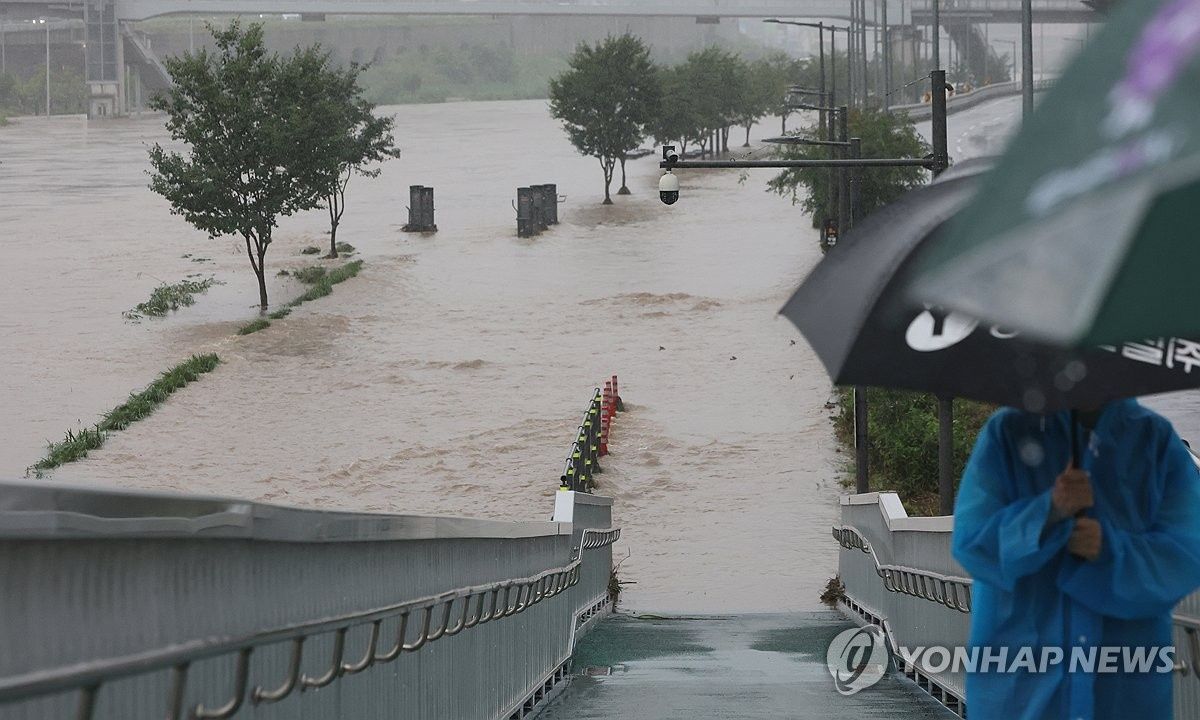
South Korea's capital region experienced a punishing overnight rainfall that left hundreds of homes and roads damaged across the Seoul metropolitan area and the eastern province of Gangwon, according to officials reporting Saturday morning. The downpour delivered nearly 200 millimetres of precipitation between midnight and 10 am local time, with the Central Disaster and Safety Countermeasure Headquarters documenting particularly intense concentrations in several municipalities: Paju received 192.5 mm, Dongducheon 189.5 mm, Pocheon 179 mm, Gimpo 166.5 mm, and Cheorwon 159.5 mm.
The accumulated damage from the deluge totalled approximately 540 recorded cases of property loss, reflecting the scale of the meteorological event. Among these, authorities tallied 148 instances involving flooded residences and roadways, while a further 392 cases involved fallen trees and scattered debris that littered affected communities. By mid-morning, emergency officials maintained heavy rain alerts across ten regions throughout Gangwon Province, with an additional mudslide warning specifically issued for Pocheon, signalling the authorities' heightened concern about secondary hazards from saturated soil and unstable terrain.
While the material damage was substantial, the human toll remained mercifully contained. No deaths or serious injuries were recorded from the overnight weather event, though authorities exercised prudent precaution by temporarily evacuating ninety-five individuals from forty-four households across six cities in the affected zones. The evacuation of these residents represented a preventive measure designed to shield vulnerable populations from potential secondary disasters as rainfall continued.
The scale of recreational and transportation disruption underscored the storm's intensity and reach. Ten national parks across the region shuttered their gates to the public, alongside the closure of 275 hiking paths that typically draw substantial weekend traffic during clement weather. Mount Bukhan, one of the metropolitan area's most frequented hiking destinations, was among the affected sites. Beyond terrestrial access restrictions, maritime operations also faced significant curtailment, with seven ferry routes operating off South Korea's west coast suspended as swelling waters and reduced visibility made navigation hazardous.
Meteorological forecasts suggested the ordeal would persist into Sunday, with rainfall rates potentially intensifying to 300 millimetres per hour in some localized areas. This projection of continued extreme precipitation prompted heightened vigilance from emergency management officials, particularly regarding the elevated risk of landslides across vulnerable terrain in the central province of Chungcheong and throughout Gangwon.
Prime Minister Han Seong-sook convened an emergency response meeting to coordinate government reaction to the unfolding crisis. During the gathering, she acknowledged the fortunate absence of human casualties while expressing sympathy for residents whose property sustained damage and whose daily routines faced disruption. Her remarks underscored the administration's focus on transitioning from crisis response to recovery operations, emphasizing the rapid mobilization of equipment and personnel to minimize ongoing inconvenience to affected communities.
The prime minister's directive to accelerate resource deployment reflected the government's operational priorities: clearing debris from transportation networks, assisting with water extraction from flooded structures, and restoring public access to essential facilities and services. Beyond immediate relief measures, Han instructed officials to maintain heightened preparedness protocols for potential landslide incidents, particularly as the forecast trajectory pointed toward Chungcheong and Gangwon receiving substantial additional rainfall during Saturday evening and Sunday morning hours.
For Malaysian and broader Southeast Asian observers, the episode provides instructive insights into disaster management in an advanced economy with sophisticated early warning systems and coordination mechanisms. South Korea's capacity to absorb nearly 200 millimetres of rain without loss of life, despite extensive property damage, reflects investments in evacuation protocols, emergency communications infrastructure, and trained response personnel. The rapid closure of public recreational facilities and transportation routes based on precipitation forecasts demonstrates a precautionary approach that prioritizes prevention over post-incident management.
The Seoul region's experience also illustrates vulnerabilities that transcend national borders and development levels. Intense rainfall events are becoming more frequent and severe across East Asia, reflecting broader climatic patterns that increasingly impact urban infrastructure designed under different environmental assumptions. Communities throughout Southeast Asia, facing similar intensifying monsoon patterns and extreme weather events, may draw lessons from how South Korea's hierarchical governance structure enables rapid resource deployment and centralized decision-making during weather emergencies, while simultaneously confronting similar challenges of protecting growing urban populations in increasingly vulnerable topographies.

