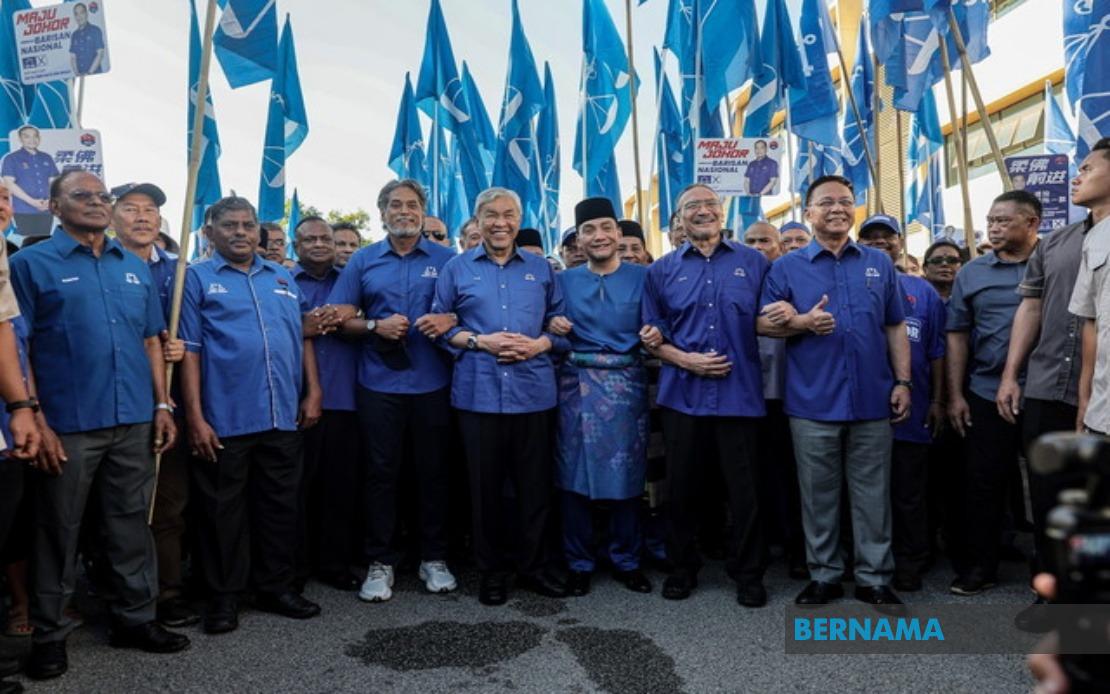
Johor Barisan Nasional chairman Datuk Onn Hafiz Ghazi formally entered the race for the state election by submitting his nomination documents on June 27, marking a significant moment in the campaign as the sitting Machap assemblyman secured his position as the coalition's standard-bearer. The filing took place at the Muafakat Hall in the Simpang Renggam District Council at 9.10 am, underscoring the formal commencement of his bid to retain or advance his political standing in the southern state's electoral contest.
The decision to have Onn Hafiz flanked by a constellation of top UMNO figures reflected the party's strategic importance in the broader Barisan Nasional framework and signalled unified support behind his candidacy. UMNO president Datuk Seri Dr Ahmad Zahid Hamidi, who holds considerable sway within the party's organizational structure, personally accompanied the Johor BN chief to the nomination venue. This gesture carried symbolic weight, demonstrating the national party leadership's commitment to the Johor campaign at a critical juncture.
The presence of Sembrong Member of Parliament Datuk Seri Hishammuddin Tun Hussein further amplified the show of solidarity, as his federal constituency encompasses areas relevant to the state's political landscape. Hishammuddin, a seasoned political operator with experience in ministerial portfolios, lent gravitas to the occasion through his attendance. His involvement suggested that UMNO viewed the Johor contest not merely as a state-level affair but as integral to the coalition's broader electoral strategy and political positioning in the region.
Former minister Khairy Jamaluddin's inclusion in the delegation added another dimension to the support network. Khairy's presence highlighted the reach of backing extended to Onn Hafiz, drawing upon figures with significant grassroots support and youth movement connections. His participation indicated that even senior figures outside formal positions of power remained invested in the success of UMNO's Johor campaign, suggesting the scale of resources and attention the party was prepared to devote to the state election.
Former Johor Menteri Besar Datuk Seri Hasni Mohammad, whose presence at the venue underscored continuity with previous state leadership, also showed support for the nomination process. Hasni's backing carried particular resonance given his previous oversight of state administration and his understanding of Johor's local political dynamics and voter expectations. His involvement signalled that the party was drawing upon institutional memory and the credibility of former office-holders to reinforce confidence in the current campaign.
The nomination centre at Simpang Renggam quickly transformed into a vibrant display of partisan enthusiasm as supporters began congregating in the surrounding areas. Party members and campaign backers dressed in their respective organizational colours created a visual spectacle across the venue, decorating the space with banners and flags in a traditional demonstration of electoral commitment. This grassroots mobilization, occurring spontaneously at the nomination point, reflected the momentum building behind the Barisan Nasional's campaign infrastructure and the capacity of the party machinery to organize public demonstrations of support on short notice.
The concentration of senior party leadership at a single nomination filing event illustrated a broader pattern in Malaysian electoral campaigns where major politicians undertake highly visible and coordinated appearances during critical procedural moments. These occasions serve multiple functions simultaneously: they generate media coverage, project party unity and organizational strength, reassure party members and supporters of leadership commitment, and establish a narrative frame through which the campaign will be understood by voters and observers.
For Malaysian and Southeast Asian observers, the Johor state election represents significant political terrain given the state's substantial population, economic importance, and historical role as a bellwether for national political trends. The state has long served as a crucial testing ground for political strategies and messaging before potential application at the federal level. UMNO's evident investment in a coordinated, high-profile campaign launch in Johor suggested the party recognized the stakes involved and sought to establish momentum early in the election cycle.
The nomination process itself, while administratively routine, carried symbolic significance in demonstrating the formal machinery of democratic elections functioning in Malaysia. The orderly filing of documents and the peaceful assembly of supporters reflected the institutional framework within which electoral competition occurs. However, the deliberate orchestration of senior leadership presence around such procedural moments revealed how modern Malaysian electoral campaigns strategically utilize every formal stage of the election process as an opportunity for political messaging and public positioning.
Looking forward, the scale of support mobilized for Onn Hafiz's nomination filing provided early indicators of the intensity with which UMNO would contest the Johor election. The presence of multiple national-level figures suggested that the party viewed this state contest as sufficiently important to warrant sustained engagement from its top echelons. For voters and political analysts monitoring the race, this opening display of organizational coordination and leadership alignment would shape expectations regarding the vigour and resources the coalition would deploy throughout the campaign period.
The Johor state election thus commenced with a carefully choreographed demonstration of Barisan Nasional unity and determination, with Onn Hafiz positioned as the coalition's focal point and beneficiary of a multi-tiered network of political support. Whether this early show of strength would translate into electoral success remained to be seen as campaigns typically encounter various challenges, shifting voter priorities, and competing narratives throughout their duration. Nonetheless, the nomination day proceedings established a template of coordination and enthusiasm that would likely characterize the broader campaign strategy.

