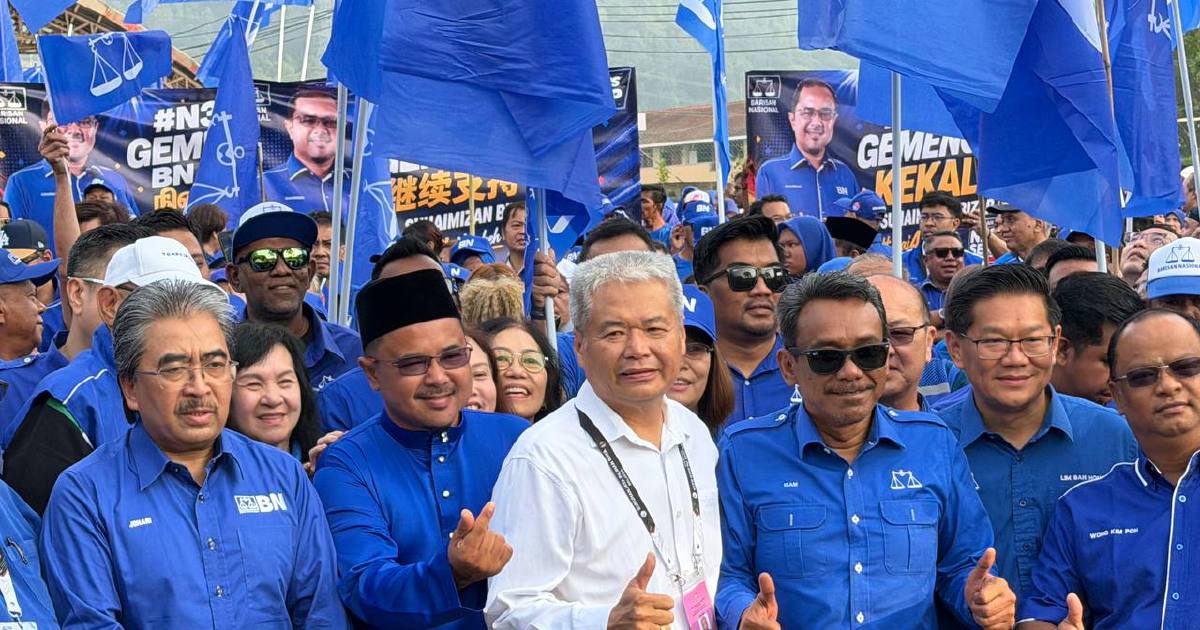
Top-ranking Umno party officials gathered at the nomination centre in Tampin this morning to demonstrate unity and boost the campaign prospects of Barisan Nasional candidates preparing for the Negri Sembilan state election. Datuk Seri Johari Abdul Ghani, who holds the position of Umno vice-president, and Datuk Seri Tengku Adnan Tengku Mansor, the party's treasurer, both made the journey to Dewan Perdana Tampin to accompany the candidates through the formal nomination process.
The presence of these senior party figures reflects Barisan Nasional's commitment to leveraging its organisational hierarchy to energise the campaign machinery across key constituencies. As one of the coalition's dominant components, Umno has invested significant resources in rallying support for candidates contesting in Negri Sembilan, a state where the coalition seeks to maintain or expand its political influence. The show of high-level backing serves multiple strategic purposes, including lending credibility to nominees and demonstrating internal party cohesion to voters.
Johari's role as vice-president places him among the uppermost tier of Umno's leadership structure, making his participation particularly significant. His presence signals that the party leadership is actively invested in the outcomes across various constituencies, rather than delegating such responsibilities entirely to lower-ranking officials. This hands-on approach by senior leadership has historically been deployed during critical electoral phases to energise grassroots supporters and media attention.
Tengku Adnan, overseeing the party's treasury, carries additional weight as financial steward of one of Malaysia's oldest and most established political organisations. His attendance underscores the financial and logistical commitment Umno has made to the Negri Sembilan campaign. Party treasurers often play crucial roles beyond merely managing funds, frequently representing the party at high-stakes political events and demonstrating institutional confidence in campaign strategies.
The Negri Sembilan state election represents a significant opportunity for Barisan Nasional to reinforce its political dominance in a state where it has maintained substantial electoral support. The coalition's focus on fielding strong candidates and supporting them visibly during nomination periods aims to establish momentum early in the campaign cycle. Tampin, as the venue for this nomination centre, sits within a constituency that will play a role in determining overall state-level outcomes.
Nomination day events across Malaysian states typically generate considerable media interest, as they mark the formal commencement of campaign activities and provide the first concrete indication of each party's candidate choices and internal dynamics. The participation of national-level figures at these events often telegraphs which constituencies or regions the broader party establishment regards as particularly consequential. For Barisan Nasional, the visible commitment of senior officials suggests strategic prioritisation of Negri Sembilan within its broader electoral planning.
The coordination between different levels of Umno's organisational structure—from vice-presidential to treasurership roles—demonstrates the party's effort to present a unified front during electoral contests. Such displays of harmony are particularly important in contexts where internal party factions might otherwise dominate political narratives. By bringing together officials from different portfolios, the party projects an image of institutional strength and shared purpose among its leadership.
For candidates themselves, nomination day serves as a threshold moment where official status transitions from selection to formal electoral contention. The presence of senior party officials can provide candidates with enhanced visibility, media coverage, and psychological reassurance regarding party support. This backing becomes particularly valuable in constituencies where electoral competition remains closely contested or where voter sentiment remains volatile.
Negri Sembilan's political landscape reflects broader dynamics affecting Malaysian state politics, where Barisan Nasional continues to compete against opposition coalitions and independent candidates. The state's electorate spans urban, suburban, and rural constituencies with varying demographic profiles and policy priorities. Barisan Nasional's strategy across these diverse areas requires coordinated messaging and visible leadership commitment, both of which the Tampin nomination event exemplifies.
The timing of such high-level participation also considers media and public perceptions of party strength and unity. In the contemporary Malaysian political environment, where voter preferences have become increasingly volatile and coalition dynamics more fluid, demonstrations of internal party coherence carry meaningful communication value. Opposition observers and undecided voters alike monitor these events for signals regarding which parties possess functional organisations and committed leadership.
Governance structures within Umno continue to emphasise collective leadership during electoral periods, with senior officials distributing themselves across key nomination venues and campaign locations. This dispersal strategy aims to maximise the party's media footprint while ensuring that major constituencies receive attention from recognisable national figures. The Tampin event fits within this broader architectural approach to state-level electoral mobilisation.
Looking forward, the Negri Sembilan election will test whether such visible leadership engagement translates into electoral support among voters. The state remains consequential within Malaysia's political calculations, and outcomes here may influence broader national political trajectories. For Barisan Nasional candidates now formally in the contest, the backing demonstrated by Johari and Tengku Adnan provides both immediate campaign resources and longer-term institutional anchoring within the coalition's structures.

