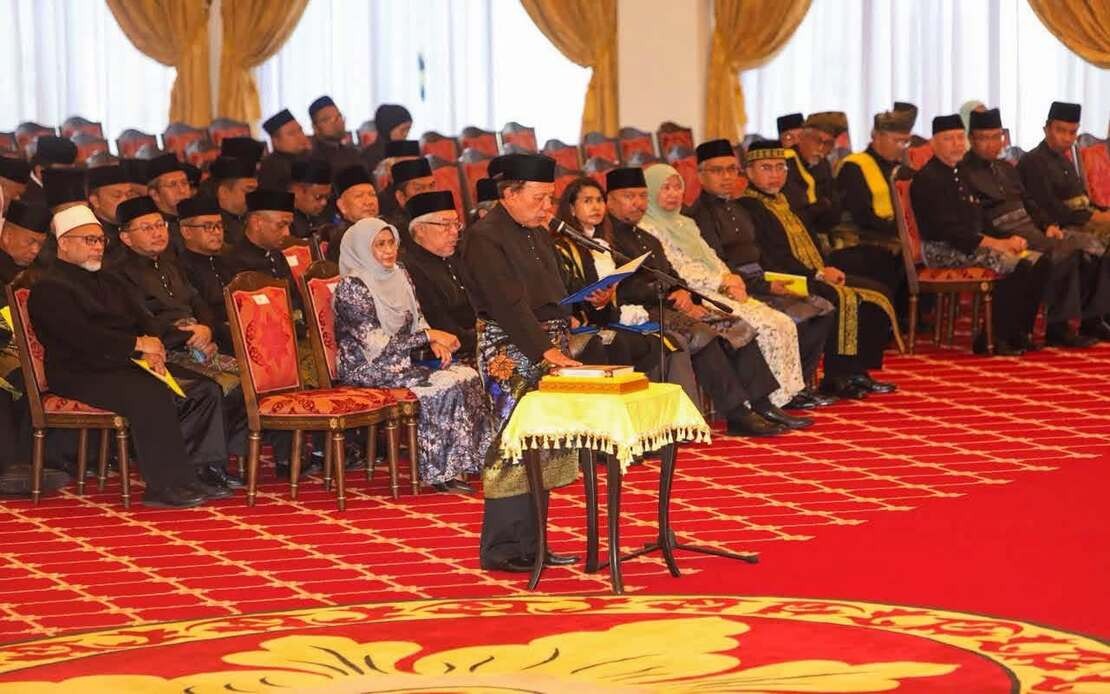
Datuk Ismail Lasim has assumed office as Negeri Sembilan's Menteri Besar, with prominent members of the federal Cabinet formally extending their support and well-wishes to the newly appointed state leader. The 67-year-old Juasseh assemblyman was sworn in before the Yang Dipertuan Besar of Negeri Sembilan, Tuanku Muhriz Tuanku Munawir, at the Balairong Seri of Istana Besar Seri Menanti, marking a transition in the state's political leadership.
Deputy Prime Minister Datuk Seri Dr Ahmad Zahid Hamidi, who also serves as Rural and Regional Development Minister, took to social media to formally acknowledge Lasim's appointment. In his statement, Ahmad Zahid characterised the position as carrying substantial responsibility and expressed confidence in Lasim's capacity to fulfil the role with competence. The DPM's public endorsement signals institutional backing from the highest levels of the federal government and reinforces national support for the new state administration as it settles into office.
The congratulatory messages from Cabinet-level officials underscore the significance attached to leadership transitions within Malaysia's state governments. Ahmad Zahid's invocation of collective effort and shared vision—framed through the phrase "together we will make Negeri Sembilan great again"—reflects a messaging strategy linking state-level governance to broader national development objectives. Such coordinated public expressions of support from multiple Cabinet ministers serve to legitimise new state leaders and project unity within the ruling coalition.
Defence Minister Datuk Seri Mohamed Khaled Nordin similarly emphasised the weight of public trust placed upon Lasim's shoulders. Mohamed Khaled's remarks focused on continuity in development trajectories, suggesting that stability and progressive economic expansion remain central to the Cabinet's expectations for Negeri Sembilan's governance. His explicit hope that the new administration would sustain existing momentum in infrastructure and prosperity initiatives indicates that federal-state coordination on development agendas remains a priority despite leadership changes at the state level.
Plantation and Commodities Minister Datuk Seri Dr Noraini Ahmad framed Lasim's appointment as a pivotal moment for the state's trajectory. Her message emphasised the spiritual and ethical dimensions of public service, invoking religious language to underscore the moral weight of leadership. This rhetorical approach reflects broader patterns within Malaysian political discourse, where religious and secular justifications for governance are frequently interwoven to build legitimacy and public trust across diverse constituencies.
Ismail Lasim brings substantial experience to the Menteri Besar's office. He entered electoral politics in 1999 as a state assemblyman and has accumulated nearly three decades of involvement in Negeri Sembilan's political landscape. Between 2004 and 2018, he served consecutively in the state executive council, holding responsibility for education portfolios and participating in the development of human capital and educational policy frameworks across the state. This lengthy tenure in state administration provides him with established relationships, institutional knowledge, and demonstrated track records that Cabinet ministers likely view as stabilising assets during the transition.
The significance of Lasim's education background within his executive council tenure cannot be understated when considering the Cabinet's confidence in his leadership. Education and human development remain critical pillars of Malaysia's longer-term economic competitiveness and social stability. Lasim's previous stewardship of these areas suggests he possesses understanding of the complex intersections between educational policy, workforce development, and regional economic diversification—issues increasingly relevant as Negeri Sembilan navigates post-pandemic economic recovery and positioning within the broader Southeast Asian context.
The public messaging from federal Cabinet ministers regarding state leadership appointments serves multiple functions within Malaysia's political system. Formal congratulations and expressions of confidence help establish clear lines of communication and institutional support during administrative transitions. For Negeri Sembilan specifically, federal backing is particularly valuable given the state's position as a key corridor connecting Malaysia's northern and southern regions and its significant role in national economic networks. Disruption or instability in state-level governance can ripple across broader regional economic relationships and investor confidence.
Ismail Lasim's accession to the Menteri Besar position occurs within a broader context of Malaysian state politics characterised by shifting coalition dynamics and the ongoing consolidation of federal-state relationships. The coordinated public support from multiple Cabinet ministers suggests a deliberate strategy to present unified governance vision and institutional continuity. For Malaysian and Southeast Asian investors monitoring political stability within Malaysian states, such clear federal endorsements may serve as reassurance signals regarding governance robustness and policy continuity.
Looking forward, the Cabinet's public backing indicates expectations that Lasim will maintain cooperative relationships with the federal government across key policy areas including economic development, infrastructure provision, and security governance. The emphasis placed by multiple ministers on stability, progress, and shared prosperity suggests the federal government views these outcomes as measurable benchmarks against which the new Negeri Sembilan administration's performance will be evaluated. These early messages establish implicit performance expectations that will likely inform federal-state interactions throughout Lasim's tenure.

