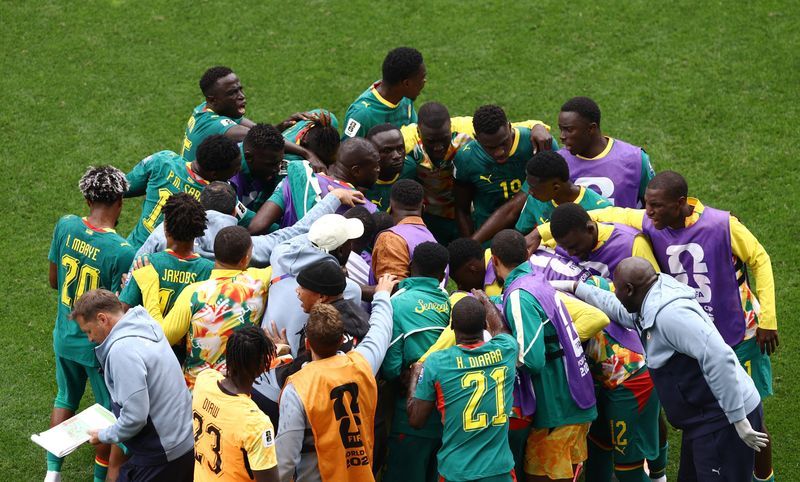
Senegal's football federation has found itself at the centre of a heated dispute over medical personnel following the country's underwhelming performance at the World Cup in North America, with federation president Abdoulaye Fall levelling accusations that the team's physician lacked appropriate sporting qualifications. At a press conference on Monday, Fall publicly stated that the team doctor had been trained primarily as a gynaecologist, suggesting this fundamental mismatch in expertise contributed to player anxiety and undermined confidence in the medical support structure during the tournament. The revelation has raised uncomfortable questions about the federation's preparatory protocols and oversight mechanisms, particularly given the high stakes involved in international competition.
The discovery of the doctor's background, Fall indicated, came relatively late in the preparations and triggered considerable unease within the squad. Players apparently expressed concerns about whether they could rely on adequate medical care, a worry that extends beyond physical recovery to encompass the psychological dimension of elite sports performance. Fall acknowledged that these anxieties necessitated immediate remedial action, and the federation subsequently sought to bring in additional medical expertise to reassure the team members. His statement underscored a principle the federation deemed fundamental: health must take absolute priority over administrative convenience, a sentiment that many would agree with in principle but which also implies significant shortcomings in the initial planning.
However, the Senegalese Association of Sports Medicine has forcefully rejected these characterisations, releasing a statement late Monday that describes the allegations as both unfounded and defamatory. The association moved swiftly to defend the doctor in question, Abderahmane Fediore, by detailing his formal qualifications and professional history. According to the sports medicine body, Fediore holds a specialist diploma in sports medicine and sports biology from Cheikh Anta Diop University's faculty of medicine, credentials that appear directly relevant to the role he has occupied.
Fediore's track record in medical administration at the institutional level lends weight to the association's defence. Prior to his involvement with the national team, he oversaw the physiotherapy department at Fann Hospital, a position suggesting he had acquired substantial experience in managing large-scale patient care and coordinating clinical teams. His tenure as Senegal's team doctor extends back to 2017, meaning he had already served the nation through three previous World Cup campaigns and five editions of the Africa Cup of Nations before this current tournament. This longevity indicates both continuity in the role and an established working relationship with the federation and its support structures.
The timing and framing of Fall's criticism raises broader questions about institutional accountability within Senegal's football governance. If legitimate concerns existed regarding medical qualifications, one might reasonably ask why these were not addressed during recruitment or why they surfaced only after disappointing tournament results. The sequence of events suggests that the federation may be deflecting attention from strategic and tactical failures by attributing poor performance to marginal factors. This pattern is not uncommon in sports administration, where scapegoating personnel for systemic issues can temporarily appease stakeholders while avoiding deeper institutional reform.
Senegal's World Cup performance certainly warranted critical examination. The team had entered the tournament as genuine contenders following a triumphant Africa Cup of Nations campaign in January, where they defeated Morocco in the final. That continental success suggested the squad possessed the calibre of players and strategic direction necessary for a strong World Cup showing. Instead, the tournament unfolded as a series of disappointments that demanded explanation. The team lost their opening two group matches to France and Norway, immediately placing themselves in a precarious position from which recovery became mathematically difficult.
Their most agonising exit came against Belgium, a match that encapsulated the squad's inability to maintain composure under pressure. Senegal held a commanding two-goal advantage with only five minutes remaining, a position that should have guaranteed progression to the knockout stages. Yet the team conceded twice in normal time, allowing the match to extend into extra time where Belgium capitalised on depleted Senegalese energy to secure a 3-2 victory. This collapse suggested issues with mental resilience, tactical discipline, and perhaps substitution management rather than deficiencies in medical support.
The federation's decision to terminate coach Pape Bouna Thiaw on Saturday represented the immediate institutional response to these failures. In competitive football, managerial changes often serve as a visible form of accountability and a signal to supporters that the organisation takes poor results seriously. However, removing the coach while simultaneously questioning the team doctor's qualifications creates an impression of institutional confusion rather than coherent analysis. It suggests that the federation may be dispensing blame widely rather than conducting a methodical review of specific factors that contributed to underperformance.
For Malaysian observers and Southeast Asian football administrators more broadly, this situation offers instructive lessons about governance and accountability structures. Professional sports organisations, regardless of geography, must maintain rigorous standards in recruitment and oversight while avoiding the temptation to blame individuals for systemic failures. Senegal's experience underscores the importance of establishing clear medical protocols, ensuring qualifications are verified during hiring rather than questioned in public after disappointing results, and maintaining institutional coherence when addressing performance issues. The dispute between Fall and the sports medicine association will likely persist, potentially damaging the federation's credibility and distracting from genuine operational improvements needed to restore Senegal to contention in future tournaments.

