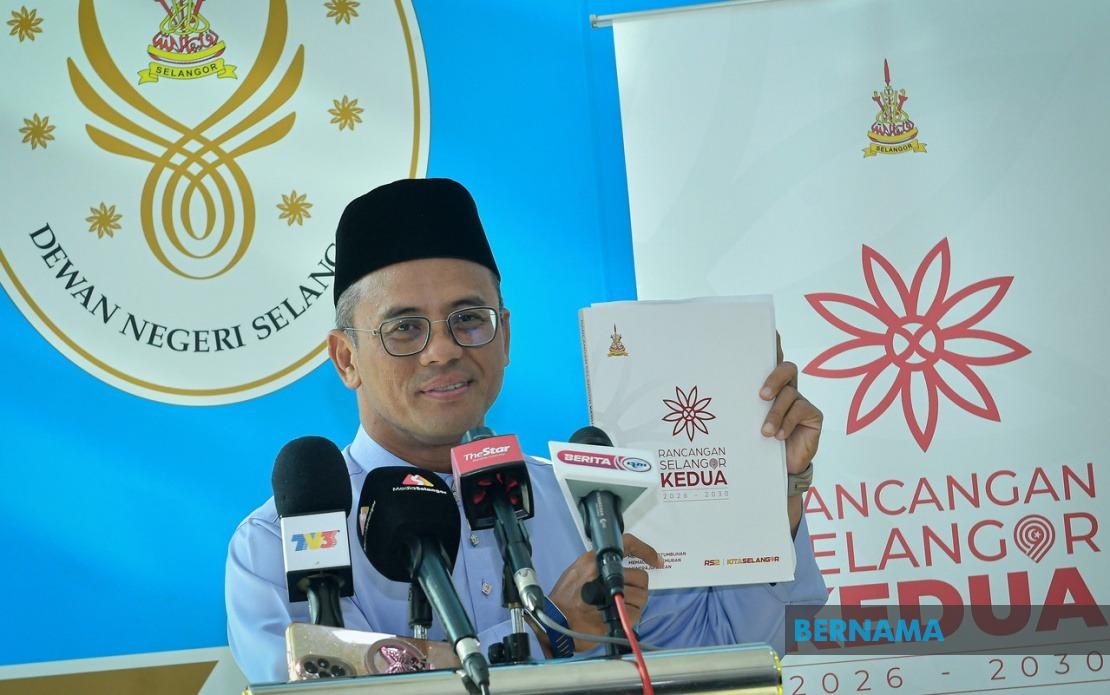
Selangor's Menteri Besar Datuk Seri Amirudin Shari has set a demanding performance benchmark requiring all local authorities in the state to attain and sustain a 95 per cent score under the PBT Star Rating System by 2030. The directive, unveiled during tabling of the Second Selangor Plan (RS-2) at the state legislature, underscores a fundamental shift in how the government measures municipal service delivery across its jurisdictions. Rather than accepting variable standards across different districts, the administration is committing to uniform excellence, ensuring that residents in every corner of Selangor—from densely urbanised Shah Alam to developing peripheral towns—receive comparable quality in public services and administrative responsiveness.
The ambition embedded in this target reflects deeper institutional reform. Amirudin framed the initiative not as a bureaucratic exercise but as a social contract commitment, emphasising that high-performing public services should never be geographically privileged but must permeate all communities equally. This philosophical underpinning matters for Malaysian governance, where service disparities between well-resourced urban centres and less developed areas remain a persistent challenge. By establishing a single, measurable standard applicable across all 40 municipal councils in the state, Selangor is attempting to address a structural inequality that has long characterised local government performance in Malaysia.
Complement to this service excellence mandate is an aggressive digital transformation roadmap. The state targets 85 per cent End-to-End Digital Government Service Sharing, a significant leap from current baselines. This initiative promises more than technological modernisation; it signals a commitment to reducing bureaucratic friction, accelerating service turnaround times, and creating transparent audit trails for public transactions. For citizens accustomed to lengthy counter queues and opaque municipal processes, digital integration offers tangible improvements. The framework emphasises responsive data sharing between agencies, potentially eliminating the fragmented silos that often force residents to repeat information across multiple departments.
Amirudin's emphasis on accountability and complaint resolution adds teeth to these aspirations. He explicitly directed local authorities to treat all feedback—whether lodged via social media platforms, physical complaints desks, or community delegations—with equivalent seriousness and action. This recognises the reality that digital-native Selangor residents increasingly voice concerns through Twitter and Facebook rather than traditional channels. By institutionalising responsiveness across all complaint vectors, the government acknowledges shifting communication patterns and the reputational damage that can flow from perceived dismissal of public concerns in the social media era.
The revenue diversification thrust represents perhaps the most consequential long-term implication of RS-2. Currently, Selangor's fiscal architecture depends heavily on land premiums and rents, which constitute approximately 75 per cent of state government income. This concentration creates vulnerability; any slowdown in property development or land transactions threatens budget stability. Amirudin candidly identified this as a structural risk requiring strategic correction. The proposed solution involves establishing a fully integrated State Investment Holding company, a consolidation vehicle designed to optimise returns from government-linked companies and state-owned entities while reducing operational redundancy across subsidiary organisations.
This restructuring of state-owned enterprises reflects contemporary trends in Malaysian governance whereby fiscal pressures are forcing governments to squeeze greater productivity from their asset portfolios. By aligning multiple GLCs under a single holding structure, Selangor aims to eliminate overlapping functions, redirect capital toward higher-yielding ventures, and position the state to compete in technology and services sectors rather than remaining primarily dependent on land commodification. For Malaysian readers, this represents a microcosm of broader state-level economic evolution, where traditional revenue sources are becoming insufficient for rising public spending demands.
The strategic alignment between GLCs and state programmes extends beyond mere financial engineering. Amirudin envisioned enhanced coordination that allows state-owned companies to pursue objectives aligned with government development priorities, whether in digital infrastructure, renewable energy, or knowledge-based industries. This integrated approach reduces the risk of GLCs pursuing narrow commercial interests divorced from public policy objectives—a common criticism of government-linked companies across Malaysia. When properly executed, such alignment can amplify the impact of public investment while ensuring that taxpayer-funded entities contribute meaningfully to state economic diversification.
For Southeast Asian observers, Selangor's approach offers instructive lessons in municipal governance at a moment when urbanisation pressures and citizen expectations are intensifying across the region. The 95 per cent target is not arbitrary; the PBT Star Rating System evaluates dimensions including financial management, infrastructure maintenance, community engagement, and administrative efficiency. Achieving uniformly high scores across 40 disparate councils with varying resource levels and geographic characteristics presents genuine operational complexity. Success would demonstrate that ambitious performance standards can be cascaded through multi-tiered government structures without sacrificing local responsiveness.
The RS-2 framework also implicitly acknowledges that traditional approaches to local government financing and service delivery are inadequate for contemporary Selangor. With a population exceeding six million and economic complexity rivalling several Southeast Asian countries, the state faces infrastructure demands that land-based revenue alone cannot sustainably address. The pivot toward innovation financing and GLC-enabled project delivery reflects pragmatic adaptation to fiscal realities, yet it also introduces governance risks. Consolidating state-owned companies into larger holding structures can create accountability opacity if oversight mechanisms prove insufficient.
Implementation challenges will prove formidable. Raising all local authorities to 95 per cent performance benchmarks within eight years requires substantial capital investment in systems, training, and infrastructure—particularly in councils serving lower-income or rapidly growing areas where service backlogs are substantial. Digital transformation, while conceptually straightforward, demands sophisticated project management and sustained commitment beyond initial enthusiasm phases. Historical experience with Malaysian government IT initiatives reveals that technical implementation often succeeds while organisational culture change lags, limiting practical benefits to citizens.
The revenue diversification strategy will similarly require careful execution. Consolidating GLCs offers efficiency gains but also risks creating behemoths insulated from competitive discipline. Private sector partnerships, while potentially valuable, demand clear performance contracts and transparent procurement to avoid perceptions of political patronage. Selangor's credibility in pursuing these reforms will partly depend on demonstrated anti-corruption governance and rigorous monitoring frameworks.
Nevertheless, the RS-2 articulation represents serious grappling with Selangor's long-term sustainable development. Rather than pursuing expansionist policies on depleting land assets, the state is consciously repositioning itself as a services and technology hub where government efficiency and digital capability become competitive advantages. For Malaysian residents increasingly vocal about municipal service quality and digital accessibility, these commitments offer measurable benchmarks against which performance can be assessed. Whether Selangor achieves its 95 per cent target by 2030 will itself serve as a barometer of whether ambitious governance transformation can be sustained through electoral cycles and bureaucratic inertia.

