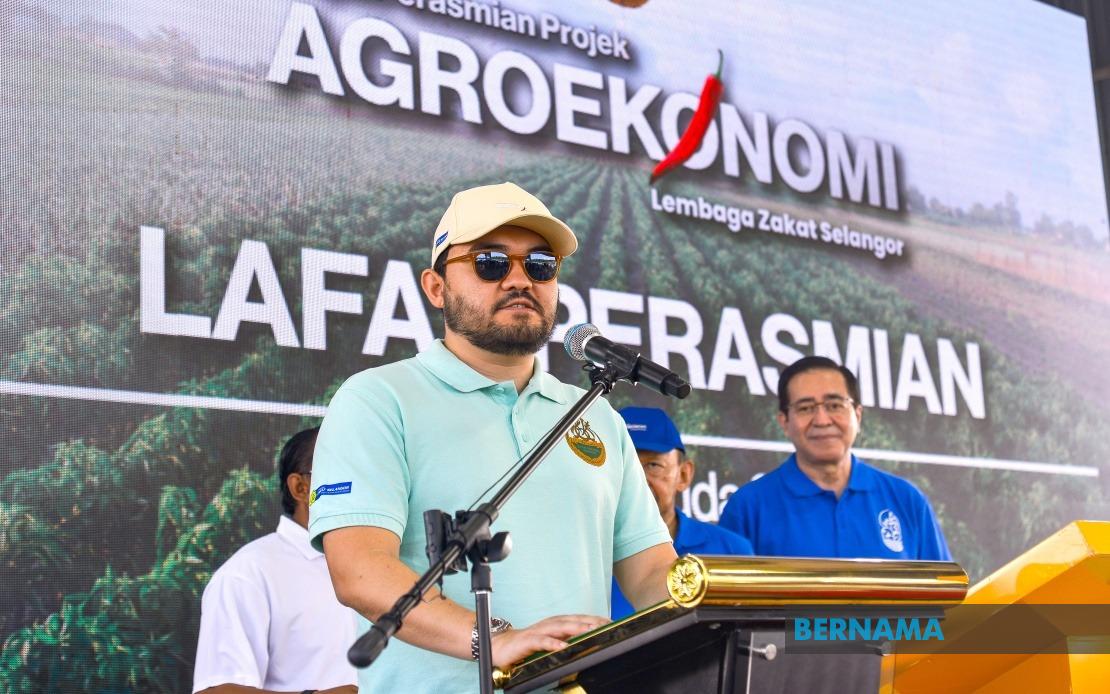
The Selangor Zakat Board is charting a new direction in poverty alleviation by moving beyond temporary cash assistance toward creating permanent economic pathways. On July 1, the institution formally inaugurated its Agroeconomic Project at Laman Agro Ehsan in Bukit Beruntung, a comprehensive initiative that pairs financial investment with land, training and housing support for 48 carefully selected asnaf beneficiaries. The RM26 million commitment reflects a strategic shift in how Islamic institutions across Malaysia can leverage their substantial zakat revenues to generate long-term self-sufficiency rather than dependence on annual handouts.
The agricultural venture spans 110 acres, with 76 acres designated specifically for productive farming activities centred on fertigation chilli cultivation. This structured approach addresses a persistent challenge in Malaysia's asnaf community: the lack of viable income-generation pathways that allow poor and lower-income households to transition from welfare recipients to economically independent contributors. By providing a complete ecosystem encompassing land access, horticultural training, crop management guidance and ongoing supervision, Selangor Zakat Board is attempting to eliminate the typical barriers that prevent agricultural ventures from succeeding among marginalised communities.
The Raja Muda of Selangor, Tengku Amir Shah Sultan Sharafuddin Idris Shah, conducted the official launch, underscoring the royal patronage that legitimises such developmental projects across the state. The presence of senior religious officials including Selangor Mufti Datuk Dr Anhar Opir and director of the Selangor Islamic Religious Department Datuk Mohd Shahzihan Ahmad emphasised that the initiative carries institutional blessing from Islamic leadership, elevating it beyond a mere commercial venture into a faith-based developmental programme aligned with Islamic principles of social welfare.
According to Zakat Selangor chairman Tan Sri Syed Anwar Jamalulail and Advisory Committee member Datuk Adnan Pawanteh, the programme represents a fundamental reimagining of asnaf support. Rather than one-off payments, participants receive three years of intensive training covering technical agricultural skills, crop monitoring protocols and hands-on operational guidance. This extended timeframe acknowledges that transforming someone from unemployment or precarious work into a viable farmer requires sustained mentorship and knowledge transfer, not merely land allocation.
The mathematics of the agricultural model is compelling for cash-strapped households. Each of the 48 participants cultivates a 0.5-acre plot planted with 2,000 chilli bags, creating a collective growing operation of 96,000 plants per planting cycle. Upon reaching stable production levels, participants can potentially earn up to RM4,000 monthly from their allocated plots. For families living below the poverty line, this income represents a transformative improvement in purchasing power and financial security. The potential earnings far exceed typical wage labour available to asnaf communities in rural Selangor, making the project economically rational for participants.
Beyond agricultural input, Selangor Zakat Board addresses the housing challenge that often prevents rural development initiatives from succeeding. All 48 participants receive accommodation in the Prima Beruntung housing area, with rental costs entirely subsidised throughout the programme duration. This removes a substantial obstacle that typically prevents low-income families from relocating to agricultural zones, where they might otherwise struggle to afford housing while building farming expertise. The integrated approach recognising that participants need shelter stability alongside income opportunities reflects sophisticated understanding of poverty dynamics.
Participant selection operated through a rigorous screening process conducted jointly with the Kuala Langat Area Farmers' Organisation, ensuring that chosen individuals possessed the motivation, capability and commitment to succeed. This vetting mechanism differs markedly from welfare distribution based purely on income criteria, instead prioritising individuals likely to complete the three-year programme and achieve economic independence. The collaboration with established farmers' organisations also provides ongoing technical networks and market connections that enhance viability once participants graduate.
Financial sustainability of the project itself benefited from strategic partnership contributions. The Pilgrims Fund Board, RHB Islamic Bank Berhad and Cagamas Berhad provided wakalah contributions totalling RM2.07 million, demonstrating how Islamic financial institutions can align profit-making with social responsibility through structured financing arrangements. This blended funding model—combining zakat resources with corporate and institutional contributions—offers a replicable template for other state zakat boards contemplating similar agricultural initiatives.
Testimonials from participating beneficiaries reveal the transformative psychological impact alongside economic benefits. Participant Norfhadilah Mohd Shafiin, a mother of five, emphasised that the programme furnished not just income opportunities but knowledge and confidence to manage agricultural operations independently. Similarly, participant Raimi Rusydi Rodi highlighted how the initiative introduced him to marketable skills through crop management training and peer collaboration. These narratives underscore that successful poverty alleviation combines economic opportunity with skill development and dignity restoration.
For Malaysian policymakers and Islamic institutional leaders, the Selangor initiative offers instructive lessons about modernising zakat distribution. Rather than treating zakat as a mechanism for managing poverty symptoms through temporary relief, progressive zakat boards increasingly recognise obligations to enable structural economic change. The Agroeconomic Project demonstrates how substantial capital investment, technical expertise, land access and patient capital over multiple years can genuinely transition vulnerable households into self-sustaining economic units. As other state zakat boards contemplate similar models—potentially adapting the formula to different crops, sectors or regions—the Selangor precedent provides both inspiration and practical blueprints for moving Malaysian asnaf populations from dependency toward genuine economic empowerment and social mobility.
The success of this cohort will likely influence zakat board strategy across Malaysia, potentially catalysing broader initiatives in agricultural entrepreneurship, skills training and asset-building for disadvantaged communities. If the projected income targets materialise and participants successfully transition to independent farming operations post-programme, Selangor Zakat Board will have demonstrated a compelling alternative to traditional welfare provision that deserves replication and scaling throughout the nation.

