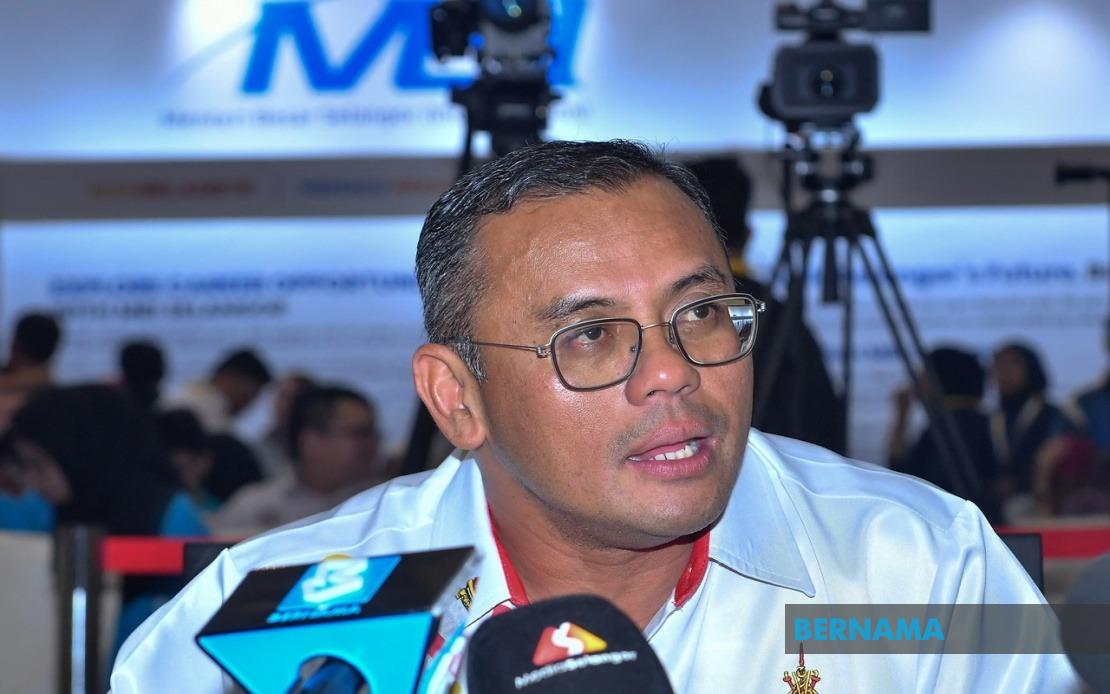
The Selangor state government has committed to engaging with workers set to be displaced by the closure of television production operations at Panasonic AVC Networks Kuala Lumpur Malaysia Sdn Bhd, with formal discussions scheduled for next week. Menteri Besar Datuk Seri Amirudin Shari announced that the state would mobilise support mechanisms and employment pathways for the affected workforce, signalling a proactive response to the manufacturing sector disruption affecting the state's industrial base.
The meeting will be orchestrated by V. Papparaidu, chairman of the State Human Resources, Poverty Alleviation, Indigenous & Minority Affairs Committee, working alongside representatives from the Social Security Organisation (PERKESO). This collaborative approach reflects recognition that factory closures demand coordination across multiple government agencies to ensure comprehensive worker protection. The session aims to gather detailed information from the affected workers themselves, establishing a foundation for tailored assistance programmes rather than applying generic solutions to their particular circumstances.
Panasonic Malaysia has indicated that production for two product lines will cease, displacing approximately 400 employees by the conclusion of March 2026. The timeline provides a window of several months for both the company and government agencies to prepare transition strategies, though this also means workers face prolonged uncertainty about their employment status. The closure underscores ongoing challenges within Malaysia's electronics manufacturing sector, where production consolidation and supply chain reorganisation continue to reshape employment landscapes across Peninsular Malaysia's industrial corridors.
Immediate relief measures form part of the government's response strategy. Amirudin indicated that short-term assistance such as food baskets would be provided without delay, recognising that displaced workers face immediate financial pressures during the transition period. However, the state administration is positioning itself beyond reactive crisis management, framing the intervention around proactive employment placement. The emphasis on helping workers find alternative employment reflects understanding that sustainable solutions depend on reintegrating displaced labour back into the regional economy rather than providing temporary relief that merely delays economic hardship.
A significant component of the support framework involves PERKESO's expanded unemployment insurance scheme, a relatively new initiative designed to cushion the impact of involuntary job loss. The programme provides graduated financial assistance to retrenched workers who remain unemployed, beginning at 80 per cent of their previous salary during the first month of joblessness. This payment structure descends to 50 per cent in the second month and 30 per cent thereafter, functioning as a wage replacement mechanism that sustains household consumption while workers pursue new employment. For Selangor residents facing retrenchment, this scheme represents a genuine innovation in the social safety net, moving beyond traditional unemployment benefits to provide income continuity.
Papparaidu emphasised PERKESO's role in this comprehensive response, characterising the financial protection as essential infrastructure for workers navigating involuntary transitions. The framing of this scheme as "insurance" rather than welfare reflects a conceptual shift in how Malaysia addresses labour market disruptions, treating job loss as a calculable risk against which workers deserve protection. This approach potentially signals evolving thinking within state-level governance about responsibilities toward displaced workers, particularly in manufacturing-dependent regions like Selangor where employment concentration in specific industries creates vulnerability to sectoral shocks.
The timing of the Panasonic announcement coincides with the Selangor Mega Jobcare 2026 programme, a large-scale employment fair convening 147 employers offering more than 11,000 job vacancies. This alignment provides a tangible opportunity for displaced Panasonic workers to access replacement employment immediately, rather than facing months of joblessness before finding new positions. The career fair's structure, targeting candidates aged 18 to 60, creates pathways for workers across different career stages, from those seeking entry-level opportunities to mid-career professionals seeking lateral transitions. Notably, 62.2 per cent of the positions advertised offer monthly salaries exceeding RM3,000, suggesting that quality employment opportunities exist within the regional labour market for those affected by the closure.
The Selangor Mega Jobcare initiative, organised collaboratively with MYFutureJobs, demonstrates how state governments can leverage large-scale events to address employment disruptions. Rather than treating factory closures as discrete crises, the integration of displaced worker support with ongoing labour market activation creates continuity in employment services. This approach reduces transition friction that typically extends unemployment periods and can cause permanent earnings losses even after workers secure new positions.
For Malaysia's broader manufacturing sector, the Panasonic situation reflects structural pressures affecting electronics production across Southeast Asia. Competition from higher-volume production in Vietnam, Thailand, and Indonesia, combined with wage pressures and consolidation among multinational manufacturers, continues to reshape employment geography. Selangor, historically Malaysia's industrial heartland, must navigate these sector-wide challenges while maintaining employment stability for its 6.5 million population. The government's response to the Panasonic closure will likely influence how similar disruptions are managed across other industries within the state.
The worker-centric approach articulated by state officials signals potential evolution in how Malaysian governments manage labour market transitions. Rather than viewing retrenchment as primarily a company matter, Selangor is positioning state intervention as integral to managing displacement impacts. This stance reflects both humanitarian considerations and economic pragmatism—workers unable to quickly find alternative employment face reduced consumption capacity, affecting local economies and tax revenues. By facilitating rapid reemployment and providing income protection during gaps, the state potentially minimises broader economic spillover from individual job losses.
The efficacy of these support mechanisms will depend substantially on implementation. The meetings scheduled for next week will prove critical in determining whether state and federal agencies can translate announced intentions into rapid, accessible assistance. Worker uptake of PERKESO's unemployment insurance scheme, for instance, requires clear communication and streamlined application processes that do not deter eligible individuals through bureaucratic complexity. Similarly, the value of Mega Jobcare vacancies depends on alignment between displaced workers' skills and advertised positions, potentially requiring additional training or credential recognition programmes.
Looking forward, the Panasonic closure serves as a test case for Malaysia's capacity to manage manufacturing transitions in an increasingly complex global economy. Success would be demonstrated through rapid reemployment of displaced workers at comparable or superior wages, minimal economic hardship during transition periods, and retention of skilled labour within Selangor's industrial ecosystem. Failure to support transitions effectively risks worker migration to other states or countries, representing loss of human capital investment that the region cannot easily replace. The state government's commitment to proactive engagement with affected workers signals recognition of these stakes and willingness to deploy available policy instruments.

