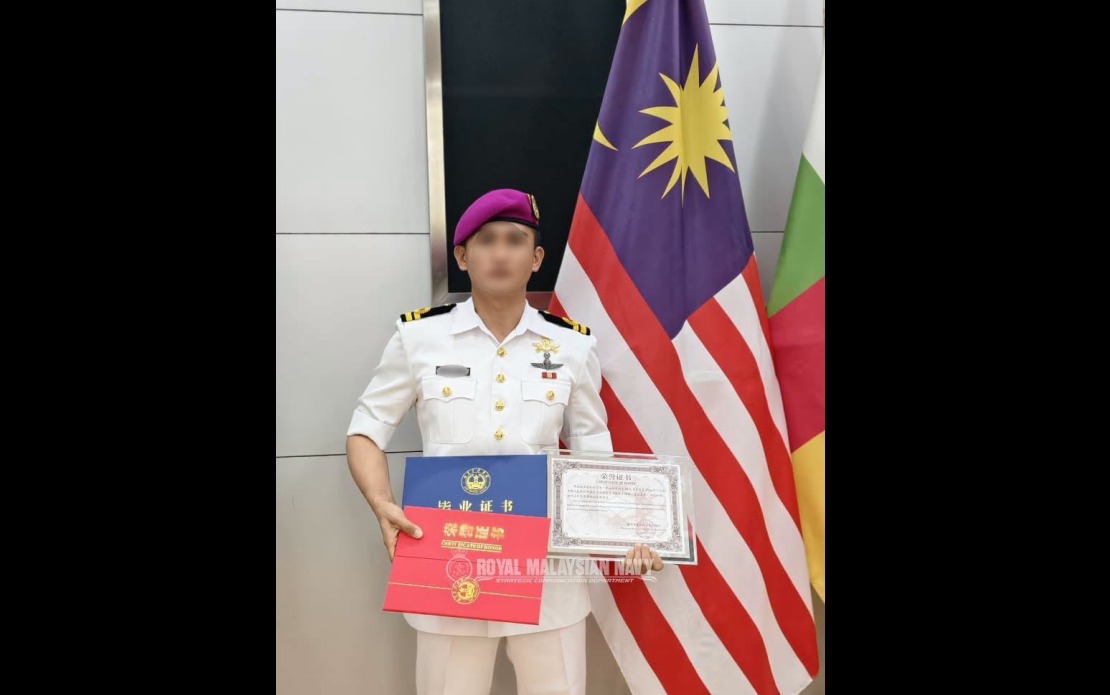
Sultan Sharafuddin Idris Shah, in his capacity as Captain-in-Chief of the Royal Malaysian Navy, has extended formal congratulations to a member of the RMN's elite Special Naval Forces unit PASKAL for securing the top position in an intensive sniper course conducted at the PLA Infantry Academy's campus in Shijiazhuang, Hebei Province. The achievement represents a significant milestone for Malaysia's naval special operations community and underscores the growing professional exchanges between Malaysian and Chinese military institutions.
The officer completed the Sniper Infantry Course between March 1 and July 31, a five-month programme that culminated in his selection as the Excellent Student Award recipient. Beyond this principal honour, the PASKAL member received the Certificate of Honors for Excellent Cadre and was presented with Silver Badge Medals in recognition of his superior performance throughout the rigorous assessment process. These multiple accolades reflect sustained excellence across the course curriculum and demonstrate the calibre of training that PASKAL personnel bring to international military engagements.
What distinguishes this achievement is its competitive context. The PASKAL officer prevailed among 131 students representing more than 24 countries, a truly international cohort that speaks to the PLA Infantry Academy's standing as a destination for military training excellence in Asia. The presence of such a large and diverse student body means the Malaysian officer's first-place finish was not merely a national accomplishment but a demonstration of capability against established military professionals from across the region and beyond. This outcome carries particular resonance for Malaysia's defence establishment, which continues to develop sophisticated naval special operations capabilities.
The Sultan's statement emphasises that the achievement extends beyond individual recognition. He framed the PASKAL officer's success as an exemplary case study for other personnel within the unit and across the broader Royal Malaysian Navy, suggesting that such international excellence should inspire colleagues to pursue similar training opportunities and push professional boundaries. This pedagogical angle reveals how military hierarchies leverage individual achievements to cultivate organisational culture and motivation among lower-ranking personnel.
Sultan Sharafuddin's explicit pride in this accomplishment also reflects the formal institutional relationship between the monarchy and Malaysia's armed forces. As Captain-in-Chief of the RMN, the Sultan holds a constitutional position that makes him the ceremonial head of the service, and his public recognition of outstanding personnel achievements strengthens the symbolic connection between the Crown and military excellence. The statement demonstrates how royal endorsement amplifies the significance of military accomplishments within the Malaysian context.
The training conducted at the PLA Infantry Academy represents one dimension of deepening military cooperation between Malaysia and China. Such exchanges allow Malaysian servicemembers to acquire cutting-edge tactics and techniques from a major regional military power while simultaneously demonstrating Malaysia's commitment to professional military development standards that transcend bilateral relationships. The sniper course itself belongs to a category of specialised training that demands exceptional discipline, patience, and technical proficiency—qualities that Malaysian military doctrine emphasises for elite units like PASKAL.
PASKAL, established in the 1980s, is widely recognised as one of Southeast Asia's most capable naval commando forces. The unit has historically maintained high operational standards and participates regularly in multinational exercises and training programmes. The selection of a PASKAL member for this particular course suggests deliberate institutional investment in maintaining technical edge, particularly in skills like precision marksmanship that remain central to special operations effectiveness across different maritime and land environments.
RMN Chief Admiral Tan Sri Dr Zulhelmy Ithnain received mention in the Sultan's statement, reflecting the hierarchical acknowledgment that significant personnel achievements also reflect on senior leadership. This recognition pattern is standard in formal military communications but serves an important institutional function by ensuring that excellence is celebrated at multiple organisational levels. The Chief's public credit for PASKAL achievements reinforces accountability for maintaining unit standards while encouraging continued professional investment.
The broader implications for Malaysia's defence sector include the validation of international training partnerships as critical components of force development strategy. By achieving top results at a prominent foreign military academy, the PASKAL officer has effectively demonstrated that Malaysian servicemembers can compete and excel in rigorous international military education environments. This builds confidence in Malaysia's ability to leverage overseas training opportunities strategically while also enhancing the reputation of Malaysian military professionalism globally.
Furthermore, the sniper course achievement illustrates how Malaysia balances its strategic relationships across multiple partners. While Malaysia maintains robust defence ties with Western nations including Australia, the United States, and Singapore, this training partnership with China demonstrates openness to diversifying military capability development sources. Such balanced engagement patterns are increasingly important in Southeast Asia's evolving security environment, where nations must manage great power competition while maximising access to quality professional development.
The Sultan's statement also carries implicit messaging about Malaysian military values and priorities. By elevating an individual achievement in specialised technical proficiency, the royal endorsement signals that Malaysia's defence establishment values meritocratic excellence, international competitiveness, and continuous professional improvement. These values align with broader patterns in how modern militaries attempt to maintain operational relevance amid rapidly evolving security challenges.
Looking forward, this achievement may encourage additional Malaysian servicemembers to pursue advanced training opportunities at Chinese and other international military institutions. It establishes a precedent of recognition for such accomplishments at the highest levels of Malaysian military and state hierarchy. For PASKAL specifically, the officer's success provides tangible evidence that the unit's recruitment and training pipelines are producing personnel capable of performing at world-class standards, an important consideration as Malaysia considers resource allocation and force modernisation priorities.

