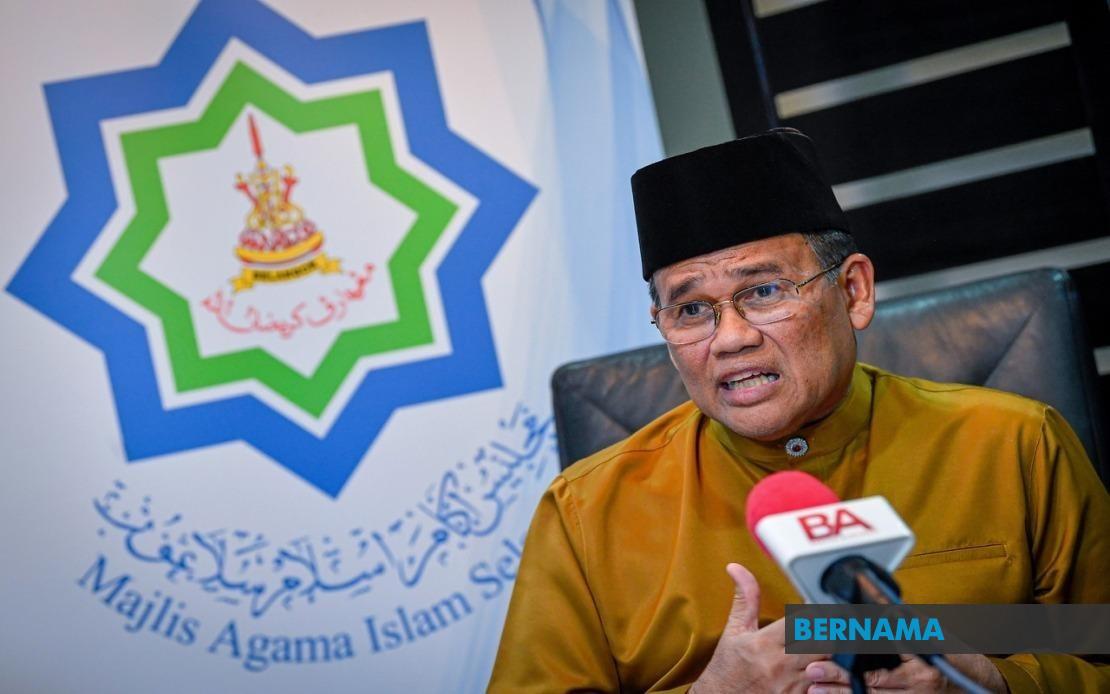
The Sultan of Selangor, Sultan Sharafuddin Idris Shah, has declined to permit surau and musolla facilities within shopping malls across the state to conduct Friday prayers at this time, according to a statement from the Selangor Islamic Religious Council (MAIS). The decision represents a conservative stance on worship infrastructure expansion, reflecting tensions between modernising religious spaces and preserving traditional institutional hierarchies within Malaysia's Islamic administration.
MAIS chairman Datuk Salehuddin Saidin explained that the royal decision prioritises safeguarding the central position of mosques within the state's Islamic ecosystem. By restricting Friday prayer authorisations to established mosques and surau, authorities aim to prevent a fragmentation of congregational worship that could weaken the institutional fabric of organised Islamic practice. The council expressed apprehension that permitting prayer services in commercial settings would create competing venues, potentially redirecting worshippers from formally designated religious institutions.
The practical impact of such competition concerns MAIS substantially. With 448 mosques and 379 surau already authorised to conduct Friday prayers throughout Selangor, the council contends that existing facilities sufficiently accommodate the state's Muslim population without requiring additional prayer spaces in shopping environments. This argument assumes adequate geographical distribution, though it sidesteps questions about accessibility during peak hours or underutilised facilities in less densely populated areas. The reasoning reflects a capacity-planning perspective, though it may not account for shifting urban patterns where shopping districts concentrate working populations at specific times.
Beyond infrastructure concerns, MAIS raised governance and oversight challenges that reveal deeper institutional anxieties. Should shopping mall surau operate independently, appointing their own imams, bilals, and administrative staff without MAIS coordination, the council would lose direct supervisory authority. Standardisation of Friday sermons—a mechanism for aligned religious messaging—would become problematic. Personnel accountability and compliance with state Islamic regulations would prove difficult to monitor. These concerns underscore how religious administration in Malaysia operates through hierarchical control structures where state-approved institutions maintain doctrinal and operational consistency.
The council did acknowledge one existing exception within Selangor: a shopping mall surau that secured temporary Friday prayer approval specifically because no mosque operates in nearby proximity. This nuanced position demonstrates that blanket prohibition is not immutable policy but rather reflects prioritisation principles. The temporary status carries implicit conditionality—once a nearby mosque becomes operational and capable of accommodating local congregations, that shopping mall permission would be withdrawn. This framework treats mall-based prayers as emergency accommodation rather than legitimate permanent alternatives to mosque-centred worship.
Selangor's decision aligns with constitutional and administrative frameworks governing Islamic affairs in Malaysia. Under the Ninth Schedule of the Federal Constitution, religious matters fall within state jurisdiction rather than federal authority. As constitutional head of Islam in Selangor, the Sultan exercises prerogative powers over Islamic administration. Consequently, the Sultan's position carries decisive weight in determining worship infrastructure policy. MAIS further cited Section 97 of the Administration of the Religion of Islam (State of Selangor) Enactment 2003, which requires prior written approval for establishing any facility functioning as a mosque, surau, or musolla, establishing legal architecture supporting the council's gatekeeping role.
This decision occurs within a broader national conversation about modernising Islamic institutions. Minister in the Prime Minister's Department (Religious Affairs) Dr Zulkifli Hasan had previously proposed establishing surau authorised for Friday prayers in shopping malls nationwide, suggesting federal-level receptiveness to such expansion. MAIS's acknowledgment of this federal position, combined with its assertion of state autonomy, indicates potential jurisdictional friction between federal and state Islamic governance structures. The statement diplomatically notes the federal government's perspective while firmly reaffirming Selangor's constitutional right to determine its own policies.
The Sultan's decision reflects broader institutional tensions within Malaysia's plural religious governance system. State Islamic councils in Malaysia function as powerful regulatory bodies exercising significant control over worship spaces, religious personnel, and doctrinal messaging. While such centralisation enables coordinated religious administration and prevents theological fragmentation, it potentially constrains religious freedom and limits institutional innovation. Shopping mall surau represent a modern response to urbanisation patterns and workplace-integrated religious practice, yet they challenge traditional hierarchies where mosques occupy paramount positions.
For Malaysian Muslims navigating contemporary urban life, the decision presents practical implications. Professionals working in commercial districts during Friday prayer times must either travel to nearby mosques—which MAIS notes exist adjacent to shopping malls—or adjust work schedules around designated prayer venues. This assumes adequate mosque proximity and that employer flexibility permits extended prayer breaks. The reasoning privileges institutional preservation over convenience accessibility, accepting some practical inconvenience to maintain religious infrastructure hierarchies.
The broader Southeast Asian context further illuminates this policy choice. Across the region, Muslim-majority jurisdictions manage comparable tensions between modernising Islamic practice and preserving institutional structures. Singapore, Brunei, and various Indonesian provinces navigate similar questions about worship space regulation, often wrestling with balancing urbanisation pressures against religious authority maintenance. Selangor's approach demonstrates Malaysia's preference for centralised religious governance emphasising institutional control, contrasting with more decentralised approaches elsewhere in the region.
Looking forward, this decision may not represent a permanent settlement. As urban densification continues and workplace religious practice becomes increasingly routine, pressure to reconsider shopping mall surau authorisation will likely persist. MAIS's acknowledgment that temporary approvals exist and could be adjusted suggests flexibility within current doctrine. Future mosque construction patterns, population growth, and evolving workplace arrangements may necessitate revisiting this stance. The Sultan's current position establishes a framework prioritising institutional preservation while leaving room for exceptions based on demonstrable needs.
The decision ultimately reflects Selangor's institutional commitment to preserving mosques as primary worship centres and MAIS's desire to maintain supervisory authority over all facilities conducting Friday prayers. While framed in religious terms emphasising mosque prominence, the policy also protects institutional interests and administrative control. Whether this approach optimally serves contemporary Muslim worshippers' practical needs remains subject to ongoing evaluation as Malaysia's urban landscape continues transforming.

