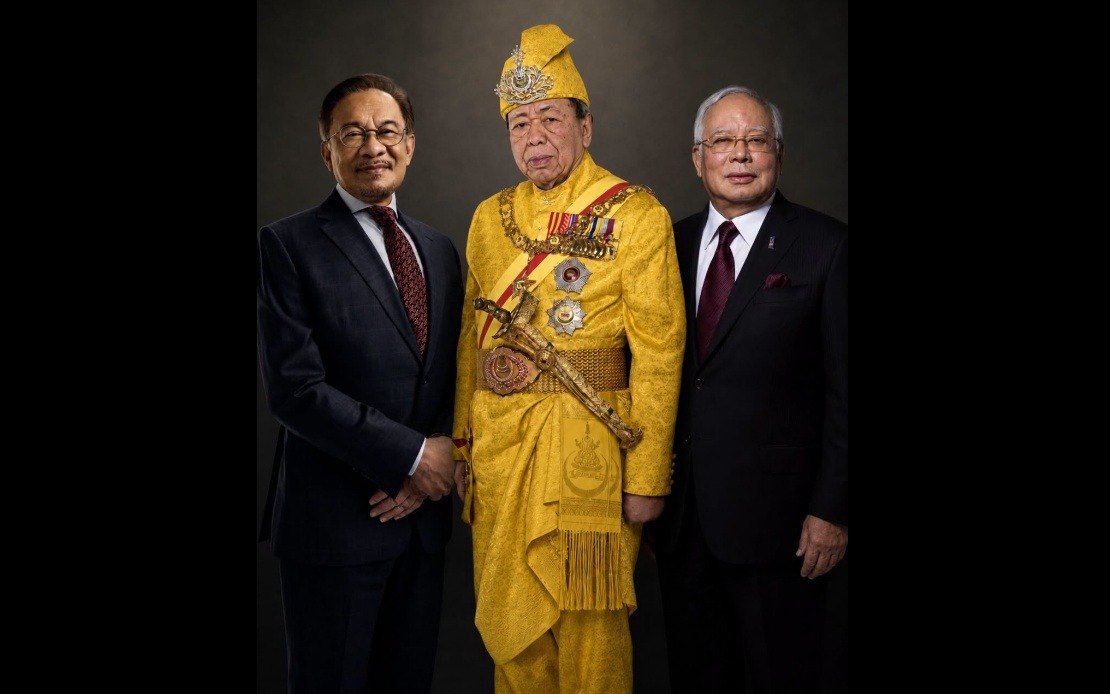
The Sultan of Selangor, Sultan Sharafuddin Idris Shah, has publicly recognised Prime Minister Datuk Seri Anwar Ibrahim's pivotal role in bringing the Shah Alam Line LRT3 project to completion, with the new transport corridor beginning operations this week. In a statement released from Shah Alam, the Sultan expressed particular satisfaction with Anwar's willingness to restore five stations along the route that had been eliminated during earlier phases of the project, alongside his initiative to develop affordable housing complexes adjacent to LRT3 stations to better serve commuters and their families.
The Sultan's acknowledgement carries significance beyond mere diplomatic courtesy. It reflects the broader challenge faced by previous administrations in delivering this long-stalled infrastructure initiative, which had encountered considerable obstacles since its original conception. The LRT3 project represents more than a simple transit system—it addresses a deeply rooted problem that prompted the Sultan to champion its construction in the first place: severe traffic congestion affecting residents in Klang, Shah Alam, and neighbouring districts, with the issue having grown so pronounced that it directly impacted families' quality of life and working patterns.
The genesis of the LRT3 initiative reveals the practical motivations driving infrastructure development in Selangor. The Sultan noted that the project originated from public grievances, particularly from housewives who complained about husbands struggling to return home at reasonable hours due to gridlock on the limited road networks connecting Klang and Kuala Lumpur. At that time, only two bridges spanned the Klang River, creating severe bottlenecks during peak traffic periods. These transportation challenges had become so acute that they warranted intervention at the highest levels of governance, prompting the Sultan to advocate for a rail-based solution that could fundamentally alter the region's mobility landscape.
The project's journey to completion has been decidedly protracted and circuitous. Following the 2018 government transition, implementation stalled for more than eighteen months before the initiative faced an additional nineteen-month delay attributable to the COVID-19 pandemic. During these extended interruptions, project parameters were substantially revised—station configurations were downsized, the planned number of train coaches was reduced, and five stations originally designated for the line were cancelled entirely. These modifications reflected both budgetary constraints and operational recalibrations necessary to move the project forward, though they represented significant compromises from the original vision.
The Sultan's commendation of Prime Minister Anwar Ibrahim specifically highlights the decision to reverse some of these earlier cutbacks by reinstating the five previously cancelled stations. This reversal signifies a commitment to expanded coverage across the Klang Valley corridor, potentially serving a broader population base than the earlier scaled-down iteration would have accommodated. Beyond station restoration, the government's parallel initiative to develop affordable housing near LRT3 stations addresses the critical intersection between transport infrastructure and residential accessibility—a particularly pressing concern in the Klang Valley where housing costs and commute distances represent persistent challenges for middle and lower-income households.
In tempering political credit-taking, the Sultan emphasised that the LRT3's successful delivery should not be attributed to any single administration or individual, but rather acknowledged as a product of sustained planning and cross-governmental cooperation spanning multiple political cycles. This measured perspective carries importance for Malaysian political discourse, where infrastructure projects often become contested terrain for partisan claims of achievement. The Sultan's insistence that the LRT3 represents continuity rather than singular accomplishment underscores the reality that significant public works typically require sustained commitment transcending electoral cycles and administrative changes.
The Sultan also extended recognition to former Prime Minister Datuk Seri Najib Tun Razak for initially responding to his calls for improved rail connectivity between Klang, Shah Alam, and Kuala Lumpur. This acknowledgement demonstrates that the Sultan views infrastructure development as a collaborative enterprise requiring support from successive administrations regardless of their political affiliations. Additionally, the Sultan referenced the previous government's decision in 2018 to abolish the Batu Tiga and Sungai Rasau toll plazas as an interim congestion relief measure, illustrating how complementary policy decisions can work alongside major infrastructure projects to address mobility challenges.
The Sultan's framing of the LRT3 as fundamentally a people-centred initiative rather than a prestige mega-project reveals an important philosophical distinction in how significant infrastructure should be conceived and evaluated. This positioning counters a common criticism in Southeast Asian development discourse, where large-scale transport projects are sometimes viewed sceptically as monument-building exercises serving political vanity rather than genuine public welfare. By emphasising that the LRT3 emerged from constituent complaints and addresses demonstrable quality-of-life problems, the Sultan places the project within a practical necessity framework that resonates with the lived experiences of Selangor commuters.
The operational launch of the Shah Alam Line opens new connectivity possibilities across the Klang Valley. The project promises to furnish commuters with what the Sultan characterised as a faster, more comfortable, and safer transportation alternative compared to road-based travel through congested corridors. For residents of Klang, Shah Alam, Petaling Jaya, and surrounding municipalities, the new line potentially transforms commuting patterns and employment accessibility, enabling workers to reach Kuala Lumpur's commercial centres and vice versa without enduring the peak-hour congestion that had previously characterised this crucial economic corridor.
Looking forward, the Sultan expressed confidence that the LRT3 will catalyse broader economic development across the region while simultaneously enhancing inter-city connectivity between key commercial hubs. This optimism reflects broader aspirations for the Klang Valley region, which encompasses some of Malaysia's most economically dynamic areas. Improved transportation linkages between Kuala Lumpur, Petaling Jaya, Shah Alam, and Klang could facilitate labour mobility, business expansion, and residential development patterns that respond to better-connected geography rather than constrained by historical traffic limitations.
Operational continuity represents another concern highlighted by the Sultan, who expressed reliance on Prasarana Malaysia Bhd to maintain rigorous maintenance protocols ensuring sustained service reliability and efficiency. This focus on long-term maintenance reflects lessons learned across Southeast Asia, where ambitious transport infrastructure sometimes deteriorates prematurely due to inadequate upkeep regimes. The Sultan's emphasis on this matter suggests awareness that the LRT3's ultimate success depends not merely on successful project completion, but on Prasarana's demonstrated capacity to manage the asset effectively throughout its operational lifespan.
For Malaysian observers monitoring major infrastructure development, the LRT3 project completion offers instructive lessons regarding project persistence across political transitions, scope management under fiscal constraints, and the importance of restoration when budgetary circumstances improve. The project's eventual delivery, following years of delays and modifications, demonstrates that even significantly compromised infrastructure initiatives can reach operational status through sustained governmental commitment, though typically with revised specifications reflecting changed economic and political circumstances. The Sultan's measured acknowledgement of multiple administrations' contributions suggests a maturity in public discourse about infrastructure development that might serve as a model for how Malaysians discuss competing claims regarding major development achievements.

