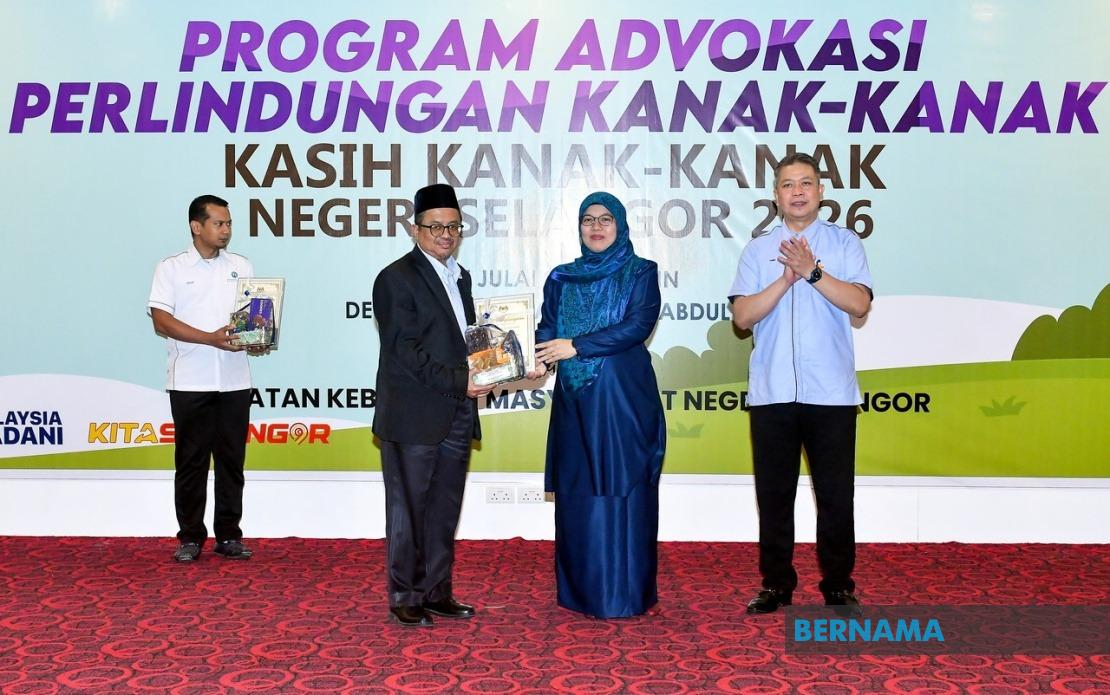
Selangor's state government is moving decisively to fortify child protection mechanisms through an expanded advocacy campaign designed to shield its substantial youth population from harm and social threats. Addressing the growing need for coordinated safeguarding in Malaysia's most urbanised state, officials launched the Programme for Child Protection Advocacy—Kasih Kanak-Kanak Selangor at the Sultan Abdul Aziz Silver Jubilee Hall in Shah Alam on July 27. The initiative underscores mounting concern about the welfare trajectory of more than 1.8 million children residing in the state, a population facing distinct vulnerabilities inherent to rapid urbanisation and dense settlement patterns.
Anfaal Saari, chairman of Selangor's Women Development and Social Welfare Committee, emphasised that the advocacy push represents far more than reactive policymaking. She stressed that state administrators must proactively embed child safety into social infrastructure rather than waiting for incidents to trigger intervention. The committee chief articulated a vision of Selangor as a nurturing environment where young people develop free from exploitation, violence and criminal exposure—positioning child protection as foundational to broader state prosperity objectives.
Data from the first half of 2024 provided stark impetus for the expanded campaign. Selangor logged 2,306 child-related cases spanning January through June, with the majority—1,877 instances—classified as care and protection matters requiring intervention by welfare authorities. An additional 366 cases involved criminal misconduct affecting children, whilst 63 cases concerned minors beyond parental control. These figures, whilst manageable in isolation, accumulate to reveal systemic pressures demanding coordinated responses across multiple agencies and community sectors.
The newly launched programme represents continuity of earlier efforts dating to 2004, when Selangor began collaboration with Yayasan Islam Darul Ehsan (YIDE) to embed protection awareness into educational settings. This two-decade partnership has reached more than 100,000 students nationwide through targeted advocacy training and pastoral support, demonstrating that sustained investment in preventive education yields measurable outcomes. By building institutional memory and institutional relationships across two decades, Selangor has constructed frameworks enabling rapid scaling when new initiatives become necessary.
The July 27 launch event drew 250 participants representing 52 schools and tahfiz (Islamic memorisation) institutions, reflecting deliberate inclusion of both mainstream and religious educational ecosystems. This approach acknowledges that child protection cannot be confined to government schools; tahfiz centres, Islamic religious schools and privately administered institutions require equivalent oversight and support mechanisms. Participation from institutions under the Selangor State Education Department (JPNS), the Selangor Islamic Religious Department (JAIS) and the Selangor Tahfiz Al-Quran Institutions Association (PITAS) signals governmental commitment to comprehensive coverage regardless of institutional affiliation.
Multi-agency coordination emerged as central to Selangor's strategic approach. Collaboration spanning JPNS, JAIS, the Royal Malaysia Police (PDRM) and the Malaysian Communications and Multimedia Commission (MCMC) enables authorities to address child protection across education, religious instruction, law enforcement and digital safety domains simultaneously. This horizontal integration prevents the fragmented policymaking that often plagues child welfare efforts, where agencies operate in silos pursuing disconnected objectives. By contrast, Selangor's model creates feedback loops and shared intelligence mechanisms allowing educators, religious authorities and police to flag emerging threats and coordinate responses.
The emphasis on tahfiz centres and religious institutions reflects evolving demographic realities across Malaysia. As Islamic education gains prominence among parents seeking moral grounding for their children, these institutions have become significant nodes in youth development networks. Yet they operate with variable oversight capacity and differing governance structures compared to mainstream schools. Selangor's inclusion of JAIS and PITAS within protection frameworks acknowledges this reality and extends safeguarding principles to environments where vulnerability may concentrate due to less developed reporting mechanisms or pastoral training.
Digital safety emerged implicitly through MCMC's involvement, signalling recognition that contemporary child protection extends beyond physical safety into online domains. As Malaysian youth increasingly inhabit digital environments, exposure to grooming, exploitation material and cyberbullying represents mounting threats that traditional protection frameworks struggle to address. MCMC's participation suggests Selangor is attempting to bridge institutional gaps between educators trained in conventional safeguarding and regulators equipped to address online harms.
For Malaysian policymakers and neighbouring state governments, Selangor's advocacy intensification offers instructive lessons about prevention-focused governance. By treating child protection as a continuous social investment rather than episodic crisis response, the state positions itself to detect emerging threats earlier and intervene before cases escalate to criminal investigation stages. This preventive orientation proves more humane and cost-effective than purely reactive models dependent on prosecution and remediation after harm occurs.
The 2,306 cases recorded in the first six months of 2024 likely understate the true prevalence of child vulnerabilities, as many instances remain unreported through embarrassment, family pressure or lack of awareness about reporting mechanisms. Selangor's advocacy campaign aims partly to increase disclosure by building institutional cultures where adults—particularly teachers and religious educators—feel equipped and obligated to flag concerning behaviours. Educational campaigns targeting young people directly also empower them to recognise inappropriate conduct and access support resources.
As Malaysia confronts evolving social challenges including economic inequality, digital disruption and migration-related family separation, child welfare pressures intensify across urban centres. Selangor's experience provides a replicable model for other state governments seeking to strengthen protection systems. The state demonstrates that coordinated advocacy combining education sector engagement, law enforcement coordination, religious institutional involvement and digital safety oversight creates more resilient safeguarding ecosystems than siloed approaches.
Governance sustainability remains the critical variable determining whether Selangor's initiative sustains momentum beyond its launch period. Continuous advocacy requires stable funding, regular training refreshes and institutional accountability mechanisms ensuring agencies remain genuinely engaged rather than nominally participating. The state's twenty-year partnership with YIDE suggests institutional commitment extending beyond electoral cycles, yet ongoing monitoring of implementation quality across 250 participating institutions will determine whether the programme translates advocacy into measurable harm reduction.

