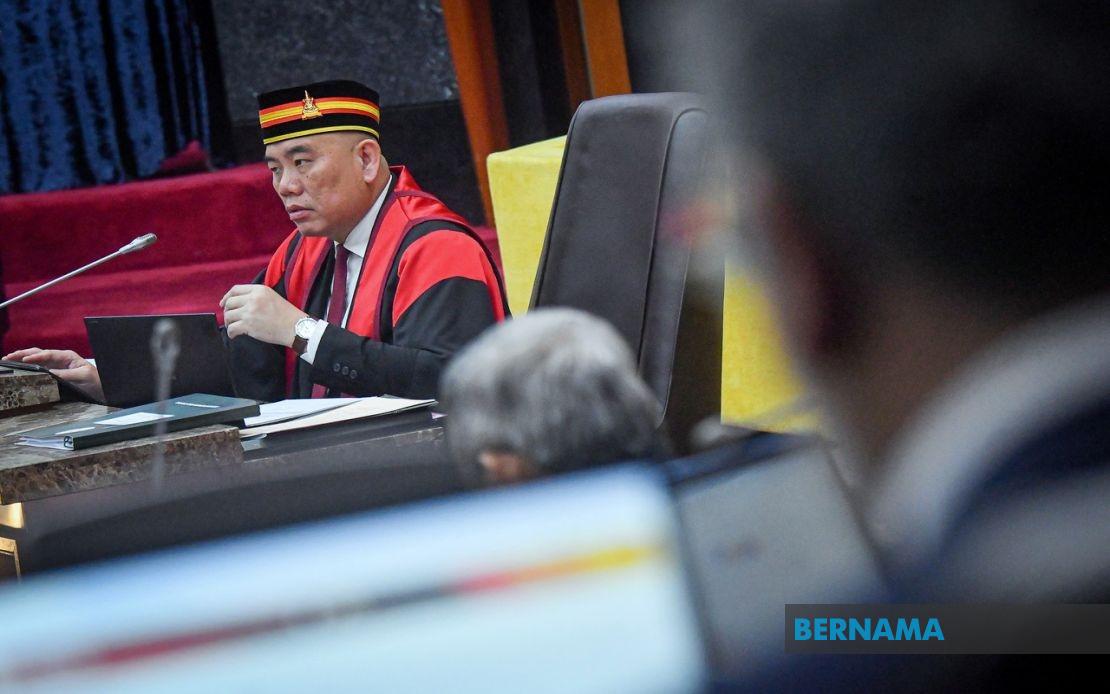
The Selangor State Legislative Assembly Speaker Lau Weng San is methodically working through a detailed examination of the status of all state assemblymen, a process that will ultimately determine whether any seats in the legislature should be formally vacated. Speaking at Wisma Dewan Negeri Selangor in Shah Alam on August 3, Lau indicated that the review encompasses members from all political parties without exception, underscoring the impartial nature of the exercise and its alignment with constitutional requirements.
The Speaker's cautious approach reflects the technical complexities and political sensitivities surrounding the review process. Rather than rushing to conclusions, Lau emphasised that every aspect of the situation demands careful scrutiny across all constituencies within Selangor. This comprehensive methodology is essential not merely for procedural correctness but also for maintaining institutional credibility during what appears to be a period of potential parliamentary flux in the state.
When questioned about the timeline for completion, Lau declined to provide a specific date, instead committing only to announcing developments once the investigative phase reaches its conclusion. This measured stance contrasts with the urgency evident at the executive level, where Menteri Besar Datuk Seri Amirudin Shari indicated that a final determination on at least one state seat was anticipated within the week. The discrepancy in timelines suggests coordination challenges between the Speaker's legislative office and the state government's executive branch.
An important constitutional backdrop informs this review process. Under Selangor's constitutional framework, any assemblyman who remains absent from sittings for six consecutive months without securing prior permission or submitting official notification faces the prospect of having his seat declared vacant. This threshold is comparatively generous, reflecting the legislature's traditional assumption that assemblymen will maintain regular attendance, but it also provides a clear mechanism for addressing prolonged absences that may stem from resignation, disqualification, or other circumstances.
Yet the Speaker's office appears mindful that the mere absence of members from parliament does not automatically signal wrongdoing or imminent vacancy declarations. Lau specifically cautioned against inferring problems from the fact that one or two assemblymen were absent from that day's sitting, pointing out that legitimate reasons—including health concerns—may explain non-attendance. This distinction matters because public speculation about parliamentary vacancies can undermine confidence in the legislative process and potentially strain political relationships unnecessarily.
Several assemblymen have proactively submitted letters to the Speaker's office notifying of their absences and providing justifications for their non-attendance. Health-related circumstances feature prominently among these explanations, suggesting that the review may encompass situations where members are unable to perform their duties due to medical conditions rather than questions about their continued commitment to their roles. Each case, according to Lau, will receive individualised assessment before any determination is reached.
The convergence of this legislative review with the state government's own administrative processes indicates that multiple institutional mechanisms are operating in parallel. Menteri Besar Amirudin Shari revealed that the state's legal adviser is preparing necessary documentation and notes that will subsequently be transmitted to the relevant authorities. This sequential progression from the Speaker's review to the state government's decision-making and ultimately to the Election Commission's evaluation of by-election requirements suggests a layered institutional response to what may be a complex political situation.
For Malaysian observers, the significance of this process extends beyond Selangor's borders. As Malaysia's most economically significant state and a politically competitive jurisdiction, developments in Selangor's legislature frequently carry implications for national political calculations. Any substantial changes to the composition of the state assembly could influence coalition dynamics and reshape parliamentary balances at the state level.
The timing of this review also merits consideration within the broader context of Malaysia's post-2022 political landscape. The country has experienced considerable parliamentary volatility following the general election, with shifting coalitions and unexpected vacancies generating uncertainty about governmental stability. Selangor's deliberate and methodical approach to assessing assemblymen status contrasts with more rushed interventions elsewhere, perhaps reflecting lessons learned from previous controversies surrounding parliamentary vacancies and by-elections.
The Speaker's commitment to transparency, evidenced by his pledge to provide updates upon review completion, suggests an awareness that such matters require public confidence and clear communication. In an era of heightened political sensitivity and rapid information dissemination, the institutional credibility of the legislature depends significantly on how thoroughly and fairly such reviews are conducted and explained.
Meanwhile, the Election Commission awaits notification of final determinations before considering whether to schedule any by-elections. This institutional sequencing ensures that electoral machinery remains in readiness but also creates a temporal framework within which political actors must operate. For assemblymen under review, the process represents an extended period of uncertainty, while for Selangor's constituents, it signals that questions about legislative representation remain to be definitively resolved.

