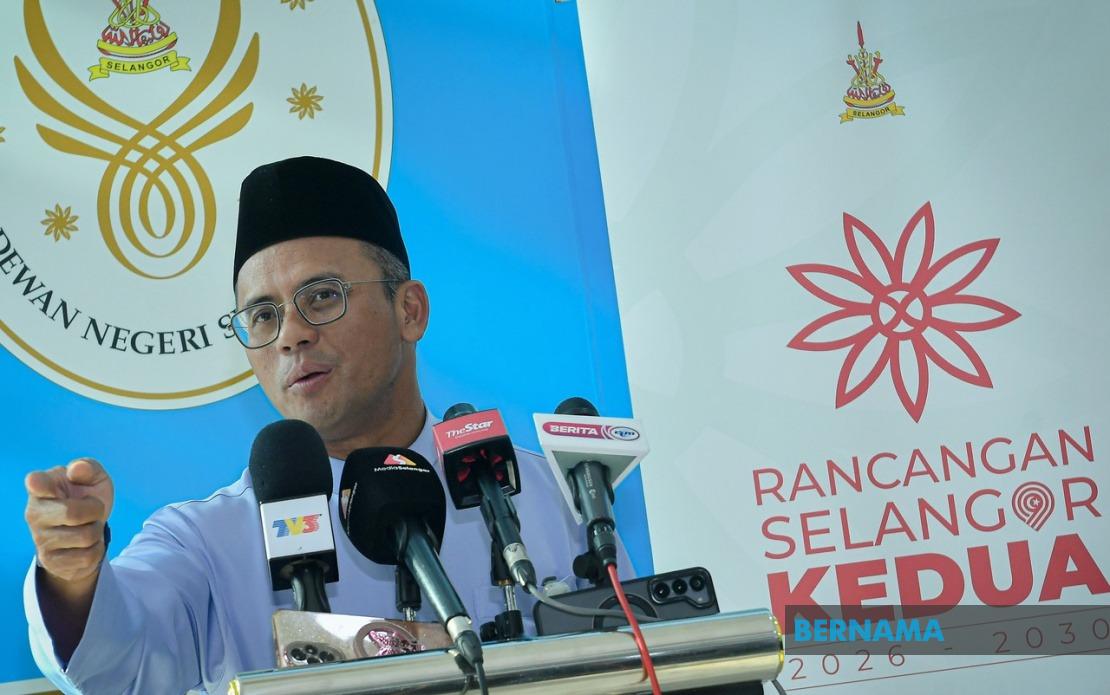
Selangor's housing shortage, one of the most acute in Malaysia, may finally see meaningful relief under an expansive government programme unveiled this week. Menteri Besar Datuk Seri Amirudin Shari has committed the state to constructing 200,000 affordable residential units through the RS-2 initiative, a bold attempt to address the growing gap between housing supply and the purchasing power of ordinary families in the country's wealthiest state.
Progress on the initiative has already been substantial. According to Amirudin's statement to the Selangor State Legislative Assembly, the state has completed 64,188 homes while an additional 69,014 remain under active construction. These figures bring the current tally to 133,202 units, representing more than two-thirds of the final target. The remaining 66,798 units represent a significant pipeline that will keep construction activity flowing across the state for several years to come, potentially reshaping housing availability across multiple districts and municipalities.
Beyond simple construction numbers, the Selangor government is introducing an innovative financial mechanism designed to help renters transition into homeownership. The scheme, administered through the Selangor Housing and Property Board, channels 30 per cent of monthly rental payments into individual housing deposits. When tenants have accumulated sufficient capital and are ready to purchase, these accumulated funds become available as down payments or equity contributions. This approach recognises a fundamental barrier facing low-income Malaysians: the difficulty of saving a deposit while paying market-rate rent simultaneously.
For Southeast Asian policymakers grappling with affordable housing shortages, this rental-to-ownership model offers a practical alternative to traditional approaches. It builds on the principle that housing programmes should facilitate wealth accumulation among lower-income groups rather than merely providing temporary accommodation. The scheme addresses a specific Malaysian reality where young families and workers often remain renters well into their thirties because deposit requirements remain insurmountable despite stable employment.
The Selangor government recognises that affordable housing cannot exist in isolation from broader urban planning. Transit connectivity has emerged as a central concern, with authorities planning to increase public transport service frequencies to improve access to Light Rail Transit and Mass Rapid Transit stations. The state intends to make cities more walkable through systematic installation of covered walkways at every station, a practical response to Malaysia's tropical climate where exposed waiting areas become untenable during heavy downpours.
Every new residential development under the Rumah Selangorku Harapan and Rumah Selangorku Idaman programmes will now incorporate bus stops, ensuring residents can access public transport without lengthy walks through residential streets. This integration acknowledges that affordable housing residents typically lack private vehicles and depend heavily on public systems. The requirement reflects a shift from viewing housing developments as isolated residential zones to treating them as components within larger urban ecosystems.
Selangor plans to deploy technology to identify optimal locations for additional transit infrastructure. Authorities will analyse traffic patterns, public gathering points, and residential distributions to determine where small bus stops remain necessary in existing housing estates. This data-driven approach contrasts sharply with conventional planning methods that often rely on historical patterns or administrative convenience rather than actual usage patterns and demographic needs.
A new household assistance index will measure programme effectiveness across the state, with comprehensive evaluations scheduled at twelve and twenty-four month intervals. This mechanism allows the government to track whether recipients of housing support actually achieve their broader economic and social goals. The index reflects recognition that housing assistance alone cannot succeed if beneficiaries lack employment security, childcare access, or other supporting services. Regular evaluation creates accountability and enables policy adjustment based on real outcomes rather than assumptions.
The scale of Selangor's initiative places significant demands on state finances and construction capacity. Reaching 200,000 units requires coordination across multiple development timelines, maintaining quality standards while scaling production, and securing adequate land in increasingly expensive areas. The state must also ensure that affordability is maintained throughout development cycles as land and material costs potentially rise. These operational challenges explain why many housing initiatives fall short of targets despite strong political commitment.
For Malaysian workers earning modest incomes, particularly those in Selangor's manufacturing and service sectors, the programme offers tangible hope. The combination of genuine affordability, location advantages near employment centres, and improved public transport access could meaningfully reshape living standards for hundreds of thousands of Malaysians. Success would demonstrate that even in Malaysia's most economically strained housing markets, systematic government action can bridge the gap between need and supply.
The regional implications are significant. Other Southeast Asian nations facing similar housing pressures—Indonesia, the Philippines, and Thailand—face comparable demographic and economic challenges. Selangor's model of integrating rental-to-own mechanisms with transit-oriented development and ongoing programme evaluation could provide a template for peer governments seeking to expand affordable housing without depleting state treasuries. Should the initiative succeed, it may influence how Malaysia's other states approach their own housing deficits in coming years.

