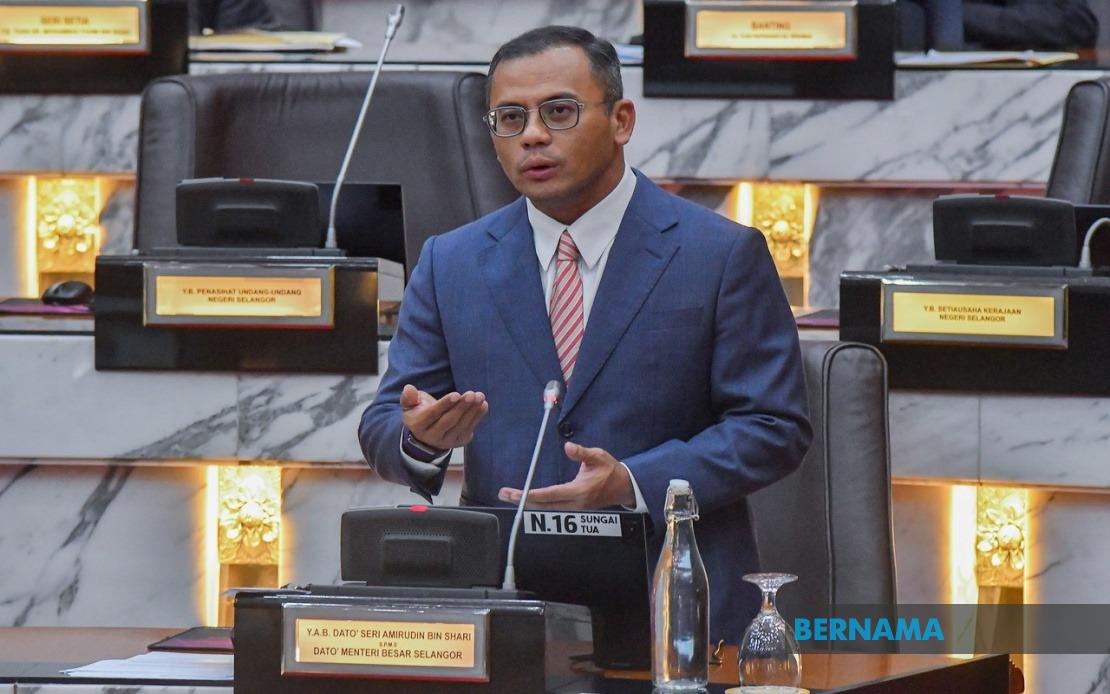
Selangor's top administrator has issued a directive requiring all municipal councils to conduct a comprehensive examination of how commuters can physically access public transportation networks throughout the state. Speaking in the State Legislative Assembly, Menteri Besar Datuk Seri Amirudin Shari emphasized that the state government stands prepared to channel extra budget allocations toward upgrading pedestrian facilities and access infrastructure, including widened walkways and improved safety features at transit stations.
The instruction comes amid growing public concern about the disconnect between rapid transit systems and the neighbourhoods they serve. The issue gained traction on social media platforms when residents highlighted the inadequacy of connecting pathways, particularly around the Light Rail Transit Line 3 (LRT3), drawing attention to how poorly designed access points discourage potential commuters from using public vehicles altogether. This connectivity problem has become a significant obstacle to the state government's broader transportation strategy, which relies on shifting private vehicle users toward mass transit solutions.
Amirudin stressed that local authorities must adopt a more responsive approach to infrastructure challenges rather than waiting for complaints to accumulate on social media channels. He called on municipal leaders to engage proactively with council members and community stakeholders to identify connectivity deficiencies before they become widespread grievances. This shift toward preventive infrastructure planning reflects growing recognition that last-mile and first-mile connectivity—the journey from home to transit stations and from transit stations to final destinations—fundamentally shapes whether people choose public or private transport.
The Menteri Besar made clear that while the state government is willing to invest in these improvements, cost-effectiveness must remain paramount. He cautioned against expensive projects that fail to deliver practical benefits to commuters. Instead, he framed infrastructure spending as a direct investment in achieving the state's mobility objectives, positioning better transit access as essential infrastructure rather than luxury amenity. This emphasis on value-for-money spending suggests the state is balancing ambition with fiscal prudence.
Responsibility for coordinating solutions has been assigned to Ng Sze Han, chairman of the State Investment, Trade and Mobility Committee and assemblyman for Kinrara. Ng has been tasked with convening all public transport operators across Selangor to map existing service coverage and identify specific geographical areas where gaps in connectivity persist. This mapping exercise represents a data-driven approach to understanding where infrastructure investments would generate the most substantial improvements in transit accessibility.
The state government recognizes that operator subsidies alone cannot solve accessibility problems if transit companies maintain inefficient operating patterns. Amirudin noted that reducing operational costs through subsidies should theoretically allow operators to expand service coverage and extend operating hours to accommodate first-mile and last-mile journeys. However, he acknowledged that without coordinated effort from operators themselves—particularly regarding schedule management and route optimization—subsidies may not translate into improved public accessibility.
This situation illustrates a fundamental challenge facing Southeast Asian cities attempting to expand public transit usage. Even when governments invest heavily in rail infrastructure and provide financial support to operators, the entire system only functions effectively when complementary services exist to connect residential areas to transit nodes. The Selangor case demonstrates how a well-intentioned transit network can fail to achieve usage targets if the final segments of commuter journeys remain inconvenient or unsafe.
For Malaysian commuters, particularly those in the Klang Valley, these connectivity improvements could significantly alter transportation choices. If walking to LRT stations becomes safer and more direct, and if bus services better bridge gaps between residential areas and rail networks, more households might abandon private vehicles. This shift would reduce traffic congestion on already-strained highways while generating environmental benefits through lower emissions from transportation.
The directive also signals growing attention to how social media serves as an early warning system for infrastructure failures. By actively monitoring public complaints online and responding with systemic reviews, Selangor's government demonstrates awareness that citizen feedback in digital spaces reflects genuine service delivery problems. This acknowledgment could encourage other Malaysian local authorities to treat social media engagement as a valuable input for urban planning rather than dismissing it as mere online chatter.
Operator participation remains critical to success. Transit companies operating in Selangor must view improved connectivity not as a burden imposed by government mandate but as an opportunity to increase ridership. Better access points and more convenient transfer routes could expand their customer bases, potentially offsetting operational costs through increased fare revenue. This alignment of government objectives with operator incentives will determine whether the connectivity review translates into meaningful improvements on the ground.
The implementation timeline and specific budget allocation for these infrastructure improvements remain undefined. Residents and transit-dependent commuters will be watching whether the state follows through with concrete investments in walkway expansion, shelter construction, and improved lighting at station access points. The success of this initiative could establish a template for other Malaysian states grappling with similar connectivity challenges in their rapidly expanding transit networks.