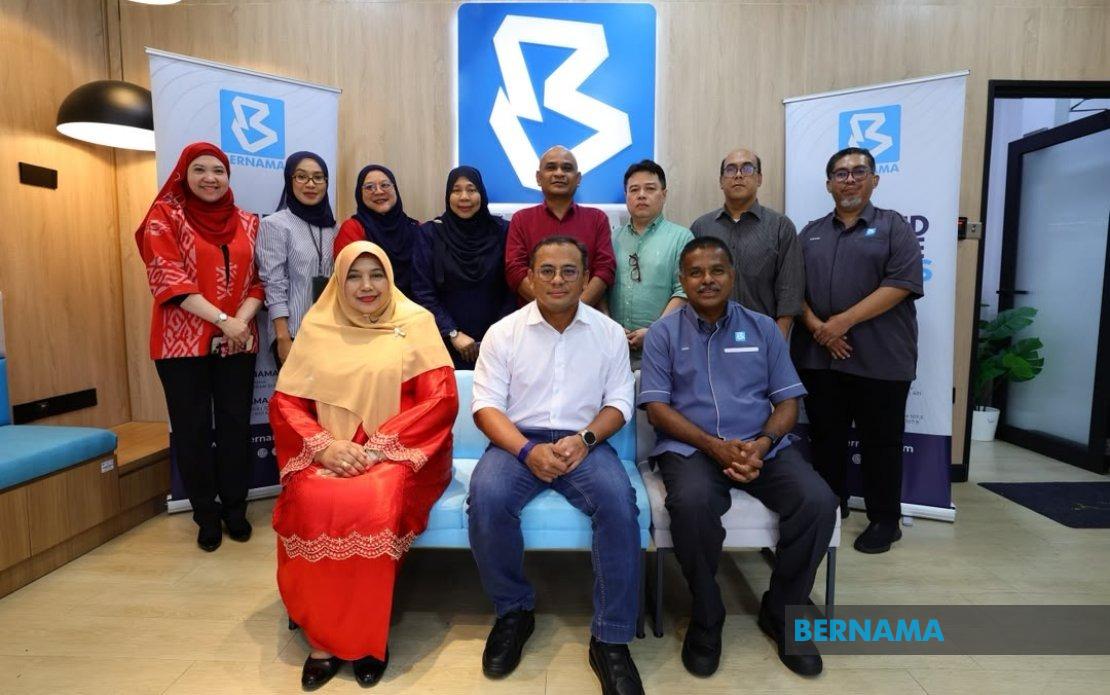
Selangor Menteri Besar Datuk Seri Amirudin Shari made an unscheduled inspection of Malaysia's national news agency on Saturday, visiting Bernama's Negeri Sembilan Bureau to gain firsthand insight into the media machinery behind the coverage of the 16th Negeri Sembilan state election. The visit comes as the election campaign entered its third day, with Amirudin arriving at the bureau's offices at 2 pm to observe how the agency coordinates its reporting on one of the country's most closely watched political contests this year.
Amirudin's tour of the facility carries particular significance given his dual role within the opposition coalition. Beyond his responsibilities as Selangor's chief minister, he serves as the Pakatan Harapan election director, positioning him at the heart of strategic decision-making for the opposition's electoral push in Negeri Sembilan. His presence at the newsroom underscores the importance both political coalitions place on media engagement and the management of election narratives across traditional and digital platforms during critical campaigning periods.
The visit was marked by a formal reception from Bernama's senior leadership, reflecting the institutional importance of the encounter. Datin Paduka Nur-ul Afida Kamaludin, who leads the news agency, and editor-in-chief Arul Rajoo Durar Raj were on hand to welcome the Selangor chief minister. Additional representation from the agency's top management, including deputy editor-in-chief of News Services Mohd Shukri Ishak and Negeri Sembilan bureau chief Nursyabiha Sukri, demonstrated the significance Bernama placed on this engagement with a senior political figure during a major electoral event.
During his time at the bureau, Amirudin received a detailed operational briefing from Mohd Hisham Abdul Rafar, the coordinating editor overseeing Bernama's election coverage. The session provided Amirudin with comprehensive insights into how the national news agency manages its reporting infrastructure during state elections, including the logistics of gathering information from multiple polling centers, coordinating with correspondents across constituencies, and meeting the demanding timelines required to deliver accurate election news in real time. Such briefings are crucial for understanding how media organizations balance the need for speed with accuracy when reporting on rapidly evolving political developments.
The architecture of Bernama's election operations room reveals the complexity of modern election coverage in Malaysia. During major electoral contests, news agencies establish dedicated command centers staffed with editors, reporters, and data analysts who work in coordinated shifts to track developments across all constituencies. These operations rooms serve as the backbone of information flow, synthesizing data from various sources and ensuring that accurate, verified information reaches the public without the distortion that often accompanies rumors or unverified claims that proliferate during election periods. By observing these mechanisms firsthand, political leaders gain understanding of how their own communications and campaign messaging will be filtered, contextualized, and presented to voters.
Amirudin's visit also included scheduling a dedicated television interview with Bernama TV to discuss election developments and, by extension, the Pakatan Harapan coalition's positions and campaign strategies. This scheduled interview allows the opposition director a platform to frame the coalition's narrative during a crucial stage of the campaign when voter decisions are still being formed. The integration of such interviews into the agency's election coverage represents the way Malaysian news organizations provide balanced access to major political figures across the electoral spectrum, ensuring that multiple perspectives on the election receive airtime.
The timing of this visit, occurring on July 20, places it early within the formal election campaign period, which was still in its opening phase. The Election Commission's schedule sets early voting for July 28, giving voters the option to cast ballots before the official polling day on August 1. This compressed timeline means that campaigns must rapidly mobilize supporters, deliver their core messages, and counter opposition claims within a matter of days. Media engagement during this window becomes critical, making interactions with major news agencies strategically significant for any campaign seeking to dominate the information landscape.
Negeri Sembilan holds particular political significance for both major coalitions in Malaysian politics. As a relatively compact state with clear geographic and demographic boundaries, it often serves as a microcosm for testing campaign strategies and messaging before deploying them in larger, more complex electoral battlegrounds. The state's election results frequently provide early indicators of shifting voter sentiment, making them closely monitored by political strategists from across the spectrum. Bernama's comprehensive coverage of the state election thus assumes importance beyond merely documenting local political activity; it provides national stakeholders with data and analysis that can inform broader political assessments.
The operational sophistication of Bernama's election coverage reflects the evolution of news gathering in Malaysia's digital age. Beyond traditional print and broadcast outputs, modern election coverage integrates multiple platforms and formats, from real-time social media updates to interactive graphics displaying results by constituency and demographic breakdowns of voting patterns. The operations room that Amirudin toured functions as a nerve center coordinating across these diverse output channels, ensuring consistency in factual reporting while adapting format and tone to suit different audience segments and media platforms.
Amirudin's documented interest in observing Bernama's operations aligns with broader patterns of political engagement with media institutions during election periods. Senior figures across Malaysia's political coalitions recognize that media management has become an essential component of modern campaigning. By understanding how news agencies organize their coverage, political leaders can better anticipate how their actions and statements will be reported, identify opportunities for media engagement, and craft communications strategies that account for newsroom practices and editorial considerations.
The visit represents a moment of transparency within Malaysia's electoral process, where a major political figure opens his schedule to observation by media practitioners and allows journalists to document his engagement with a national news institution. Such visibility in political-media interactions, while sometimes calculated, serves the democratic principle that voters should understand how information about elections is gathered and processed. As the Negeri Sembilan campaign progresses toward polling day on August 1, the role of organizations like Bernama in providing accurate, comprehensive election coverage remains crucial to ensuring that voters can make informed decisions based on verified facts rather than speculation or misinformation.

