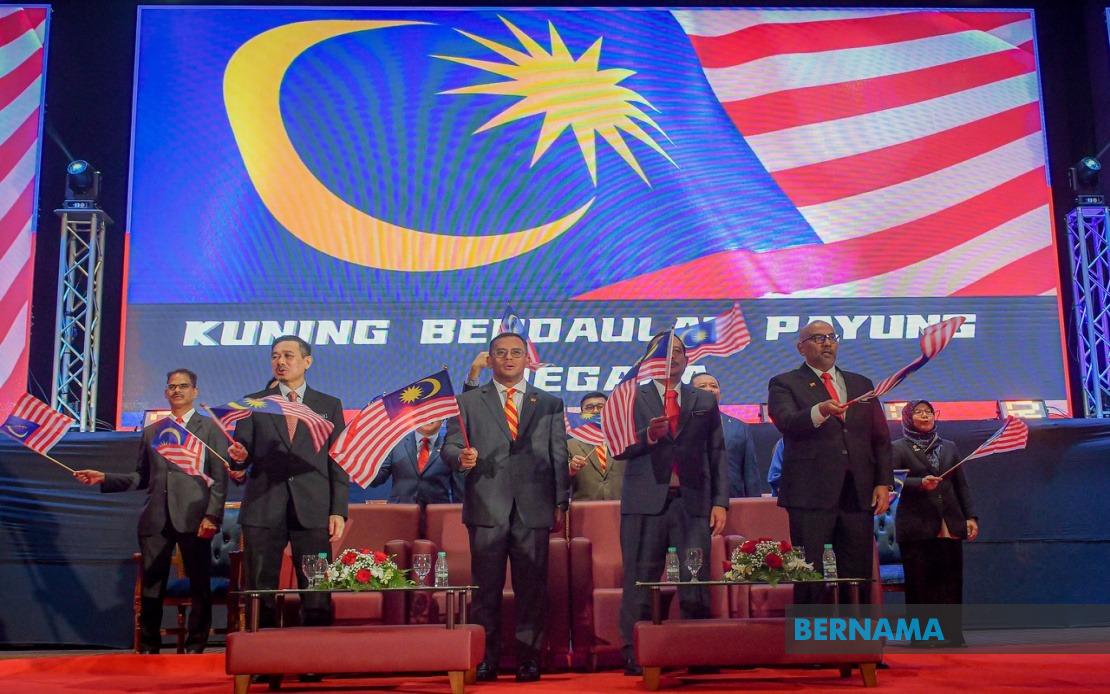
The resolution of an eligibility controversy surrounding a Selangor state assemblyman should reach a critical juncture this week, according to Menteri Besar Datuk Seri Amirudin Shari, with the Election Commission poised to make the final determination on whether a by-election will be necessary. Speaking at a public event in Shah Alam on Friday, Amirudin indicated that the Selangor State Legislative Assembly Speaker holds primary responsibility for formally declaring the seat's status, after which the electoral authority will assess whether a replacement vote is mandated under Malaysian election law.
The procedural path forward hinges on the state legal adviser completing an advisory memorandum this week that will clarify the constitutional and statutory implications of the seat controversy. Amirudin explained that once the Speaker formally notifies the state government of the seat's final status—whether the assemblyman remains eligible or whether the position has become vacant—this information will flow to the Election Commission for their determination. The Menteri Besar stressed that the state administration stands ready to accept whatever course the Election Commission prescribes, indicating the state government's commitment to operating within the established legal framework regardless of the outcome.
The underlying matter stems from allegations questioning the eligibility credentials of a Selangor state assemblyman, though specific details regarding the nature of these eligibility concerns have not been publicly disclosed. Such disputes can encompass various grounds under Malaysian constitutional law, ranging from residency requirements to questions about dual citizenship or other disqualifying factors. The deliberative timeline suggests officials are working methodically through documentation and legal analysis rather than rushing toward a hasty resolution, reflecting the gravity of decisions that could affect both individual political careers and the composition of the state assembly.
For Malaysian and regional observers, this episode underscores the intricate interplay between different institutional actors in electoral governance. The Election Commission, the state legislative assembly, the legal advisory apparatus, and the executive branch each play distinct roles in resolving such constitutional questions. This separation of functions, while occasionally appearing cumbersome, serves as a safeguard against arbitrary decision-making and ensures that eligibility disputes receive scrutiny from multiple institutional perspectives. The week-long timeline for legal review suggests officials are balancing thoroughness with the need for timely resolution.
Beyond the institutional mechanics, this situation carries political implications for Selangor's legislative dynamics. Any vacancy in the state assembly could reshape voting patterns on key legislation or government support mechanisms, making the stakes material for governance in Malaysia's most economically developed state. The potential for a by-election would also trigger campaign activity and renewed political engagement in whichever constituency is affected, drawing resources and attention from both the ruling coalition and opposition parties.
In addressing a separate issue, Amirudin also tackled the contentious matter of stray dog management in Selangor, attempting to strike a balance between public safety imperatives and animal welfare concerns that have generated considerable public and royal attention. The Menteri Besar acknowledged that enforcement actions by local authorities have drawn criticism over perceived cruelty, while simultaneously asserting that inaction would leave residents vulnerable to incidents involving uncontrolled animals. This reflects a genuine policy tension facing urban administrations across Southeast Asia as they navigate between competing public goods and increasingly vocal animal welfare advocacy.
The Tengku Permaisuri of Selangor, Tengku Permaisuri Norashikin, had recently expressed distress at viral incidents depicting alleged animal cruelty, drawing palace attention to an issue that affects both the welfare of animals and public perception of government competence. Amirudin indicated the state government has taken note of these concerns from the Istana and remains committed to ensuring that enforcement operations comply with humanitarian principles. This represents a concerted effort to demonstrate responsiveness to royal concerns while maintaining the authority's capacity to address genuine public safety threats from roaming animals.
Amirudin rejected characterisations that local authorities only act under public pressure, asserting instead that animal control has consistently featured in state legislative assembly deliberations and remains a standing priority. He highlighted that assembly members, including representatives from constituencies affected by stray animals, have previously raised these concerns during formal proceedings. This defence suggests that framing enforcement purely as reactive publicity management misses the ongoing administrative attention the issue receives, even when not commanding headlines.
The fundamental tension Amirudin articulated centres on the need for the state to act decisively within legal parameters to prevent public safety incidents, whilst simultaneously ensuring that enforcement personnel exercise their authority with restraint and without resorting to unnecessarily harsh methods. This distinction between lawful enforcement and humane implementation reflects evolving expectations about how government agencies should conduct operations affecting animals. The challenge intensifies in densely populated areas where stray animal populations compete with human safety needs for administrative attention.
The Istana Alam Shah has reportedly urged the Federal Government to revisit penalties under the Animal Welfare Act 2015, suggesting that current legislative frameworks may inadequately deter cruelty. This intervention from constitutional monarchy signals that animal welfare has transcended the realm of purely secular policy debate and now engages the institution's moral leadership role. Calls for stricter penalties and more consistent enforcement reflect frustration that offenders have previously evaded meaningful consequences, undercutting the act's deterrent effect.
For Malaysian policymakers and animal welfare advocates, this convergence of palace concern, public activism, and administrative enforcement underscores the political economy of compassionate governance. Neither abandoning enforcement nor conducting it callously represents acceptable governance, yet finding the operational middle ground remains genuinely challenging. The state's willingness to acknowledge these tensions and commit to balanced approaches may set a template for other jurisdictions grappling with similar challenges in the region.
Amirudin's framing throughout both announcements emphasises institutional propriety and collaborative decision-making rather than unilateral executive action. Whether addressing the seat eligibility matter or stray animal management, the Menteri Besar positioned the state administration as bound by legal processes and responsive to input from other institutional actors. This approach, whilst perhaps frustrating to those seeking faster resolutions, reflects commitment to constitutional governance and plural decision-making frameworks that characterise Malaysia's political system.

