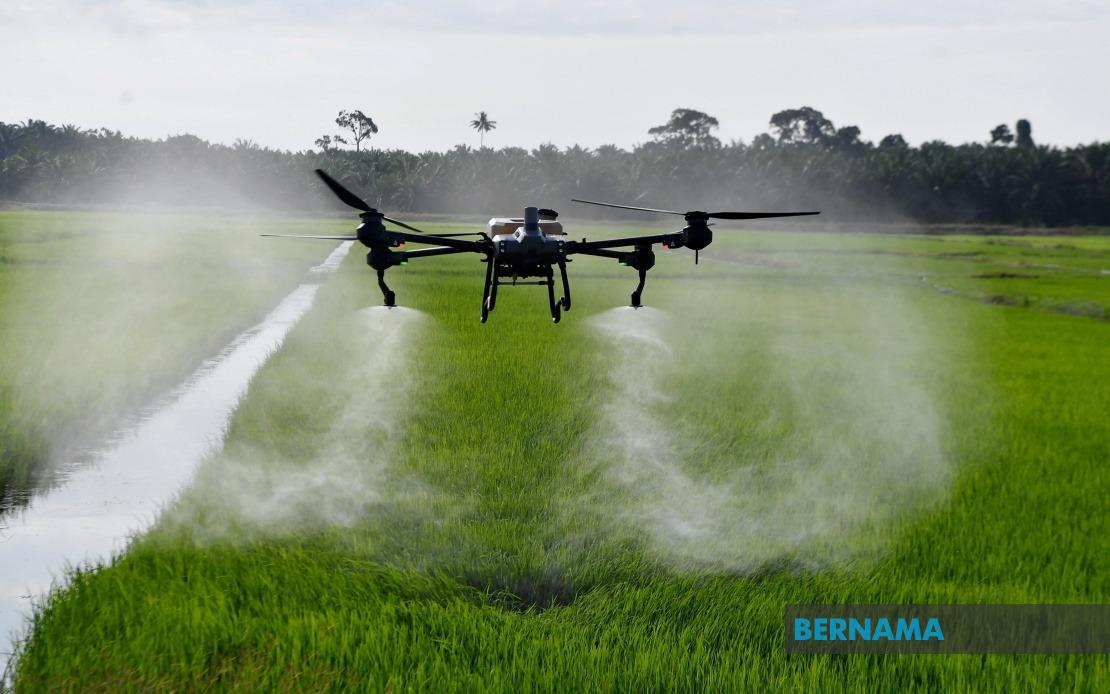
Selangor is making a strategic push into unmanned aerial systems technology by committing RM500,000 toward building a comprehensive drone industry ecosystem that officials believe could transform the state into a regional innovation leader. The allocation, announced during the pre-launch ceremony of Droneport-1000 at Universiti Selangor, represents part of a broader initiative to position the state as a key player in high-impact technology sectors through 2027, with ambitions extending well beyond simple hardware manufacturing into cutting-edge software, artificial intelligence, and semiconductor development.
Dr Mohammad Fahmi Ngah, who chairs Selangor's State Islamic Affairs and Innovation Culture Committee, emphasised that this funding round marks a significant increase from previous budgets and reflects government commitment to completing vital infrastructure improvements while fostering private sector collaboration. The investment will focus on upgrading facilities associated with the Droneport-1000 project and funding strategic programmes designed to draw both domestic and international companies into the emerging sector. This dual approach—improving physical infrastructure while simultaneously marketing Selangor as an attractive investment destination—reflects a maturing understanding of how technology ecosystems require both hard facilities and soft incentives to flourish.
The centrepiece of Selangor's drone ambitions is the Droneport-1000 project itself, a facility spanning 24 square kilometres of designated airspace with operational altitude reaching up to 1,000 metres. When fully certified, it will represent Malaysia's largest designated drone testing zone, and officials claim the airspace coverage is approximately ten times larger than Singapore's comparative facilities. This scale matters significantly for the region, as companies developing autonomous systems, aerial surveillance applications, and drone delivery mechanisms require extensive testing grounds to validate their technologies under realistic conditions. Currently, the project is navigating the certification process with the Civil Aviation Authority of Malaysia, a procedural necessity that underscores the regulatory rigour expected in this evolving sector.
The economic potential extends far beyond the physical infrastructure itself. Dr Mohammad Fahmi highlighted that Selangor views drone technology as foundational to multiple industrial applications and future economic growth drivers, with returns on investment potentially unlimited given the technology's nascent stage and rapid global expansion. The sector encompasses much more than manufacturing completed drone units; it encompasses the entire value chain including software platforms, artificial intelligence systems that process drone-collected data, and semiconductor components currently being developed at facilities in Puchong. This vertical integration approach positions Selangor to capture multiple layers of the value chain rather than remaining dependent on any single product category.
State officials plan to deploy financial incentives including matching grants to attract both Malaysian companies and foreign investors to participate in platform development. These incentives are designed to overcome the typical barriers faced by emerging technology sectors: high capital costs, technical talent scarcity, and regulatory uncertainty. By offering financial support proportional to private investment, the state government shares risk while ensuring that industry partners maintain meaningful skin in the game. This matching grant approach has proven effective in other jurisdictions attempting to establish technology clusters, as it signals genuine government commitment while maintaining fiscal discipline.
Zannifa Azura Ahmad, chief executive officer of Selangor Aviation & Technology Innovation, articulated a vision for Droneport-1000 as an ecosystem bridge connecting multiple constituencies—academic researchers, industry practitioners, and emerging talent seeking career opportunities. The facility is positioned not as an isolated testing ground but rather as a collaborative environment where knowledge generated through university research can transition into commercially viable products and where young engineers gain practical experience with real-world applications. This knowledge-to-commercialisation pipeline addresses a persistent challenge in developing countries, where research capacity and industrial capacity often operate in disconnection from one another, limiting technology transfer and economic return on research investment.
The involvement of established local technology firms including Aerodyne demonstrates that Selangor's drone initiative builds upon existing capabilities rather than emerging entirely de novo. These companies bring operational expertise, established customer relationships, and technical competencies that can accelerate ecosystem maturation. Their participation also signals confidence in the project's viability and the government's credibility in supporting industrial development, which in turn attracts smaller companies and startups that might otherwise hesitate to invest in uncertain ventures. This anchoring effect—where established firms lend legitimacy to emerging sectors—has been critical in other successful technology cluster developments globally.
The practical applications driving government enthusiasm for drone technology are thoroughly grounded in Selangor's specific challenges. Forest reserve encroachment, coastal erosion, and bund breaches represent ongoing management problems affecting environmental integrity and public safety. Drone-based monitoring systems equipped with artificial intelligence can analyse patterns across the 24-square-kilometre airspace far more rapidly than traditional ground-based inspection teams, while simultaneously reducing long-term labour requirements. This efficiency argument—delivering equivalent or superior results with fewer personnel—carries particular weight in a state managing complex environmental systems across diverse geographies.
Selangor's initiative also reflects Malaysia's broader positioning within global technology competition. Southeast Asia has become increasingly important to international technology companies seeking alternatives to concentrated manufacturing in East Asia or high-cost Western centres. By establishing certification frameworks, testing facilities, and financial incentives for drone technology development, Selangor competes directly with Singapore, Thailand, and Indonesia for investment and talent in this high-growth sector. The timing is strategically significant, as global drone markets are expanding rapidly across multiple applications from agriculture and infrastructure inspection to emergency response and urban planning.
The partnership between Universiti Selangor and the state government exemplifies how public institutions can contribute to technology ecosystem development beyond traditional teaching and research roles. Universities increasingly serve as physical anchors for technology clusters, providing facilities, talent pipelines, and credibility that attracts private investment. Unisel's involvement in Droneport-1000 positions the institution as actively engaged in moving technology from laboratory to market, which enhances its relevance to employers and students while generating potential revenue streams through licensing, consulting, and facility rentals.
Support from established regulatory bodies including the Malaysian Communications and Multimedia Commission and the Civil Aviation Authority of Malaysia indicates that Selangor's drone initiative operates within Malaysia's institutional framework rather than attempting to circumvent it. This regulatory alignment, while occasionally slowing commercialisation timelines, provides essential legitimacy and ensures that systems developed at Droneport-1000 can transition smoothly into operational deployment across the broader economy. Companies developing in a certified environment with regulatory oversight build products that can scale nationally and internationally, whereas unregulated development often produces systems requiring costly redesign for compliance purposes.
The semiconductor supply chain dimension mentioned by Dr Mohammad Fahmi warrants particular attention, as it signals ambitions extending beyond drone assembly into fundamental component manufacturing. Semiconductor fabrication represents one of the most capital-intensive and technologically advanced manufacturing activities, yet it commands exceptional profit margins and generates substantial employment. If Selangor successfully develops semiconductor capabilities tied to drone and artificial intelligence applications, the state could establish competitive advantages that persist across technology cycles.
Looking forward, Selangor's RM500,000 allocation and supporting infrastructure investments represent initial commitments in what will likely require sustained funding and policy support over many years. The success of technology clusters internationally typically requires decade-long commitments with multiple rounds of public and private investment, ongoing talent development, and regulatory frameworks that evolve with technology. However, the visible commitment demonstrated through this allocation, combined with physical facilities, financial incentives, and institutional partnerships, suggests Selangor is approaching drone technology development with appropriate seriousness and strategic intent. Whether the initiative achieves its ambitions of establishing a regionally significant hub will depend substantially on execution efficiency and the private sector's response to the opportunities presented.

