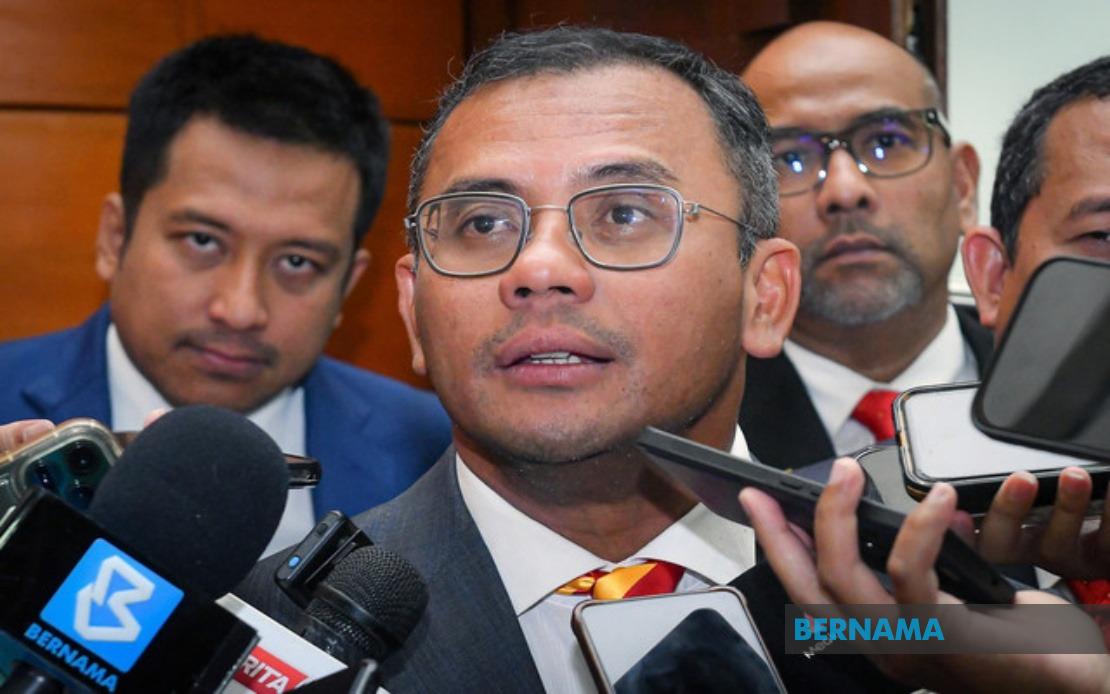
The Selangor state government has committed RM3.5 million towards a comprehensive research initiative aimed at strengthening the policy foundations of its ambitious economic and social development blueprint. The Selangor Development Grant, known as SELidik 2026, represents an evolution from the earlier Selangor Research Grant programme, with Menteri Besar Datuk Seri Amirudin Shari emphasising the expanded scope and direct alignment with the government's transformation priorities as outlined in the Second Selangor Plan (RS-2).
The programme, formally launched through a grant handover ceremony at Bangunan Sultan Salahuddin Abdul Aziz Shah, demonstrates a strategic shift towards evidence-based policymaking in the state. Rather than commissioning isolated research projects, SELidik 2026 positions academic research as an integral instrument for translating the RS-2's six missions into tangible, implementable government initiatives. This approach acknowledges that sustainable economic development and social progress require robust empirical foundations and innovative solutions grounded in rigorous scholarship.
Of the total RM3.5 million allocation, RM2.5 million has been earmarked specifically for the state's two public universities: Universiti Islam Selangor (UIS) and Universiti Selangor (UNISEL). In the initial phase, these institutions will concentrate on producing practical research outputs including educational modules, software applications, and working prototypes that can be directly applied to government operations and economic initiatives. This focus on tangible deliverables rather than purely theoretical contributions reflects a pragmatic recognition that research value extends beyond academic journals into real-world policy implementation.
The second phase of SELidik 2026 contemplates expanding participation to other public research institutions throughout Malaysia, broadening the intellectual resource pool available to support Selangor's development objectives. An additional RM1 million from the RM3.5 million budget has been designated for local universities throughout Selangor, creating opportunities for smaller institutions and emerging research centres to contribute expertise. This tiered approach allows for initial concentration and refinement of the research framework before wider dissemination, reducing coordination challenges while maintaining quality standards.
Menteri Besar Amirudin indicated that the government envisages potential future involvement of international universities should surplus funds materialise, though this remains contingent on budget performance and demonstrated effectiveness of the current domestic partnerships. Such an expansion would position Selangor as a knowledge-intensive region capable of attracting world-class research collaboration, potentially enhancing the state's reputation as a centre for innovation in Southeast Asia. The international dimension could also facilitate technology transfer and exposure to global best practices in fields relevant to the RS-2 agenda.
The programme is structured around mandatory thematic alignment with the Second Selangor Plan's six core missions, ensuring that all funded research directly contributes to the government's strategic priorities. Prospective researchers must demonstrate clear connections between their projects and either one of the six missions or the 25 subordinate focus areas within the RS-2 framework. Additionally, each research initiative must establish direct linkages with relevant government departments, creating accountability mechanisms and facilitating knowledge transfer from academia to the civil service.
The six missions underpinning RS-2 encompass economic leadership for Selangor, equitable development across all districts, improvements in livelihood and environmental quality, development of a productive and inclusive workforce, building resilience and sustainability, and establishing responsive governance that serves both business and resident interests. By anchoring research funding to these missions, the state government ensures that academic endeavours remain tethered to measurable development outcomes rather than drifting into disconnected scholarly pursuits. This integration of research with policy cycles represents a sophisticated understanding of how evidence should inform governance.
Management of SELidik 2026 falls under Yayasan Selangor, the state's development foundation, which brings institutional experience in administering complex multi-stakeholder initiatives. The foundation serves as an intermediary between government policy architects and academic institutions, translating development priorities into research briefs and subsequently channelling findings back to relevant standing committees and executive decision-makers. This institutional arrangement reduces bureaucratic friction while maintaining accountability for public fund deployment.
Previous research initiatives in Selangor have examined areas including agricultural productivity, innovation development methodologies, and economic diversification strategies. The new SELidik programme promises to systematise and accelerate the translation of such findings into actionable policy. Rather than allowing research results to languish in archives, the structure explicitly directs outputs toward government departments tasked with policy formulation and programme implementation, creating feedback loops that strengthen governance capacity.
The RS-2 itself, announced on August 7, establishes ambitious targets for the 2026-2030 period, aiming to generate RM600 billion in economic value through coordinated development across multiple sectors and districts. Given the scale of this aspiration, the RM3.5 million research investment, while relatively modest, serves as a foundational tool for identifying efficient pathways toward these economic goals. Research funding for strategic specialisation should help Selangor identify and develop competitive advantages in emerging sectors rather than pursuing broad-based development that may lack focus or differentiation.
For Malaysian readers, Selangor's research investment model offers lessons about structuring public funding for scholarship with explicit development objectives. As other states and federal agencies contemplate their own research portfolios, the Selangor approach demonstrates how to maintain academic integrity while ensuring societal relevance. This balance proves particularly crucial as Malaysia seeks to transition toward a knowledge economy and reduce dependence on conventional resource extraction and manufacturing.

