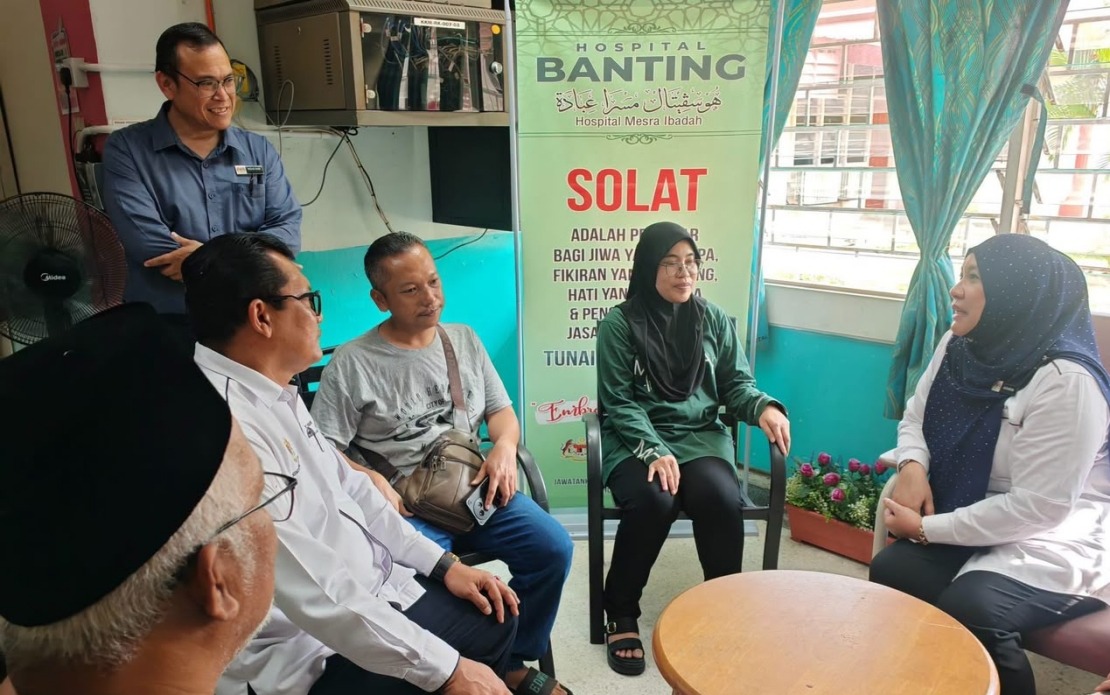
The Selangor State Education Department made an official visit to Banting Hospital on Sunday to support a teenage girl recovering from a stabbing attack at a local secondary school. The visit, led by department director Wan Nor Ashikin Abu Kassim, underscores the education authority's commitment to standing alongside the affected student and family during this traumatic incident in the Kuala Langat district.
During the hospital visit, Wan Nor Ashikin met directly with the student and her parents, conveying the department's concern and offering words of encouragement as the victim continues treatment. The gesture reflects institutional responsibility to extend care beyond the classroom during periods of crisis affecting the school community. Such visits carry symbolic weight in Malaysia's education system, signalling that authorities recognise their duty of care extends to students facing extraordinary hardship.
The fifteen-year-old sustained severe injuries in the attack, with her father revealing that she suffered a punctured lung and 16 stab wounds across her body. The extent of physical trauma underscores the gravity of the incident and the long recovery path the student faces both medically and psychologically. Medical teams at Banting Hospital are providing ongoing treatment to stabilise her condition and manage the multiple injuries sustained.
Authorities have moved swiftly to contain the situation through the criminal justice system. A suspect believed responsible for the stabbing has been detained by police, following the initial incident reported at the secondary school. The suspect has now been remanded in custody for four days effective from Sunday, allowing investigators time to gather evidence and interview relevant parties as the case progresses through preliminary investigations.
The incident raises fresh concerns about school safety across Malaysia, particularly regarding how secondary institutions manage conflict resolution and protect students from violence. Banting, located in the southern Selangor district, joins a troubling list of Malaysian schools where serious weapons-related incidents have occurred. The stabbing prompts questions about security protocols, counselling services, and early intervention mechanisms that schools employ to identify students at risk of harming themselves or others.
Selangor JPN stated its intention to cooperate fully with the student's family, Banting Hospital, and all relevant agencies involved in both the medical care and investigation phases. This multi-agency approach reflects standard procedure in serious student incidents, coordinating between education authorities, police, health services, and potentially child welfare agencies to ensure comprehensive support and accountability. The department's public commitment to such cooperation demonstrates institutional transparency.
For the broader Malaysian education community, this incident serves as a sobering reminder of how quickly school environments can become sites of violence despite the protective structures theoretically in place. Parents, educators, and administrators across the country will scrutinise how Selangor's education system responds not only to immediate victim support but to systemic improvements that might prevent future incidents. The psychological impact on other students and staff at the Banting school will likely require targeted counselling and support services to process the trauma of witnessing or learning about such violence within their institution.
The case also highlights the critical role played by law enforcement and the judicial system in delivering swift action. The four-day remand order demonstrates authorities' understanding that serious crimes involving minors warrant expeditious investigative processes. However, questions may emerge regarding whether school-based incidents of this magnitude should trigger broader community and parental discussions about the underlying factors contributing to youth violence in urban and semi-urban areas of Selangor.
Looking forward, the recovery process for this student will extend far beyond physical healing. Educational authorities and medical professionals will need to coordinate reintegration strategies, ensuring her academic progress does not suffer while accommodating her physical and mental health needs. Peer support, teacher sensitisation, and a supportive school environment will be essential as she returns to education following recovery.

