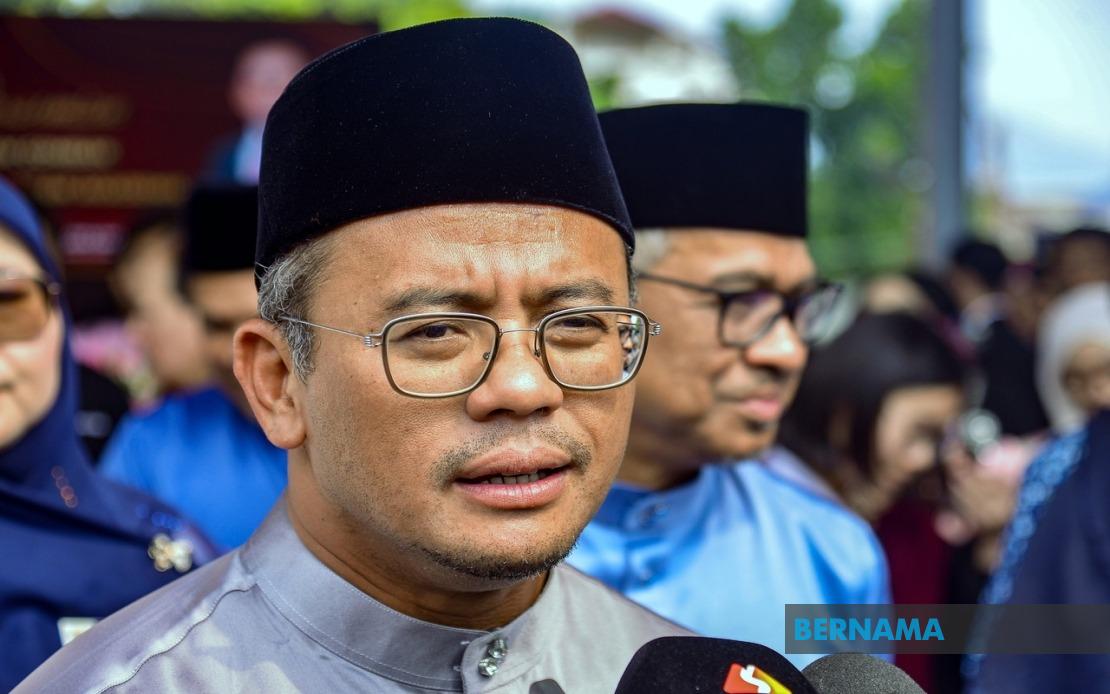
The Selangor government is preparing a comprehensive education strategy for its 2027 state budget that aims to elevate student performance while broadening participation in science and technology fields. Menteri Besar Datuk Seri Amirudin Shari revealed the priorities during remarks following the opening of Gombak Form Six College and the 2026 Academic Excellence Awards ceremony, signalling the state's commitment to educational advancement as a cornerstone of its governance agenda.
The decision to emphasise STEM disciplines reflects a deliberate policy shift within Selangor's approach to workforce development and economic competitiveness. With approximately one million students enrolled across the state's education system, the government recognises that improvements in academic achievement and skill acquisition could generate substantial ripple effects throughout Malaysian society and the broader economy. This concentration of student population makes Selangor a laboratory for educational innovation that may influence national policy direction.
Amirudin outlined a multi-faceted approach centred on maintaining academic excellence while expanding vocational and technical pathways. The budget allocation will support existing examination performance standards whilst simultaneously creating incentives and opportunities for students to engage with STEM subjects and develop practical competencies. The strategy acknowledges that contemporary economic demands require a generation equipped not only with strong academic credentials but also with hands-on technical capabilities and problem-solving skills aligned with industry needs.
Community engagement forms another pillar of the educational vision. By framing student achievement as a pathway to meaningful community contribution, the state government is attempting to instil purpose beyond traditional academic metrics. This philosophical approach suggests that Selangor views educated youth as resources for addressing societal challenges rather than merely preparing them for individual advancement or corporate employment.
The infrastructure component of the budget remains under development, with government officials still compiling comprehensive assessments of facility requirements across the state. Amirudin indicated that detailed allocation decisions would materialise by September or October, suggesting a methodical approach rather than hasty spending commitments. This timeline allows for stakeholder consultation and prioritisation of schools facing the most acute facility deficiencies, though it may frustrate institutions awaiting urgent upgrades.
A significant innovation within the education support framework is the Himpunan Pelajar Tingkatan Enam Selangor (HIPTERS), a recently launched initiative designed to provide concrete assistance to Form Six students navigating the transition to tertiary education. The programme extends tangible support through book vouchers and complimentary internet data, addressing practical barriers that can impede academic progress, particularly for students from lower-income households. The distribution of 10,000 book vouchers in 2026 represents a substantial commitment, though the actual coverage remains modest relative to the overall student population.
The expansion of HIPTERS beyond Form Six cohorts into university student populations demonstrates how targeted interventions can evolve based on demonstrated need and effectiveness. By initially testing programmes at secondary level and subsequently adjusting scope, Selangor exemplifies incremental policy development that builds evidence before major resource allocation. This approach contrasts with broader-brush initiatives that may lack differentiation or efficiency.
For Malaysian readers, particularly those in Selangor, these budgetary priorities signal government responsiveness to concerns about educational quality and equity. The simultaneous emphasis on academic excellence and STEM participation acknowledges that Malaysia's economic diversification strategy depends upon producing graduates capable of contributing to knowledge-intensive industries. Yet the focus on Form Six support also reflects awareness that significant segments of the student population may lack family or financial resources to capitalise on educational opportunities without targeted assistance.
The regional implications extend beyond Selangor's borders. As Malaysia's economically most dynamic state and home to substantial private sector activity, Selangor's educational investments often set precedents that other states monitor and potentially emulate. A successful STEM expansion programme in Selangor could influence state-level education policies across Southeast Asia, particularly in neighbouring territories also pursuing industrialisation and innovation-based economic models.
However, the emphasis on STEM should not overshadow equally important educational dimensions including humanities, social sciences, and liberal arts disciplines. While technology-focused curricula capture policy attention and attract funding in contemporary governance contexts, holistic development requires diverse intellectual traditions. Selangor policymakers would benefit from ensuring that budget priorities do not inadvertently marginalise important but less economically prominent fields of study.
The timeline for finalising budget allocations also warrants scrutiny. While deliberation ensures thoughtful decision-making, extended planning periods can delay necessary infrastructure improvements and leave schools uncertain about resource availability. Educational institutions operate within fixed academic calendars, meaning mid-year or delayed budget announcements may complicate institutional planning and procurement processes.
Looking forward, the success of Selangor's education budget will depend upon implementation fidelity and sustained political commitment beyond the current budget cycle. Educational transformation requires multiyear funding consistency and administrative capacity to manage complex programmes effectively. Whether these 2027 initiatives represent genuine structural reform or cyclical policy announcements will become apparent through budget appropriations and performance metrics in subsequent years.

