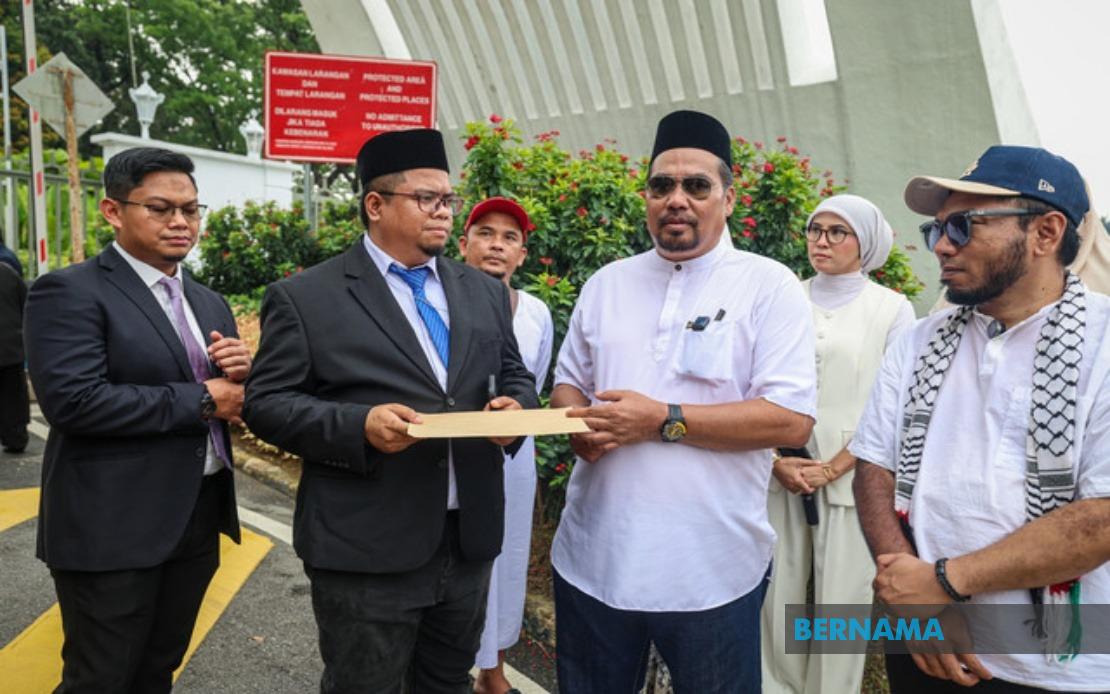
The social media activist group SEKPUR has intensified pressure on the government to hold accountable those responsible for the financial and operational failings at Tabung Haji, Malaysia's pilgrimage savings fund, in the wake of a comprehensive Royal Commission of Inquiry report that exposed significant governance weaknesses. During a peaceful demonstration at Parliament today, SEKPUR formally submitted a memorandum to the Minister in the Prime Minister's Department (Religious Affairs) via press secretary Zairudin Hashim, calling for decisive action against individuals involved in the institution's mismanagement regardless of their political affiliations or positions.
The activist group's intervention underscores growing public concern about the state of Tabung Haji, an institution integral to Malaysia's Muslim and Malay community. SEKPUR secretary Mohd Yani Alias emphasised that the memorandum echoes the Yang di-Pertuan Agong's directive that those culpable for the issues afflicting Tabung Haji must face justice and be pursued comprehensively. The group made clear that its position transcends partisan considerations, asserting that wrongdoing must be addressed through stern action irrespective of political allegiances, given that Tabung Haji serves a broad community with deep cultural and religious significance.
The memorandum's submission followed a special sitting of the Dewan Rakyat during which the minister briefed Parliament on findings from the Royal Commission of Inquiry and outlined government efforts to rehabilitate Tabung Haji's financial health. The 211-page RCI report, made public on 29 July, documented substantial deficiencies in the institution's governance and operational practices across the 2014 to 2020 period, a critical timeframe that witnessed the accumulation of losses and structural problems requiring urgent intervention.
Beyond demands for accountability, SEKPUR articulated broader systemic concerns that reflect anxieties among depositors and the pilgrimage community. The group raised alarm about Tabung Haji's capacity to maintain long-term financial viability while simultaneously delivering competitive hibah distributions to account holders. This dual concern reveals a fundamental tension: restoring institutional health may necessitate difficult trade-offs with returns to depositors, who depend on hibah allocations as part of their savings incentive.
The memorandum also highlighted escalating costs associated with performing the hajj pilgrimage, which SEKPUR argues place mounting financial strain on Malaysian Muslims considering or planning pilgrimage. This complaint reflects a practical reality facing potential pilgrims who must balance sacred obligation with economic feasibility. Additionally, SEKPUR urged greater transparency regarding the administration of hajj quotas, suggesting that current allocation mechanisms lack sufficient public scrutiny and clear communication about how slots are distributed among eligible applicants.
The RCI's findings incorporated 25 recommendations designed to strengthen Tabung Haji's operational frameworks and financial controls. According to official records, Tabung Haji had implemented approximately 75 percent of these recommendations by 30 July, indicating a measured response to the inquiry's conclusions. However, the pace and comprehensiveness of implementation remain open questions, particularly regarding whether the institution possesses adequate resources and expertise to execute more complex structural reforms.
The SEKPUR demonstration represents a significant development in the post-RCI landscape because it channels civil society pressure toward government enforcement mechanisms. Rather than accepting the inquiry's findings as concluding the matter, the activist group has escalated demands for tangible consequences, signalling that affected communities expect more than diagnostic reports. This dynamic reflects a broader Malaysian pattern wherein high-profile inquiries generate expectations for prosecutorial follow-through, yet implementation often encounters bureaucratic delays or institutional resistance.
For Malaysian policymakers, the convergence of concerns raised by SEKPUR—accountability, financial sustainability, depositor returns, pilgrimage affordability, and transparency—presents a complex policy puzzle. Addressing one dimension may compromise another; for instance, pursuing aggressive legal action against former Tabung Haji officials might satisfy accountability demands but could distract management attention from operational rehabilitation. Similarly, prioritising competitive hibah distributions might conflict with capital preservation necessary for institutional survival.
The activism surrounding the RCI report also carries broader implications for how Malaysia's public institutions are perceived and governed. Tabung Haji occupies a unique position as both a government-linked entity managing public resources and a religiously and culturally significant institution serving a defined community. The mismanagement documented in the RCI report has consequently wounded not merely investor confidence but also institutional credibility within the Muslim and Malay constituency that depends upon its functioning.
As the government navigates implementation of RCI recommendations and considers prosecutorial options, SEKPUR's memorandum serves as a reminder that public expectation for accountability remains high. The group's emphasis that political affiliation should not shield wrongdoers sets a potentially significant marker for how similar governance failures might be handled across Malaysia's institutional landscape. Whether the government translates SEKPUR's demands into concrete enforcement actions will likely influence public trust in both Tabung Haji's reforms and the government's commitment to institutional accountability more broadly.
Moving forward, Tabung Haji faces a multifaceted challenge: restoring financial health, implementing governance reforms, pursuing accountability where warranted, and rebuilding community confidence. The institution's success in navigating these parallel imperatives will substantially affect not only the millions of Malaysians with deposits in Tabung Haji but also broader patterns of institutional trust within Southeast Asia's largest Muslim-majority nation.

