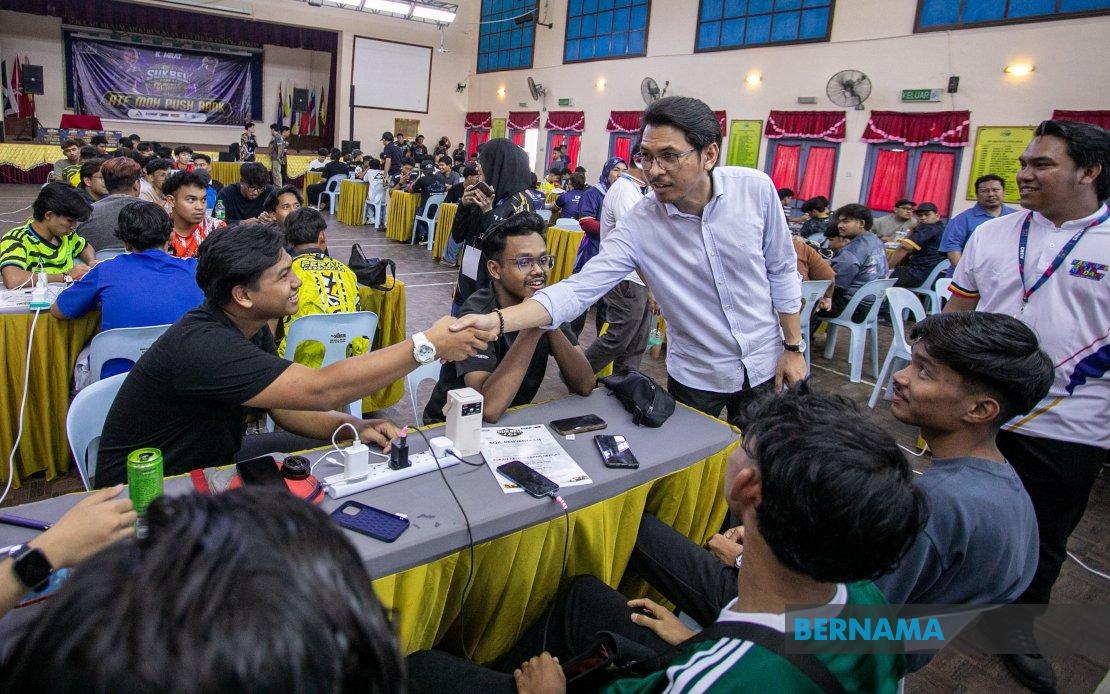
The Sejahtera MADANI initiative operating in Perak has proven its capacity to reach vulnerable communities, having already channelled RM2.3 million in assistance to approximately 2,000 beneficiaries across the state. Building on this foundation, the government has committed an additional RM3 million to broaden the programme's scope and deepen its impact among those most in need of socioeconomic support.
Muhammad Kamil Abdul Munim, the Finance Minister's political secretary, outlined the expanded vision during the initiative's roadshow in the Padang Rengas parliamentary constituency at Lubok Merbau. The fresh allocation signals recognition that initial efforts, while meaningful, represent merely the opening phase of what the MADANI administration intends to be a sustained and comprehensive welfare intervention across Perak's districts and communities.
The expanded funding recognises three distinct yet interconnected target groups whose circumstances demand tailored assistance. Micro-entrepreneurs operating in informal or marginal sectors face persistent challenges accessing capital and business development support that could unlock their growth potential. Low-income households navigate daily pressures that make education and health outcomes precarious, while academically gifted students from modest backgrounds often abandon promising educational trajectories due to financial constraints. The initiative's redesigned approach acknowledges that sustainable poverty reduction requires addressing all three simultaneously.
Beyond mere cash transfers, the programme distinguishes itself through provision of tangible productive assets. During the Padang Rengas roadshow, thirteen high-achieving students received laptops essential for tertiary education participation, addressing the digital divide that increasingly determines educational success. Simultaneously, five small-scale entrepreneurs were furnished with business equipment calibrated to enhance operational efficiency and income generation capacity. This combination of direct financial support and asset provision creates conditions for meaningful, lasting improvements rather than temporary relief.
Muhammad Kamil emphasised that the initiative represents deliberate policy philosophy emphasising targeted, results-oriented assistance. The MADANI government, he stated, prioritises measurable impact over indiscriminate spending, ensuring public resources reach those positioned to convert assistance into tangible improvements in living standards and educational achievement. This framing positions the initiative within broader governance commitments to efficient resource deployment and accountability to taxpayers.
However, the expansion announcement simultaneously reflects acknowledgment that the original implementation model encountered significant difficulties. Muhammad Kamil conceded that the initial decentralised approach, which granted local communities substantial autonomy in determining project priorities, produced mixed outcomes. Several initiatives failed to materialise as conceived, while others experienced management lapses that undermined intended benefits. These implementation challenges demanded honest reassessment and structural adjustment before expansion could responsibly proceed.
The government's response has been to impose substantially tighter supervision mechanisms throughout project lifecycles. Enhanced monitoring protocols will operate continuously from conception through completion, creating multiple checkpoints where projects can be assessed against performance benchmarks. This supervisory intensification reflects mature recognition that well-intentioned programmes can deteriorate through inadequate oversight, whether through deliberate corruption, administrative incompetence, or community capacity constraints that initially went underestimated.
Muhammad Kamil's candid acknowledgment that implementation weaknesses prove inevitable demonstrates refreshing transparency about governance realities in complex social programmes. Rather than dismissing such difficulties as isolated aberrations, officials now frame them as predictable elements requiring robust management systems. This approach—accepting imperfection while implementing rigorous safeguards against fraud and resource leakage—establishes realistic expectations whilst committing to continuous improvement disciplines.
For Malaysian and Southeast Asian observers, the initiative illustrates how governments balance decentralisation's empowerment benefits against centralised accountability requirements. Communities possess valuable knowledge about local priorities that distant bureaucracies cannot replicate; yet decentralised discretion without oversight creates vulnerability to capture by local elites, misappropriation, and simple execution failures. The Sejahtera MADANI recalibration suggests evolving toward hybrid models that preserve community input whilst embedding stronger performance verification.
The programme's emphasis on students and entrepreneurs reflects sophisticated understanding of development pathways. Education investments yield compounding returns across generations, making support for high-achieving students from low-income backgrounds exceptionally cost-effective anti-poverty intervention. Similarly, productive entrepreneurship generates employment and tax revenue whilst building household resilience. By targeting both simultaneously, the initiative pursues scalable strategies that might eventually reduce welfare dependency through human capital enhancement and economic participation expansion.
The RM3 million expansion, whilst substantial, remains modest relative to Perak's total population and poverty prevalence. The initiative should therefore be understood as demonstrative intervention establishing operational models and evidence bases rather than comprehensive solution to state-level poverty and educational inequality. If expansion proceeds successfully, lessons learned could inform larger-scale replication across other states or integration into permanent social protection frameworks.
As Malaysia continues navigating post-pandemic economic pressures and structural inequality challenges, programmes like Sejahtera MADANI gain heightened relevance. The government's willingness to acknowledge implementation difficulties, adjust course, and invest additional resources suggests commitment to learning-oriented governance that prioritises genuine beneficiary outcomes over programme preservation. Whether expanded funding translates into proportionately expanded beneficiary numbers and improved lives depends substantially on how rigorously the enhanced supervisory mechanisms operate in practice across Perak's diverse communities.

