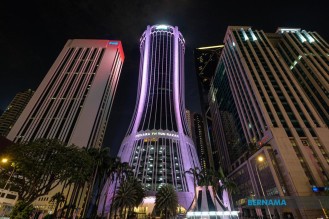
The government's decision to place Tabung Haji's fund management and investment operations under the Securities Commission Malaysia represents a pivotal shift toward protecting the interests of millions of Malaysian Muslims saving for the pilgrimage to Mecca. Following the special cabinet sitting on August 11, authorities announced this restructuring as a cornerstone reform emerging from the Royal Commission of Inquiry into TH, signalling their commitment to addressing systemic governance failures that precipitated the institution's financial troubles over recent years.
Dr Mohd Faisol Ibrahim, a senior lecturer in Islamic Economics and Banking at Universiti Sains Islam Malaysia, emphasises that the SC's involvement in overseeing TH's investment decisions carries substantial importance beyond mere bureaucratic oversight. The academic points out that depositors—predominantly working-class Malaysians setting aside funds for their religious obligation—reasonably expect competitive returns on their contributions. Unlike commercial banks, TH operates as a non-banking intermediary, yet this distinction does not diminish the financial expectations of those entrusting their savings to the institution. The tension between generating attractive dividend rates and maintaining prudent investment practices lies at the heart of regulatory reform efforts.
The government's approach incorporates key recommendations from the task force assembled to implement findings from the RCI report, released publicly on July 29 following its presentation to the Yang di-Pertuan Agong in August 2022. Minister in the Prime Minister's Department (Religious Affairs) Dr Zulkifli Hasan outlined the dual-track governance structure now being implemented: haj operations and management remain anchored within the Religious Affairs portfolio, preserving TH as a unified entity while investment activities migrate to SC supervision. This arrangement seeks to insulate commercial decision-making from political pressures whilst maintaining the institution's singular focus on serving Malaysia's pilgrimage needs.
Dr Mohd Faisol advocates for the SC to assume direct representation within TH's investment committee, positioning financial regulators to scrutinise proposed investments before execution. This preventive mechanism would filter out decisions carrying excessive risk exposure or lacking transparency. More fundamentally, it would align TH's investment governance with standards routinely applied to major institutional investors regulated by the SC. The academic underscores that solvency ratios, reserve requirements, investment protocols and profit-distribution frameworks all require tightening—a response grounded in the reality that TH's previous crisis inflicted severe financial harm on ordinary depositors who depended on the institution's stability.
A multi-layered system of institutional checks represents another mechanism for safeguarding TH's operations. Dr Mohd Faisol proposes establishing parallel investment and risk committees that would jointly evaluate major investment proposals before approval, preventing unilateral decision-making by TH management. Such a structure would incorporate representatives from the SC, Bank Negara Malaysia and the Ministry of Finance, creating what amounts to a collective veto capable of protecting deposits from commercially unsound initiatives. This distributed oversight responds directly to the RCI findings documenting weaknesses in TH's management and operations spanning 2014 to 2020—a period during which inadequate checks and balances allowed problematic investments to proceed unchallenged.
The RCI's 25 recommendations addressed governance deficiencies with precision. Among the most significant proposals was prohibiting active politicians from serving on TH's board of directors, eliminating a conflict of interest that historically enabled non-commercial considerations to influence investment policy. The report also recommended separating decision-making authority between the Religious Affairs and Finance portfolios and establishing an independent mechanism for board appointments, divorcing such selections from patronage networks. These structural reforms acknowledge that TH's institutional health cannot be assured through supervisory oversight alone; governance fundamentals must be rebuilt from the foundation.
Bank Negara Malaysia's role warrants particular emphasis. Dr Mohd Faisol argues that BNM, as TH's principal financial adviser, should expand its engagement in reviewing investment decisions and implementing strategic risk management protocols. Given BNM's mandate to maintain financial system stability, closer coordination with TH—which mobilises funds from hundreds of thousands of Malaysians—serves the broader goal of protecting systemic resilience. The central bank's involvement introduces expertise in monetary dynamics, foreign exchange exposures and macroeconomic headwinds that should inform TH's asset allocation strategies.
Financial restructuring must parallel governance improvements to ensure TH's balance sheet reflects long-term viability. Dr Mohd Faisol suggests increasing TH's capital reserves by adjusting the minimum savings requirement for those intending to perform the haj. Such adjustments cannot ignore macroeconomic realities—ringgit strength fluctuations and global economic volatility directly affect pilgrims' purchasing power in Saudi Arabia and TH's ability to meet haj fund obligations. By calibrating savings minimums to broader economic conditions, authorities can build resilience without imposing undue burden on individual depositors.
The investment philosophy guiding TH must be fundamentally recalibrated. Policy decisions should prioritise the interests of depositors intending to fulfil their religious obligation, rejecting any framework that subordinates commercial merit to government investment objectives. Malaysia's experience demonstrates that conflating TH with broader state development priorities creates moral hazard and misaligned incentives. The institution exists to serve Muslims preparing for the haj; this singular mission must govern every investment decision, from equity selection to asset allocation across geographic markets.
For Malaysian readers, these reforms carry implications extending beyond TH itself. The restructuring demonstrates government willingness to address institutional governance failures through independent oversight and regulatory tightening—an approach potentially applicable to other statutory bodies managing public resources. The integration of the SC into TH's operations also strengthens the regulator's oversight infrastructure across non-banking financial institutions, enhancing market discipline across the broader financial ecosystem. For the millions of Malaysians who have contributed to TH, the reforms represent belated but necessary protection against a recurrence of the institutional mismanagement that previously undermined their savings.
The transition toward SC-led investment supervision will require careful implementation. Clear protocols for committee decision-making, transparent disclosure of investment holdings and regular reporting to depositors must accompany any restructuring. Malaysia's experience with TH's past difficulties has taught that institutional reform without accountability mechanisms remains incomplete. By embedding multiple layers of oversight, distributing decision-making authority and insulating investment policy from political pressure, authorities can restore confidence in an institution whose stability matters profoundly to millions of Malaysians preparing to answer the Islamic faith's most demanding spiritual obligation.

