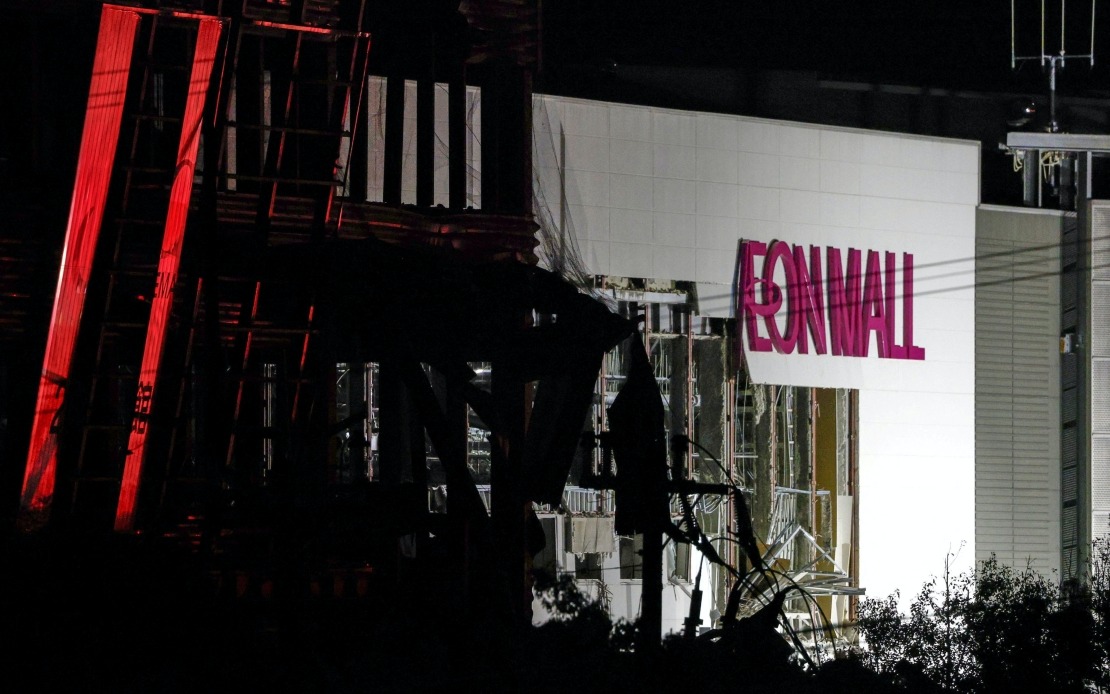
Rescue operations intensified on Tuesday evening at Aeon Mall Kumamoto in Kashima Town as authorities launched a desperate search for between 20 and 30 employees who lost contact following an explosion that tore through the major shopping centre. The incident unfolded in the aftermath of a significant seismic event that shook Kumamoto Prefecture earlier in the afternoon, compounding the disaster and leaving emergency responders stretched across multiple crisis zones across the region.
The explosion erupted at approximately 6 pm local time at the Aeon Mall Kumamoto facility, a major retail and entertainment destination that serves a significant portion of the prefecture's population. National Police Agency officials confirmed they had been unable to establish contact with multiple staff members employed at the shopping complex, though the precise circumstances of how they came to be separated or why communications broke down remained unclear in the immediate aftermath. Police officers and firefighters fanned out across the damaged building, systematically checking for survivors who might be trapped in rubble or sealed sections of the structure.
Authorities maintained cautious uncertainty about whether the missing individuals were entirely within the building's confines or scattered elsewhere in the surrounding area. The challenge facing emergency responders was compounded by the scale of destruction and the complexity of the structure itself, which like many modern shopping malls consists of multiple levels, interconnected corridors, and numerous compartments. The building's layout meant that rescue teams needed to conduct methodical searches rather than rapid sweeps, prioritising safety for both rescuers and any potential survivors still within the premises.
Most customers present at the shopping mall at the time of the explosion had been successfully moved to outdoor safety zones before the full extent of the incident became apparent. This rapid evacuation likely prevented significant casualties among the public, as Aeon Malls typically accommodate hundreds of shoppers during evening hours. However, the confusion surrounding which employees remained unaccounted for suggested that some staff members may have been in restricted areas of the building, storage facilities, or administrative offices inaccessible to the general customer evacuation procedures.
The tragedy unfolded against the backdrop of a magnitude-7.1 earthquake that struck Kumamoto Prefecture at 4:27 pm local time, approximately ninety minutes before the explosion occurred at the shopping complex. This powerful seismic event had already triggered significant structural damage across the region and necessitated coordinated emergency responses from prefecture-wide authorities. The compound nature of the disaster—earthquake followed by explosion—stretched rescue resources thin and complicated search and recovery efforts as teams contended with both the initial earthquake damage and the subsequent blast devastation.
Beyond the shopping mall itself, authorities reported that fewer than ten additional people had become unaccounted for in other locations throughout the prefecture as a result of the earthquake, suggesting that the Aeon Mall explosion represented the focal point of the evening's emergency response requirements. This geographic concentration meant that rescue teams could focus resources on the shopping complex while maintaining awareness of other developing situations elsewhere in the prefecture that might require attention as night fell.
Broadcasters including TBS reported that multiple fatalities appeared inevitable given the nature and scale of the explosion, though exact death tolls could not be confirmed in the chaotic hours immediately following the incident. A Kumamoto Prefectural Police official acknowledged publicly that authorities anticipated significant loss of life, cautioning that verifying final casualty figures would require extended investigation and systematic examination of the building's interior. The official's statement reflected the grim reality that the explosion's force and the building's structural integrity had created conditions where survival prospects for those caught within the blast radius remained dire.
For Malaysian readers and the broader Southeast Asian region, the incident underscored the critical importance of robust building safety standards and comprehensive disaster preparedness protocols in commercial facilities. Japan's stringent construction codes and emergency response systems, among the world's most advanced, demonstrated that even well-regulated environments remain vulnerable to compound disasters where natural catastrophes trigger secondary emergencies. The incident also highlighted how single points of failure in infrastructure—such as gas systems, electrical installations, or structural damage from earthquakes—can cascade into mass casualty events despite sophisticated modern safeguards.
The tragedy at Aeon Mall Kumamoto represented a sobering reminder of the vulnerability of modern commercial infrastructure to compound hazards. Authorities in the region and across the Asia-Pacific would likely review their own protocols for integrated emergency response when earthquakes trigger secondary incidents at major public facilities. The situation demonstrated that even with evacuation procedures successfully executed for the general public, concentrated employee populations in restricted areas of large buildings remain at particular risk during sudden explosive events.
As night deepened and rescue operations continued by floodlight and emergency vehicles, the focus remained on locating the missing employees and establishing the circumstances that had led to the explosion itself. Initial theories suggested possible gas line rupture or electrical failure triggered or exacerbated by earthquake damage, though investigators cautioned against premature conclusions pending detailed site examination. The coming days would bring clearer answers about both the human toll and the technical factors that had combined to create the evening's catastrophe.

