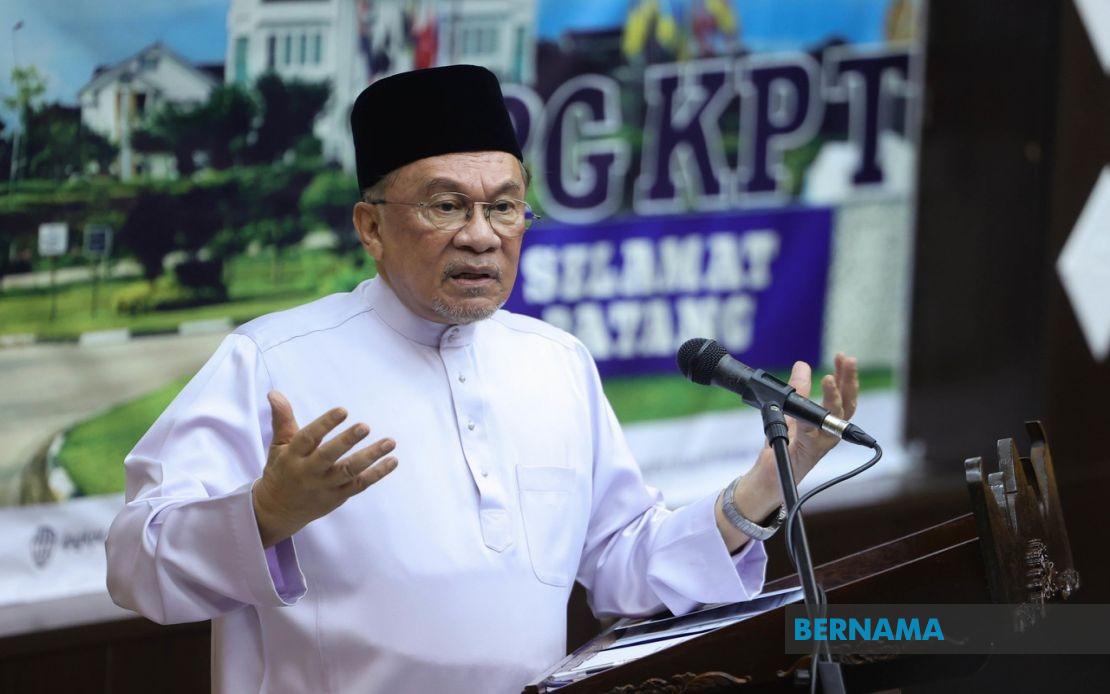
Prime Minister Datuk Seri Anwar Ibrahim has called on Malaysian schools to prioritize transparency when addressing bullying, warning against the institutional temptation to suppress incidents in order to maintain a polished public image. Speaking in Nilai on July 17, the Prime Minister made clear that concealing bullying undermines both the victims who suffer in silence and the broader educational mission of schools to develop well-rounded citizens. Education Minister Fadhlina Sidek was present at the remarks, signalling government alignment on the issue.
Anwar's intervention reflects growing concern within policy circles that some educational institutions may be treating bullying as a reputational liability rather than a welfare crisis. The Prime Minister reframed the narrative around reporting, arguing that schools disclosing a small number of bullying cases should not face criticism or stigma. He offered a concrete example: a school with 1,000 students reporting two bullying incidents demonstrates responsible governance, not institutional failure. The blame, he suggested, rests not with headteachers or principals who report such cases but with those who detect problems and choose to remain silent.
This stance carries particular weight in the Malaysian context, where education remains a sensitive political and social issue. Schools have historically operated under significant community scrutiny, creating incentives for administrators to minimize adverse publicity. By positioning transparency as a sign of good management rather than weakness, Anwar seeks to shift institutional incentives toward disclosure and swift remediation. The message implicitly acknowledges that bullying exists in schools regardless of their standing or quality, and that denial serves no one.
The Prime Minister extended his critique beyond procedural matters, arguing that persistent bullying reveals deeper gaps in character education within Malaysia's schools. Despite increased access to religious instruction compared to earlier decades, he observed, students still lack foundational understanding of human dignity and mutual respect. This diagnostic framing suggests that technical improvements to reporting mechanisms, while necessary, are insufficient without concurrent efforts to reshape school culture and moral pedagogy.
Anwar articulated a vision of education that transcends academic and technical achievement. He questioned the value of producing graduates with impressive qualifications—whether as technocrats, information technology specialists, or doctorate holders—if they lack fundamental empathy and respect for others. This critique implicitly challenges the outcome-obsessed orientation of many Malaysian schools, which prioritize examination results and university placements over character formation. The remark resonates with broader debates about whether Malaysia's education system adequately prepares students for responsible citizenship and social cohesion.
The Prime Minister placed considerable emphasis on the teaching profession's role in fostering moral development alongside intellectual growth. Teachers, he suggested, carry responsibility not merely for subject instruction but for creating school environments where learning flourishes within a framework of shared values and mutual consideration. This framing elevates educators' expectations, positioning them as custodians of a more holistic educational mission than traditional subject-based instruction.
Yet Anwar balanced his criticisms with recognition of the teaching profession's current performance standards. He acknowledged that Malaysia's teachers operate at a high level and expressed confidence that the sector would continue improving as the nation pursues educational excellence. This dual approach—combining accountability with affirmation—may reflect an attempt to encourage buy-in from educators without demoralizing a profession that often feels undervalued in public discourse.
For Malaysian schools and administrators, the message carries immediate practical implications. Institutional cultures that currently discourage reporting of bullying incidents face implicit pressure to recalibrate their approach. Parent-teacher associations and school boards may increasingly scrutinize whether their institutions are fostering genuine safety or merely managing appearances. The Prime Minister's remarks effectively authorize and encourage whistleblowing and transparency, potentially reducing the social and professional costs that educators currently face when reporting problematic conduct.
The intervention also signals government intent to address what may be a widespread but underreported problem. If bullying cases are being suppressed in some schools, the actual prevalence of the phenomenon likely exceeds publicly available data. This gap between reported and actual incidents may have contributed to underinvestment in prevention and support services. By encouraging disclosure, Anwar's remarks could lead to better data collection and more informed policy responses at both federal and state levels.
Regionally, Malaysia's approach to school bullying reflects broader Southeast Asian challenges around education quality and child welfare. Several countries in the region grapple with similar tensions between institutional reputation and student protection. Malaysia's explicit rejection of a cover-up culture potentially positions it as a leader on this issue within ASEAN, though implementation will ultimately determine whether the rhetoric translates into genuine behavioral change among school administrators.
The remarks underscore a tension inherent in school governance: institutions must maintain public confidence to function effectively, yet that same concern for reputation can create perverse incentives to minimize rather than address problems. By framing transparency as compatible with institutional strength, Anwar attempts to resolve this tension. Whether schools adopt this reframing depends significantly on whether parents, regulators, and the broader public reinforce the message through their reactions to institutions that openly report bullying cases.
Moving forward, the government faces questions about enforcement and support mechanisms. Simply urging schools to report bullying, without corresponding investment in counselling services, teacher training, and investigative capacity, risks overwhelming institutions already stretched thin. The Prime Minister's remarks represent a necessary starting point in shifting institutional culture, but sustained progress will require complementary measures to equip schools with resources and expertise to address bullying comprehensively once cases emerge from the shadows.

