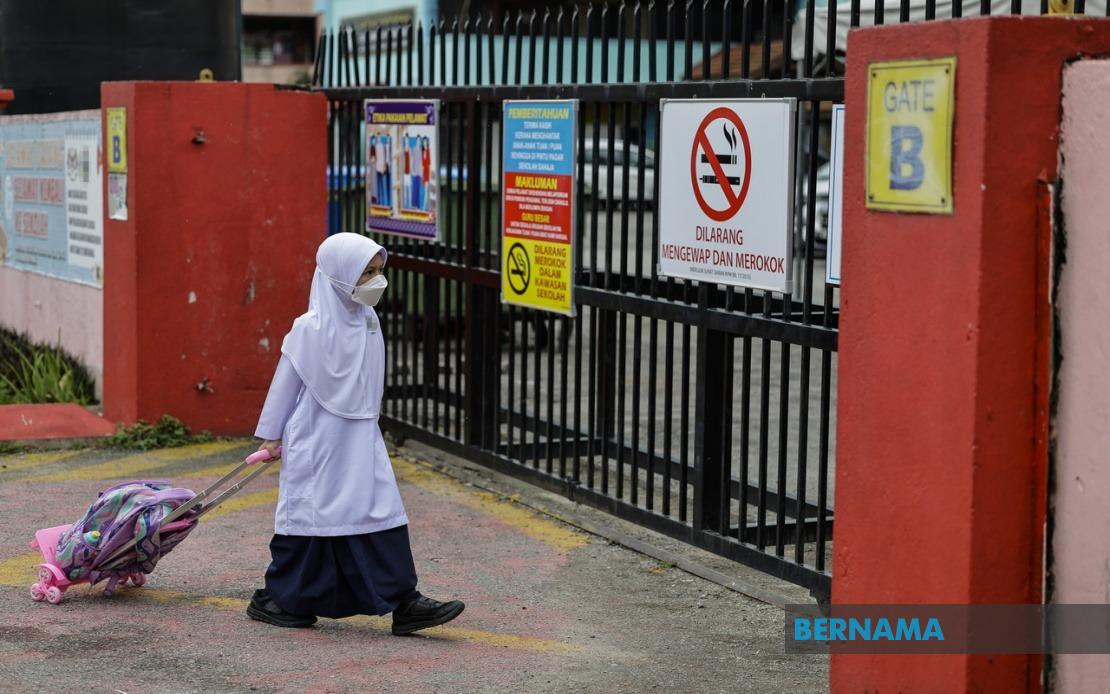
School administrators across Malaysia have been empowered to make independent decisions about closures when air quality deteriorates to hazardous levels, Deputy Education Minister Wong Kah Woh announced during an event in Taiping. The authority to shut down educational institutions lies with principals and headmasters when the Air Pollutant Index surpasses 200, provided they receive guidance from their respective State Education Departments and District Education Offices. This framework represents a decentralized approach to managing school operations during haze episodes, acknowledging that conditions vary significantly across different regions of the country.
Wong's clarification emerged against the backdrop of several Malaysian localities recording unhealthy API readings, prompting concerns about student safety and institutional preparedness. The Ministry of Education has maintained standing circulars addressing haze management protocols, with iterations released in 2016, 2019, and 2023, reflecting an evolving institutional response to recurring air quality crises in the region. These guidelines form the backbone of Malaysia's approach to protecting schoolchildren from exposure to hazardous air conditions, which health experts have linked to respiratory complications and compromised learning outcomes.
The thresholds established by the education ministry create a graduated response system rather than a blanket nationwide policy. When API readings reach 100, schools must immediately cease all outdoor activities and suspend communal gatherings that would expose students to polluted air. This intermediate measure allows educational institutions to maintain operations while implementing protective measures, ensuring curriculum continuity without sacrificing health considerations. The postponement of outdoor sports events and extracurricular activities becomes mandatory at this level, shifting these programmes to indoor venues or future dates when air quality improves.
The decision to grant principals discretionary authority over full school closures reflects trust in school leadership to assess local conditions and make contextually appropriate judgments. Unlike centralized emergency protocols that apply uniformly across all states, this approach acknowledges that two regions with identical API readings may face different practical circumstances. A school in a rural area with minimal air quality monitoring infrastructure may require closure at a lower threshold than an urban institution equipped with advanced air filtration systems and indoor educational facilities. This flexibility could prove crucial for maintaining educational equity across disparate school settings.
The education authorities have committed to regular monitoring of haze conditions and API readings through established state-level structures, creating an early warning system for school administrators. State Education Departments and District Education Offices serve as intermediaries between schools and meteorological information, translating raw data into actionable guidance. This institutional architecture places responsibility for interpretation and decision-making at multiple levels, distributing both authority and accountability throughout the education system rather than concentrating it at the ministry level.
For Malaysian and Southeast Asian educators, this policy framework addresses a recurrent challenge in the region's climate and environmental context. Transboundary haze originating from agricultural burning in neighbouring countries has become a predictable seasonal phenomenon, particularly affecting schools in Peninsular Malaysia's western states and the eastern regions of Sabah and Sarawak. Students in these vulnerable areas experience multiple haze episodes annually, disrupting their academic calendars and potentially affecting their health trajectories. Schools have therefore developed institutional memory around managing these crises, making decentralized decision-making increasingly practical.
The API threshold of 200 marks a significant inflection point in Malaysia's environmental health assessment system. At this level, air quality is classified as unhealthy, posing risks even to the general population but particularly vulnerable groups including children, elderly individuals, and those with pre-existing respiratory conditions. Schools exceeding this threshold face an ethical obligation to protect their student populations, justifying institutional closures regardless of academic calendar pressures. The discretionary framing acknowledges that API 200 represents a decision point where closure becomes advisable rather than a hard regulatory mandate requiring uniform implementation.
Wong's remarks came during the signing of a Memorandum of Understanding between Toyo Tyre Malaysia and UniMAP, indicating that environmental management and occupational health considerations are gaining prominence across Malaysian institutional sectors. The automotive and manufacturing industries have their own stakes in air quality management, as poor visibility and hazardous conditions affect workplace safety and operational efficiency. This convergence of concerns across education, industry, and government suggests a broader institutional recognition of haze as a multifaceted governance challenge requiring coordinated responses.
The standing circulars issued in 2016, 2019, and 2023 document the Ministry of Education's iterative refinement of haze management protocols. Earlier versions may have applied more conservative thresholds or imposed stricter uniformity across regions, while recent updates presumably incorporate lessons learned from previous episodes and evolving scientific understanding of air pollution's health impacts. This documented evolution suggests that Malaysian education policy has become increasingly responsive to environmental pressures, though critics might question whether response mechanisms keep pace with the escalating severity and frequency of haze events.
School principals now bear significant responsibility for interpreting API data, consulting with education authorities, and making decisions that balance academic continuity against health protection. This places considerable weight on institutional leadership, requiring principals to understand air quality metrics, monitor official guidance, and potentially make controversial closure decisions that affect thousands of families' daily routines. Professional development and support systems enabling principals to discharge these responsibilities effectively remain crucial, particularly in smaller schools with limited administrative infrastructure.

