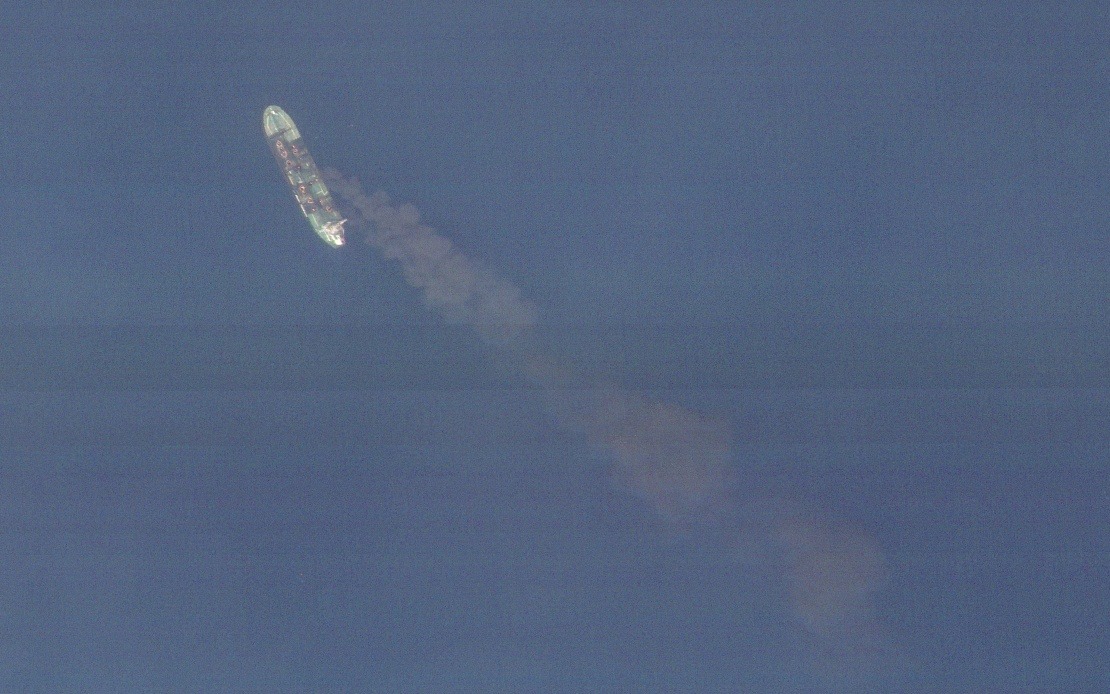
The Saudi-led military coalition operating in Yemen has declared its intention to shield commercial shipping through one of the world's most strategically vital waterways, after the Iran-backed Houthi movement announced restrictions on vessels associated with Saudi Arabia. The declaration came swiftly on Monday evening in response to Houthi pronouncements that would effectively bar such maritime traffic from waters they control, particularly through the Bab al-Mandab Strait—a narrow passage linking the Red Sea to the Indian Ocean that handles roughly 12 percent of global maritime commerce.
Coalition spokesperson Turki Al-Malki articulated the coalition's resolve through a social media statement, asserting that the Joint Forces Command stands ready to implement all lawful and decisive operational countermeasures necessary to ensure safe passage for vessels flagged to or chartered by coalition members traversing the contested strait. The language deployed suggested preparation for potential military escalation, though framed within the bounds of international maritime law. For Malaysian businesses dependent on Red Sea routes for Southeast Asian trade flows, this escalating rhetoric signals potential disruptions to established shipping corridors and possible insurance premium increases.
The coalition spokesperson simultaneously attempted to dismantle the credibility of the Houthi ban by highlighting what he characterized as contradictions in the group's position. Al-Malki pointed to statistics indicating that over 300 commercial vessels had been permitted entry into Houthi-administered ports during the first six months of the calendar year, carrying diverse cargo including essential foodstuffs and petroleum products. This rebuttal suggests the coalition views the ban as politically theatrical rather than practically comprehensive, though such assurances may provide limited comfort to shipping companies evaluating route risks.
Riyadh's Foreign Ministry independently weighed in with its own statement, rejecting Houthi characterizations of a blockade affecting Yemen's civilian population. The ministry contended that Saudi Arabia has actively pursued amelioration of Yemeni suffering through comprehensive development initiatives and sustained budget transfers to the internationally recognized Yemeni government. This dual-track response—combining operational assurances from the military coalition with diplomatic messaging from civilian authorities—reflects Riyadh's effort to frame its actions as defensive and humanitarian rather than aggressive.
The underlying trigger for this maritime showdown traces to an incident the previous week, when the Saudi-backed Yemeni government's forces conducted airstrikes against Sanaa International Airport, explicitly designed to prevent landing of an Iranian aircraft carrying a delegation of senior Houthi officials. The Houthis responded swiftly with their own barrage of missiles and unmanned aerial systems directed toward Saudi Arabian territory, demonstrating their continued capacity for cross-border strikes despite years of coalition air superiority. This tit-for-tat pattern exemplifies the cycle of provocations that has characterized the Yemen conflict.
The Houthi announcement itself invoked what movement representatives termed a "blockade for blockade" principle, presenting their maritime restrictions as retaliatory measures against what they characterized as nearly twelve years of Saudi Arabian siege warfare. This rhetorical framing—equating alleged blockade measures with direct military action—reflects how both parties to the conflict employ competing narratives about who bears responsibility for civilian suffering and regional instability. For external observers including Malaysian policymakers monitoring the region, these competing claims complicate efforts to understand ground realities and assess humanitarian impact.
Yemen's underlying political and military crisis has persisted since late 2014, when Houthi forces seized control of the capital Sanaa and substantial portions of Yemen's northern territories. This development prompted Saudi Arabia, supported by a coalition of Gulf and other states, to launch military intervention beginning in 2015. The subsequent eight-plus years of warfare have created one of the world's worst humanitarian catastrophes while fragmenting Yemen into competing zones of influence and administrative control. The Red Sea maritime dimension represents merely one theater within this broader, multifaceted conflict.
The 2022 United Nations-brokered ceasefire agreement had provided a fragile respite from the most intensive phases of warfare, reducing direct military engagements and enabling limited humanitarian access. However, the recent pattern of incidents—the airport strikes, Houthi aerial responses, and now the maritime ban announcement—suggests this de-escalatory momentum faces serious strain. Analysts and regional observers have begun warning that the accumulated provocations and tit-for-tat escalations risk completely unraveling the 2022 truce architecture, potentially returning the conflict to earlier phases of intensive military operations.
For Malaysia and broader Southeast Asia, developments in Yemen carry significant economic implications beyond immediate humanitarian concerns. The Red Sea and Bab al-Mandab Strait represent critical transit corridors for Malaysian-flag vessels and Malaysian-traded cargo destined for European and African markets. Shipping companies based in Malaysia or operating Malaysian-chartered vessels must carefully evaluate risks associated with passage through contested waters where military actors demonstrate willingness to deploy strikes against maritime targets. The escalating rhetoric from the Saudi-led coalition, while intended to reassure traders, simultaneously signals heightened military preparedness that could inadvertently increase incident risks.
The Saudi coalition's commitment to "necessary and decisive operational measures" raises questions about what practical implementation might entail. Enhanced naval patrols, expanded air defense deployments, or even targeted military strikes against Houthi maritime assets represent possibilities within the coalition's stated framework. Such measures, while potentially deterring Houthi action, might simultaneously increase the probability of accidental engagement with commercial shipping. The International Maritime Organization and major shipping associations have already flagged the Red Sea region as elevated-risk, and continued escalation would likely trigger further warnings and potentially mandatory routing changes that could add days and substantial costs to Asia-Europe shipping schedules.
The coalition's dismissal of the Houthi ban as "fallacies and escalation" reflects confidence in its military superiority but perhaps underestimates the Houthis' demonstrated capacity for disruption despite technological disadvantage. The group has repeatedly struck commercial shipping, oil infrastructure, and military installations using relatively low-cost drone and missile systems, inflicting economic damage disproportionate to their technological sophistication. If the Houthis translate their maritime ban announcement into sustained interdiction operations against Saudi-aligned vessels, the consequences for regional shipping economics and global energy markets could prove significant.
The immediate path forward remains uncertain, contingent upon whether the coalition's show of resolve deters further Houthi escalation or instead provokes additional provocations. Historical patterns in the Yemen conflict suggest that deterrent threats often fail to prevent escalation cycles, as both parties employ military action partly to signal resolve to domestic audiences and regional competitors. Malaysian and other Southeast Asian maritime interests should prepare contingency planning for potential disruptions to Red Sea shipping, including alternative routing options through the Suez Canal or longer circumnavigation routes around Africa, alongside engagement with insurance providers and freight forwarders to understand emerging risk assessments.

