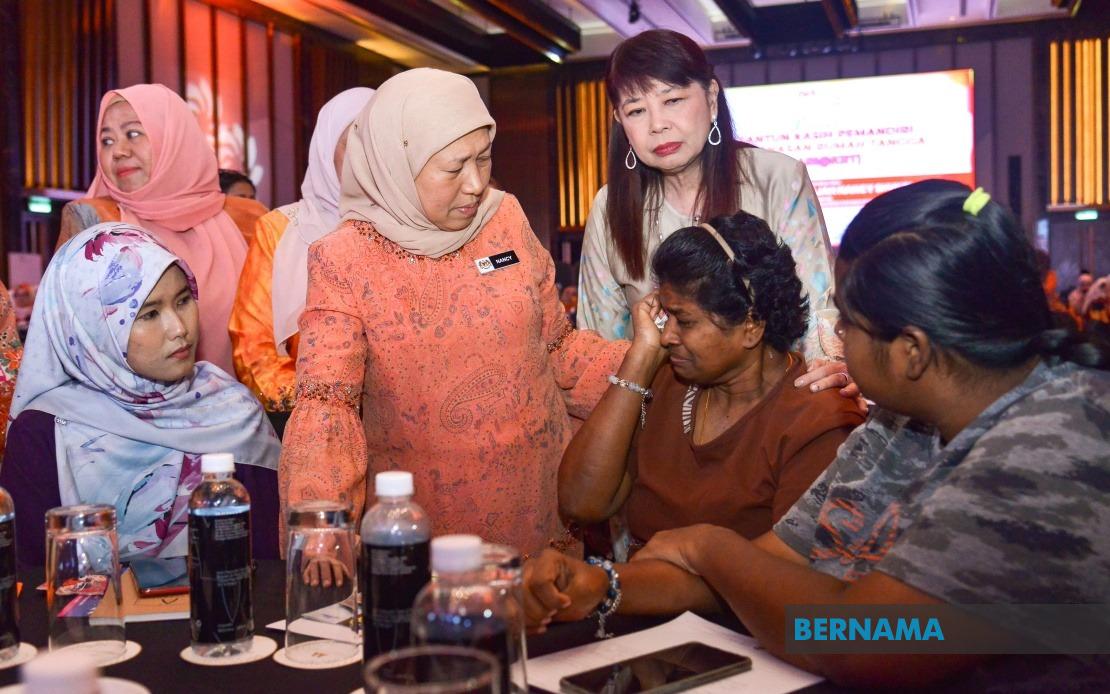
Malaysia is rolling out an ambitious new initiative to support domestic violence survivors, with the Ministry of Women, Family and Community Development unveiling the SARI@KRT: Road to Eliminate Violence Against Women (EVAW) 2026 programme. The scheme aims to reach at least 1,400 beneficiaries nationwide, with a minimum of 100 participants allocated to each state, marking a significant government commitment to transforming the lives of those fleeing abusive situations.
Minister Datuk Seri Nancy Shukri emphasised that the programme goes beyond traditional awareness-raising efforts, seeking instead to restore psychological wellbeing and rebuild trust among survivors. The initiative combines three critical pillars: strengthening psychosocial support services, providing comprehensive legal assistance, and creating pathways for economic empowerment. This multifaceted approach recognises that escaping domestic violence requires more than refuge—survivors need healing, advocacy, and means for sustainable independence.
The timing of the launch is particularly significant given alarming statistics from the Royal Malaysia Police. Domestic violence cases surged to 4,014 reports during the first half of 2024, representing an 9.1 percent increase compared to 3,678 cases during the same period in 2023. While this rise is concerning, authorities note that the escalation partly reflects growing public awareness and increased willingness among victims to seek help through official channels, a shift that underscores changing attitudes toward reporting abuse.
Geographical variation in reported cases reveals important regional patterns. Johor emerged as the state with the highest number of recorded incidents at 721 cases, followed by Selangor with 614 and Perak with 405. These figures suggest that larger, more urbanised states experience higher reporting rates, though questions remain about whether this reflects actual prevalence or simply better access to police services and awareness campaigns in developed areas.
Understanding the root causes of domestic violence is essential for developing effective interventions. According to data gathered by authorities, misunderstandings and communication breakdowns remain the predominant trigger, accounting for 1,967 of the reported cases. Drug abuse follows as a secondary factor in 444 incidents, whilst financial stress precipitated 378 cases. This breakdown highlights the interconnected nature of family conflict, where poor communication often compounds challenges created by substance dependency or economic hardship.
A particularly overlooked dimension that Nancy highlighted concerns financial abuse within marriage. She drew attention to situations where one spouse possesses the financial capacity to provide for household needs but deliberately refuses to do so, placing the burden on the other partner. Classifying such behaviour as abuse reflects evolving legal and social understanding that violence extends beyond physical harm to encompass economic control and deprivation. This framing challenges traditional gender roles and emphasises that supporting a family is fundamentally a shared responsibility rather than an individual burden.
The SARI@KRT programme addresses this reality by providing practical support mechanisms. The Ministry offers special allowances enabling survivors to attend court proceedings related to child maintenance claims, acknowledging that financial security for children represents a critical component of safe separation. By subsidising attendance at legal proceedings, the government removes a barrier that often keeps survivors trapped in abusive situations or prevents them from securing formal financial arrangements for dependents.
Nancy's call for greater community engagement reflects a recognition that support systems must extend beyond government institutions. She encouraged members of the public to share information about available assistance and to facilitate early intervention in situations of suspected abuse. This approach acknowledges that neighbours, colleagues, family friends, and extended family members often observe warning signs before formal authorities become involved, and their willingness to encourage intervention can prove lifesaving.
For Malaysian readers, the programme's implications extend across several dimensions. The scheme directly benefits survivors by offering integrated services that address psychological trauma, legal vulnerabilities, and economic dependency simultaneously. From a broader policy perspective, the initiative signals that the government recognises domestic violence as a structural problem requiring coordinated intervention rather than a private matter. The focus on economic empowerment and financial literacy particularly resonates in a Southeast Asian context where economic participation of women remains linked to their autonomy and safety within households.
The regional context matters significantly. Across Southeast Asia, domestic violence remains a persistent challenge, with many countries grappling with similar statistics and similar gaps in survivor support. Malaysia's SARI@KRT programme potentially serves as a model for integrated victim assistance, combining mental health support, legal protections, and economic pathways. The emphasis on reaching participants across all states demonstrates commitment to supporting victims in both urban and rural settings, addressing the reality that abuse transcends geographic and socioeconomic boundaries.
Looking forward, the success of SARI@KRT will depend on implementation quality and survivor uptake. Reaching the target of 1,400 beneficiaries requires not only funding and trained personnel but also effective outreach to identify and engage potential participants. Many survivors remain unaware of available support, isolated by shame, fear, or geographic remoteness. The programme's true measure will be whether it successfully connects with those most in need rather than simply those most easily accessible.
The government's positioning of the statistics as partly reflective of positive cultural shifts warrants careful interpretation. Whilst increased reporting does suggest growing confidence in official channels, the underlying rate of domestic violence remains deeply troubling. Rising reported cases should prompt sustained investment in prevention alongside support for survivors. Education programmes addressing healthy relationships, communication skills, and conflict resolution in schools and community settings might ultimately prove as valuable as victim-focused interventions in reducing the overall incidence of abuse.

