Deputy Prime Minister Datuk Seri Fadillah Yusof has announced the approval of 52 projects under the Cakna MADANI Programme across Sarawak, collectively valued at RM9.46 million and specifically designed to tackle the persistent challenges of coastal and riverbank erosion while simultaneously reducing vulnerability to flooding in the state. The announcement underscores the federal government's commitment to addressing environmental infrastructure gaps in East Malaysia, where water-related disasters have increasingly threatened communities and livelihoods.
The implementation timeline for these 52 initiatives varies considerably. Twelve projects have already reached completion, thirteen are currently progressing through active construction phases, and the remaining twenty-seven remain in the planning and pre-implementation stages. This staggered approach allows for flexible resource allocation while ensuring continuous momentum in addressing critical vulnerabilities. The distribution of project status reflects careful project management and staged funding releases, a critical consideration in Sarawak's vast geographical expanse where logistics and terrain present ongoing operational challenges.
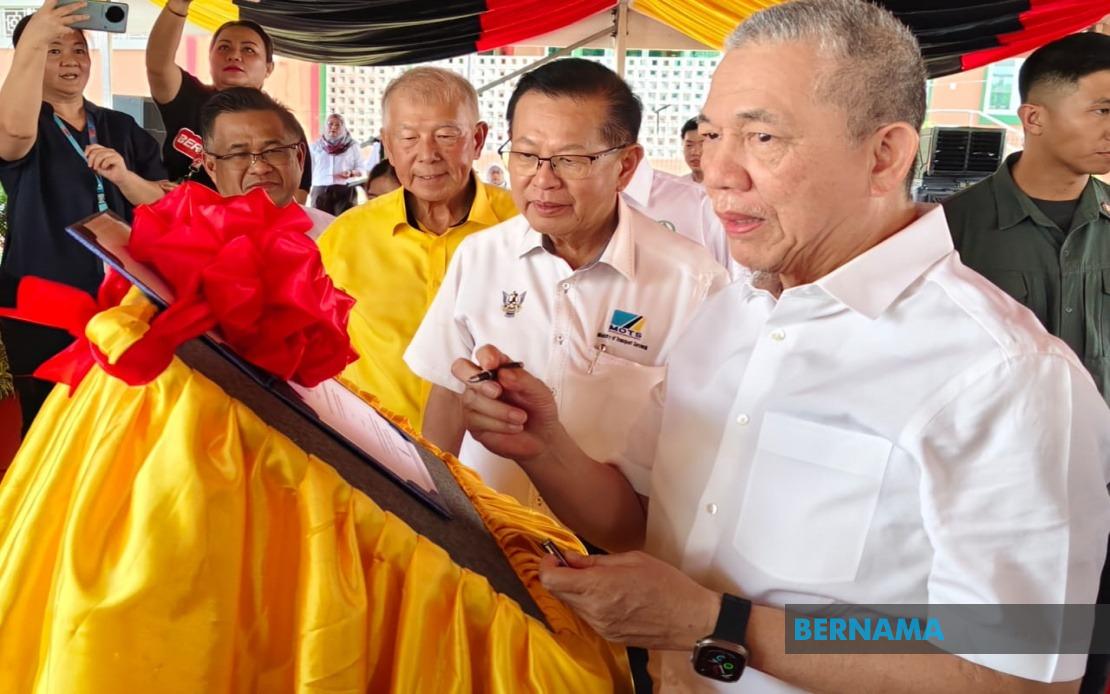
During a site visit to Miri District, Fadillah inspected the Riverbank Stabilisation Project at Tab Cinaq Cemetery, one of three Cakna MADANI initiatives being undertaken in the district. This particular project, budgeted at RM134,682, commenced in May and is scheduled for completion by November. The work involves constructing a fifty-metre retaining wall specifically engineered to stabilise the riverbank, arrest ongoing erosion processes, and safeguard both the cemetery infrastructure and adjacent structures from further deterioration. Such targeted interventions address the immediate needs of vulnerable communities while serving as concrete examples of how federal funding translates into tangible protections.
Beyond these immediate Cakna MADANI efforts, Fadillah, who also holds the portfolio of Energy Transition and Water Transformation Minister, outlined a considerably more ambitious longer-term framework. Twenty-nine flood mitigation projects spanning multiple categories have secured approval across Sarawak with a total investment of RM3.834 billion. This broader portfolio encompasses continuation projects from previous phases alongside newly conceived initiatives, reflecting an evolution in the state's approach to water management and environmental resilience. The scale of this investment demonstrates recognition that addressing Sarawak's flood vulnerabilities requires sustained, multi-year commitment rather than episodic interventions.
The composition of the RM3.834 billion portfolio reveals strategic prioritisation. Eighteen projects representing continuation efforts account for RM3.567 billion of the total budget, indicating that substantial previous investments are being maintained and expanded upon. The remaining eleven newly initiated projects carry a combined value of RM267 million, representing fresh commitments to emerging priorities and previously unaddressed vulnerabilities. This balance between continuity and innovation reflects adaptive management principles where past lessons inform current strategy.
Among the continuation initiatives is the RTB Sungai Miri project, a flagship flood management intervention carrying a total cost of RM31 million. Construction commenced in October 2023, and by the time of Fadillah's announcement, physical progress had reached 58.11 percent completion. The project is projected to reach full completion by November 2026, providing a roughly three-year execution window for comprehensive remediation of this critical waterway. This timeline allows for seasonal considerations and methodological adjustments as construction advances.
The significance of these investments extends beyond the immediate beneficiary communities. Sarawak's vulnerability to flooding and erosion has historical precedents that continue to shape development patterns and resource allocation priorities. The state's position on the island of Borneo, combined with its extensive coastline and numerous river systems, creates inherent environmental challenges that standard drainage and retention infrastructure must continuously address. Monsoon seasons and the occasional tropical storm compound these baseline vulnerabilities, making proactive mitigation not merely beneficial but essential for protecting economic productivity and ensuring public safety.
For Malaysian policymakers and development specialists, the Sarawak investment strategy offers lessons applicable to similar challenges across Southeast Asia. States and provinces with comparable geographical and hydrological characteristics face comparable risks, suggesting that Malaysia's experience managing these issues could inform regional approaches. Furthermore, the integration of multiple project categories—from immediate stabilisation works to comprehensive flood mitigation planning—demonstrates sophisticated programme design that acknowledges both emergency response and preventive capacity building.
The budgetary commitment represented by these initiatives also reflects broader considerations about regional equity within Malaysia's development framework. East Malaysia, historically receiving lower per-capita infrastructure investment than Peninsular Malaysia, has increasingly become a focus for targeted federal spending, particularly in sectors addressing environmental vulnerability and climate resilience. The Cakna MADANI Programme exemplifies this rebalancing, directing resources toward communities facing specific environmental pressures rather than applying standardised national approaches.
Implementation of projects across Sarawak's diverse geography presents genuine operational complexities. The state encompasses urban centres like Kuching and Miri alongside extensive rural areas where access, resource availability, and technical capacity present distinct challenges. The staged implementation approach—with projects at different phases simultaneously—allows field teams to develop expertise progressively and adjust methodologies based on site-specific conditions encountered during construction. This adaptive capacity becomes increasingly valuable in a state where environmental conditions and community circumstances vary substantially across districts.
For residents and local authorities in affected areas, completion of these projects represents tangible progress toward hazard reduction. Erosion control works protect not only cemeteries and public infrastructure but also residential areas and agricultural land increasingly threatened by riverbank collapse. The psychological benefit of visible mitigation efforts complements the physical protections provided, building community confidence that government recognises local vulnerabilities and acts decisively to address them. This sentiment becomes particularly important in areas where previous flooding or erosion events have created lasting anxieties about climate and hydrological stability.

